Mylopharodon conocephalus
Hardhead
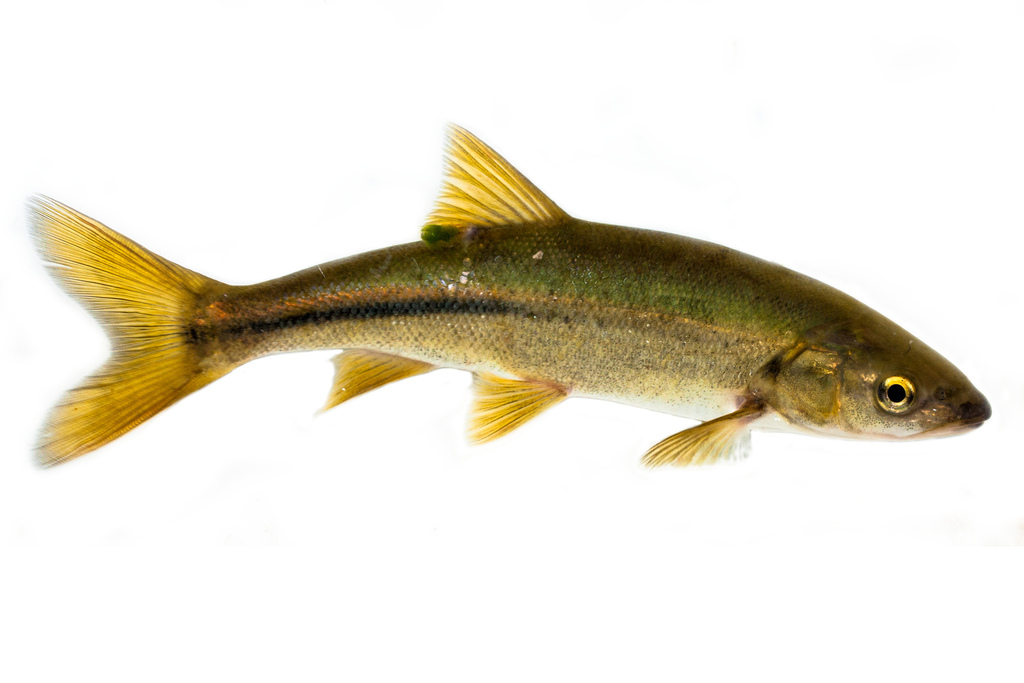
(c) Ken-ichi Ueda, some rights reserved (CC BY) · licence
Family: Leuciscidae · Class: Actinopterygii · Order: Cypriniformes
Conservation status: G3 S3
Mylopharodon conocephalus (Hardhead) is a California animal in the Leuciscidae family.
The hardhead is a large, robust freshwater fish endemic to California's Central Valley and coastal drainages. Adults typically reach 200 to 450 mm (8 to 18 inches) in total length, with some individuals exceeding 600 mm (24 inches). The species exhibits a streamlined, torpedo-shaped body with a relatively large head comprising approximately 25% of total body length. The mouth is subterminal with thick, fleshy lips and pharyngeal teeth adapted for processing hard-shelled invertebrates. Coloration varies from olive-green to bronze on the dorsal surface, grading to silver-white on the belly. Breeding males develop tubercles on the head and pectoral fins. Historically, hardhead occurred throughout the Sacramento and San Joaquin river systems, including major tributaries such as the American, Feather, Tuolumne, and Stanislaus rivers. The species also inhabited coastal drainages from the Russian River south to the Salinas River. Current distribution is fragmented, with populations persisting in foothill reaches of Central Valley tributaries, Clear Lake, and portions of the Pajaro River system. The species has been extirpated from much of its historical lowland habitat. Hardhead inhabit clear, flowing waters of foothill streams and rivers, typically at elevations between 60 and 1,200 meters (200 to 4,000 feet). Adults prefer deeper pools and runs with rocky or gravel substrates, while juveniles utilize shallow, vegetated areas along stream margins. The species tolerates water temperatures from 10 to 28°C (50 to 82°F) but appears sensitive to elevated temperatures during summer months. Hardhead require well-oxygenated water and are intolerant of high turbidity levels. Hardhead are opportunistic omnivores, feeding on aquatic insects, crustaceans, mollusks, plant material, and small fish. Their pharyngeal teeth are particularly well-adapted for crushing snail shells and hard-bodied invertebrates. Spawning occurs from April through June when water temperatures reach 16 to 20°C (61 to 68°F). Males establish territories over gravel beds in shallow riffles or pool tailouts. Females deposit 3,000 to 17,000 adhesive eggs in gravel nests, which males guard until hatching occurs after 5 to 7 days. Sexual maturity is reached at 3 to 4 years of age. The hardhead is classified as G3 S3, indicating vulnerability both globally and within California. While not federally or state listed, populations have declined significantly due to habitat modification, water diversions, and competition from introduced species. Dam construction has fragmented populations and altered natural flow regimes essential for spawning. Water temperature increases associated with reservoir releases and climate change pose additional threats. The California Department of Fish and Wildlife considers hardhead a species of special concern, and several populations are protected within designated wild trout waters where habitat conditions remain suitable.
Classification
Class: Actinopterygii · Order: Cypriniformes · Family: Leuciscidae
Conservation status
G3 S3
Frequently asked questions
How is Mylopharodon conocephalus classified?
Mylopharodon conocephalus belongs to class Actinopterygii, order Cypriniformes, family Leuciscidae.
What family does Mylopharodon conocephalus belong to?
Mylopharodon conocephalus is in the Leuciscidae family.
Is Mylopharodon conocephalus protected or of conservation concern?
Mylopharodon conocephalus carries the following status: G3 S3.
What is Mylopharodon conocephalus?
The hardhead is a large, robust freshwater fish endemic to California's Central Valley and coastal drainages.
Is Mylopharodon conocephalus found in California?
Yes. Mylopharodon conocephalus is recorded in California in The California Species Project's catalogue.
Related species
Other California species in the same genus, family, or bioregion.
Data from The California Species Project — 14,000+ California species with verified data from CNPS, CDFW, USFWS, and more.