Myocastor coypus
Nutria
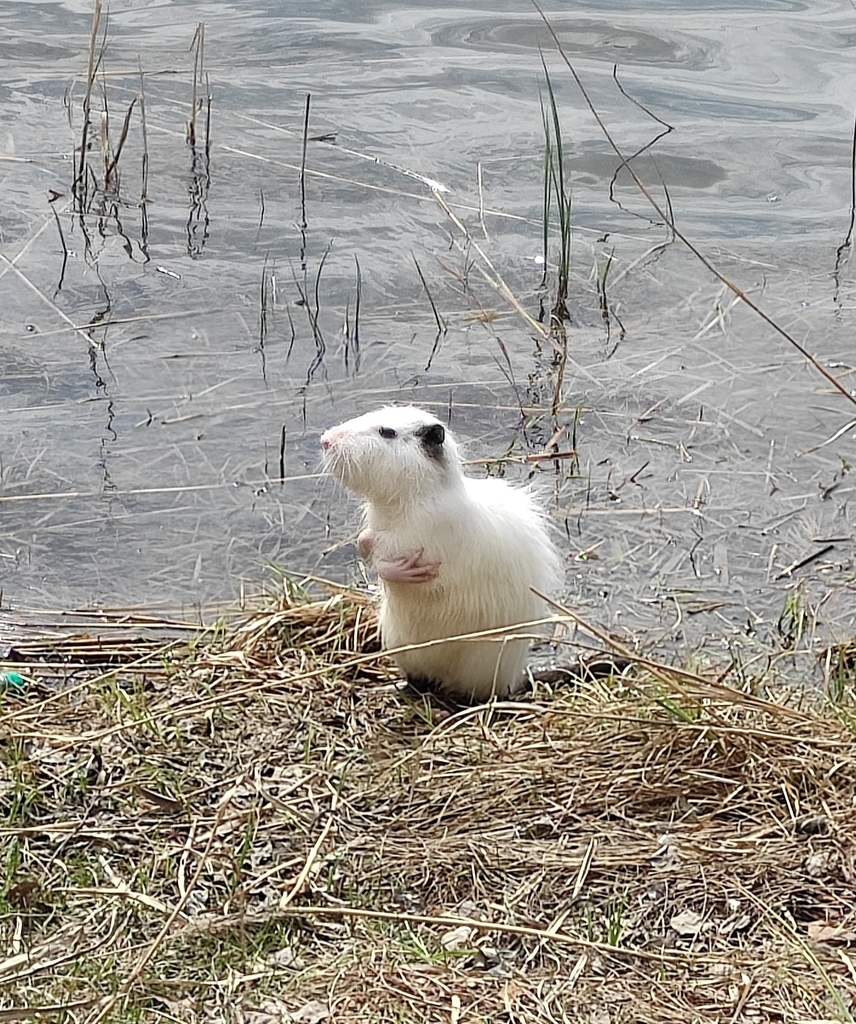
(c) Юлия, some rights reserved (CC BY) · licence
Family: Echimyidae · Class: Mammalia · Order: Rodentia
Myocastor coypus (Nutria) is a California animal in the Echimyidae family.
The nutria (Myocastor coypus), also known as coypu, is a large semi-aquatic rodent native to South America that has established invasive populations in several regions worldwide. Adults typically measure 43 to 63 cm (17 to 25 inches) in body length, with an additional 25 to 42 cm (10 to 17 inches) for the tail, and weigh 5 to 9 kg (11 to 20 pounds). The species exhibits a robust, beaver-like appearance with dense, waterproof fur that ranges from yellowish-brown to dark brown on the dorsal surface and lighter brown to gray on the ventral side. Distinguishing features include large, bright orange incisors, small eyes and ears positioned high on the head, webbed hind feet, and a long, round, sparsely-haired tail that is cylindrical rather than flattened like a beaver's. Historically, nutria were not native to California but were introduced for fur farming in the early to mid-20th century. Escaped and released individuals established populations in various wetland areas. The California Department of Food and Agriculture conducted an extensive eradication program from 2017 to 2022, successfully eliminating known populations in the San Joaquin Valley, including areas in Fresno, Merced, Stanislaus, and Tuolumne counties. As of December 2025, California is considered nutria-free following intensive monitoring and removal efforts. Nutria inhabit freshwater and brackish wetland environments, including marshes, swamps, ponds, slow-moving streams, and agricultural canals. They construct burrows in banks or build platform nests among emergent vegetation. The species prefers areas with abundant aquatic vegetation and requires access to both water for feeding and terrestrial areas for denning. They can tolerate a wide range of water conditions but avoid areas with strong currents. Nutria are primarily herbivorous, consuming up to 25% of their body weight daily in plant material. Their diet consists mainly of aquatic vegetation, including cattails, sedges, rushes, and various grasses, though they occasionally consume mussels, snails, and other small invertebrates. The species is highly prolific, with females capable of producing two to three litters per year of two to thirteen young each, following a gestation period of approximately 130 days. Young are born fully furred with eyes open and can swim within 24 hours of birth. In California, nutria are classified as a prohibited invasive species under state law. Their presence poses significant ecological and economic threats, including destruction of wetland vegetation, erosion of levees and waterways through burrowing activities, and competition with native wildlife. The successful eradication program involved trapping, monitoring with detection dogs, and habitat modification. Continued surveillance efforts monitor for potential reintroduction through natural dispersal from other states or illegal transport. The California Department of Food and Agriculture maintains protocols for rapid response should nutria be detected in the future.
Classification
Class: Mammalia · Order: Rodentia · Family: Echimyidae
Frequently asked questions
How is Myocastor coypus classified?
Myocastor coypus belongs to class Mammalia, order Rodentia, family Echimyidae.
What family does Myocastor coypus belong to?
Myocastor coypus is in the Echimyidae family.
What is Myocastor coypus?
The nutria (Myocastor coypus), also known as coypu, is a large semi-aquatic rodent native to South America that has established invasive populations in several regions worldwide.
Is Myocastor coypus found in California?
Yes. Myocastor coypus is recorded in California in The California Species Project's catalogue.
More California species
This species has no close relatives in our California data — here are other species to explore.
Data from The California Species Project — 14,000+ California species with verified data from CNPS, CDFW, USFWS, and more.