Myotis californicus
California Myotis
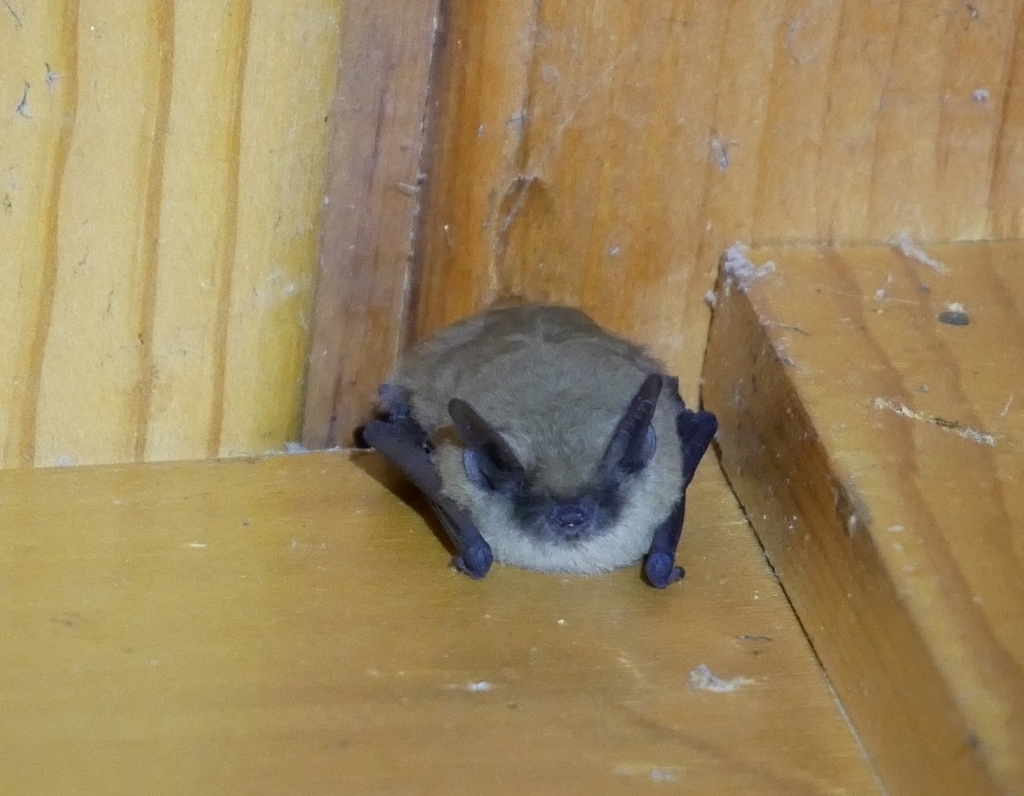
no rights reserved · CC0
Family: Vespertilionidae · Class: Mammalia · Order: Chiroptera
Myotis californicus (California Myotis) is a California animal in the Vespertilionidae family.
The California myotis is a small bat species belonging to the mouse-eared bat family Vespertilionidae. Adults measure 70-85 mm (2.8-3.3 inches) in total length, with a forearm length of 28-35 mm (1.1-1.4 inches) and weighing 3-5 grams (0.1-0.2 ounces). The dorsal pelage ranges from yellowish-brown to dark brown, while the ventral surface is typically paler. The ears are relatively small and rounded, measuring 11-15 mm in length. The wing membranes are dark brown to black, and the interfemoral membrane is sparsely furred. The calcar lacks a keel, distinguishing it from similar Myotis species. A distinctive feature is the relatively short, blunt tragus that extends about half the length of the ear. The California myotis has one of the most extensive distributions of any North American bat, ranging from British Columbia south through Mexico. In California, the species occurs throughout the state from sea level to elevations exceeding 2,400 meters (7,900 feet). It is found in all major habitat types and is among the most widely distributed bat species in the western United States. The species occupies diverse geographic regions including the Cascade Range, Sierra Nevada, Coast Ranges, Central Valley, Mojave Desert, and Sonoran Desert. This species demonstrates extensive habitat flexibility, occupying coniferous forests, oak woodlands, chaparral, grasslands, agricultural areas, and desert scrub communities. Day roosts are established in buildings, caves, mines, rock crevices, tree cavities, and under bark or bridges. Maternity colonies typically contain 20-100 females and are often located in warm, protected sites such as attics or cave entrances. Winter hibernation sites include caves, mines, and buildings where temperatures remain stable. California myotis are insectivorous, feeding primarily on small flying insects including moths, flies, beetles, and mosquitoes. Foraging occurs along habitat edges, over water sources, and around vegetation. Flight patterns are characterized by slow, erratic movements typically within 3 meters of surfaces. Echolocation calls are frequency-modulated sweeps ranging from 80-40 kHz. Mating occurs in fall, with delayed fertilization allowing birth timing to coincide with peak insect abundance. Gestation lasts approximately 50-60 days, with females typically producing one pup per year between May and July. Young become volant at 18-21 days and reach adult size by 5-6 weeks. The California myotis is not federally or state listed and appears to maintain stable populations across most of its range. However, local populations face threats from habitat modification, pesticide use, and disturbance of roost sites. White-nose syndrome, caused by the fungus Pseudogymnoascus destructans, poses an emerging threat to western bat populations, though California myotis appear less susceptible than some congeners. Conservation efforts focus on protecting roost sites, particularly maternity colonies, and maintaining habitat connectivity across fragmented landscapes.
Classification
Class: Mammalia · Order: Chiroptera · Family: Vespertilionidae
Frequently asked questions
How is Myotis californicus classified?
Myotis californicus belongs to class Mammalia, order Chiroptera, family Vespertilionidae.
What family does Myotis californicus belong to?
Myotis californicus is in the Vespertilionidae family.
What is Myotis californicus?
The California myotis is a small bat species belonging to the mouse-eared bat family Vespertilionidae.
Is Myotis californicus found in California?
Yes. Myotis californicus is recorded in California in The California Species Project's catalogue.
Related species
Other California species in the same genus, family, or bioregion.
Data from The California Species Project — 14,000+ California species with verified data from CNPS, CDFW, USFWS, and more.