Myotis ciliolabrum
Small-footed Myotis
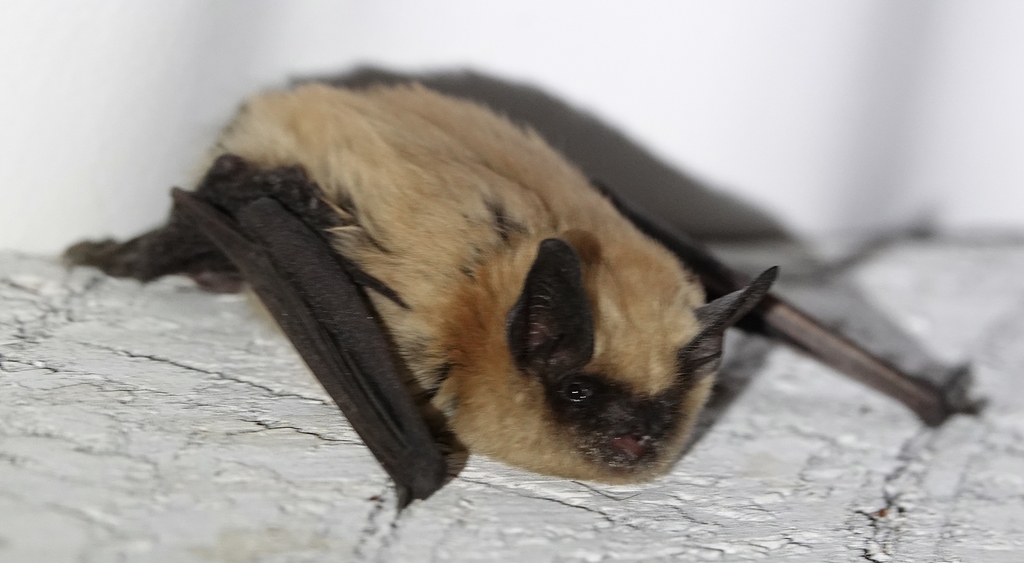
(c) Colin Croft, some rights reserved (CC BY) · licence
Family: Vespertilionidae · Class: Mammalia · Order: Chiroptera
Conservation status: G5 S3
Myotis ciliolabrum (Small-footed Myotis) is a California animal in the Vespertilionidae family.
The small-footed myotis is one of North America's smallest bat species, measuring 7 to 9 centimeters (2.8 to 3.5 inches) in total length with a wingspan of 21 to 25 centimeters (8.3 to 9.8 inches). Adults typically weigh 3 to 6 grams (0.1 to 0.2 ounces). The species is characterized by its distinctive small, narrow feet with black wing and tail membranes that contrast sharply with the pale brown to golden-brown dorsal fur. The ventral surface is typically buff-colored to pale yellow. The ears are relatively large for the body size, measuring 12 to 15 millimeters in length, and the tragus is long and pointed. A distinctive black facial mask extends from the nose to behind the ears, giving the species its characteristic appearance. The small-footed myotis has the broadest distribution of any North American bat species, ranging from southern Canada to central Mexico and from the Pacific Coast to the Great Plains. In California, the species occurs primarily in arid and semi-arid regions throughout much of the state, with confirmed populations in the Sierra Nevada, Cascade Range, Modoc Plateau, and desert regions of southern California. The species is generally absent from the Central Valley and coastal areas west of the Coast Ranges. This species demonstrates broad habitat flexibility, occupying diverse environments from sea level to elevations exceeding 3,000 meters (9,800 feet). Small-footed myotis typically roosts in rock crevices, cliffs, canyon walls, and occasionally in buildings or caves. The species shows a strong preference for arid landscapes with rocky outcrops and sparse vegetation, including pinyon-juniper woodlands, desert shrublands, and ponderosa pine forests. Day roosts are usually narrow rock crevices that provide thermal stability and protection from predators. Small-footed myotis are insectivorous, foraging primarily on small moths, flies, beetles, and other soft-bodied arthropods. They emerge late in the evening, typically 30 to 60 minutes after sunset, and forage close to surfaces such as cliff faces, tree canopies, and water bodies. Flight is characterized by slow, maneuverable movements with frequent hovering and gleaning behavior. Mating occurs in fall, with females storing sperm through winter hibernation. Gestation lasts approximately 50 to 60 days, with a single pup born in late June or early July. Females form small maternity colonies of 10 to 20 individuals, while males typically roost alone or in small groups. The small-footed myotis is not federally listed and lacks state listing status in California. The Global/State Rank of G5 S3 indicates the species is secure globally but vulnerable in California, where populations appear stable but face potential threats from habitat modification and climate change. Primary conservation concerns include roost site disturbance from recreational climbing and mining activities, wind energy development impacts, and white-nose syndrome, though this fungal disease has not significantly affected western populations. The species' adaptability to various arid habitats and widespread distribution contribute to its overall conservation security, though continued monitoring of California populations is warranted given the state's S3 ranking.
Classification
Class: Mammalia · Order: Chiroptera · Family: Vespertilionidae
Conservation status
G5 S3
Frequently asked questions
How is Myotis ciliolabrum classified?
Myotis ciliolabrum belongs to class Mammalia, order Chiroptera, family Vespertilionidae.
What family does Myotis ciliolabrum belong to?
Myotis ciliolabrum is in the Vespertilionidae family.
Is Myotis ciliolabrum protected or of conservation concern?
Myotis ciliolabrum carries the following status: G5 S3.
What is Myotis ciliolabrum?
The small-footed myotis is one of North America's smallest bat species, measuring 7 to 9 centimeters (2.8 to 3.5 inches) in total length with a wingspan of 21 to 25 centimeters (8.3 to 9.8 inches).
Is Myotis ciliolabrum found in California?
Yes. Myotis ciliolabrum is recorded in California in The California Species Project's catalogue.
Related species
Other California species in the same genus, family, or bioregion.
Data from The California Species Project — 14,000+ California species with verified data from CNPS, CDFW, USFWS, and more.