Myotis occultus
Arizona Myotis
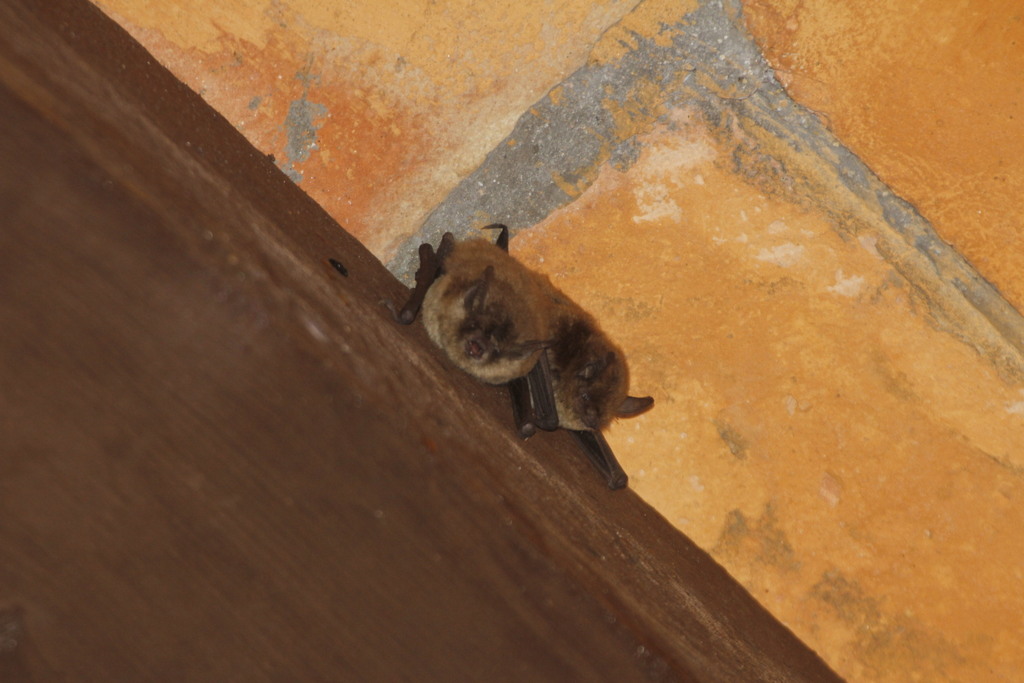
(c) Juan Cruzado Cortés, some rights reserved (CC BY-SA) · licence
Family: Vespertilionidae · Class: Mammalia · Order: Chiroptera
Conservation status: G4G5 S1
Myotis occultus (Arizona Myotis) is a California animal in the Vespertilionidae family.
The Arizona myotis is a small to medium-sized bat with a forearm length of 34-39 mm and weighing 4-8 grams. The pelage is glossy brown dorsally, with slightly paler ventral coloration. The ears are moderate in length, and the tragus is narrow and pointed. Wing membranes are dark brown to blackish. This species can be distinguished from the closely related little brown bat (Myotis lucifugus) by subtle morphological differences, though genetic analysis has confirmed its status as a distinct species (Valdez et al. 1999). The Arizona myotis occurs primarily in the southwestern United States, including Arizona, New Mexico, Colorado, Utah, Nevada, and California. In California, the species has been documented with a Global/State Rank of G4G5 S1, indicating it is apparently secure to secure globally but critically imperiled within the state. The species was formerly considered a subspecies of the little brown bat but is now recognized as a separate species based on morphological and genetic evidence. Arizona myotis inhabits forested and woodland areas, particularly ponderosa pine and oak-pine woodland near water sources. According to NatureServe, this species also occurs in wooded riparian areas within desert regions (Hoffmeister 1986). The species shows a strong association with water, typically roosting in areas within several kilometers of permanent or semi-permanent water sources. Elevation ranges vary considerably across its range, from desert riparian zones to montane forests. Like other members of the genus Myotis, Arizona myotis are insectivorous, foraging primarily for small flying insects including moths, beetles, flies, and mosquitoes. They typically emerge from roosts shortly after sunset to forage over water surfaces and along forest edges. Foraging flights generally occur within 2-3 kilometers of roosting sites. The species exhibits seasonal movements between summer and winter roosts, though migration patterns are not as extensive as some other bat species. Breeding occurs in late summer or early fall, with females giving birth to a single pup in late spring or early summer after a gestation period of approximately 60 days. The conservation status of Arizona myotis in California is of particular concern, with the S1 ranking indicating critical imperilment within the state. Primary threats include habitat loss and fragmentation, particularly the loss of riparian woodland habitat, water diversions affecting foraging areas, and potential impacts from white-nose syndrome, though this disease has not yet significantly affected western bat populations. Climate change poses additional challenges through altered precipitation patterns and reduced water availability in already arid regions. The species' limited distribution within California makes it particularly vulnerable to local habitat modifications. Conservation efforts focus on protecting riparian corridors and maintaining water sources within forested habitats. Additional research is needed to better understand population trends and specific habitat requirements within California's portion of the species' range.
Classification
Class: Mammalia · Order: Chiroptera · Family: Vespertilionidae
Conservation status
G4G5 S1
Frequently asked questions
How is Myotis occultus classified?
Myotis occultus belongs to class Mammalia, order Chiroptera, family Vespertilionidae.
What family does Myotis occultus belong to?
Myotis occultus is in the Vespertilionidae family.
Is Myotis occultus protected or of conservation concern?
Myotis occultus carries the following status: G4G5 S1.
What is Myotis occultus?
The Arizona myotis is a small to medium-sized bat with a forearm length of 34-39 mm and weighing 4-8 grams.
Is Myotis occultus found in California?
Yes. Myotis occultus is recorded in California in The California Species Project's catalogue.
Related species
Other California species in the same genus, family, or bioregion.
Data from The California Species Project — 14,000+ California species with verified data from CNPS, CDFW, USFWS, and more.