Myotis velifer
Cave Myotis
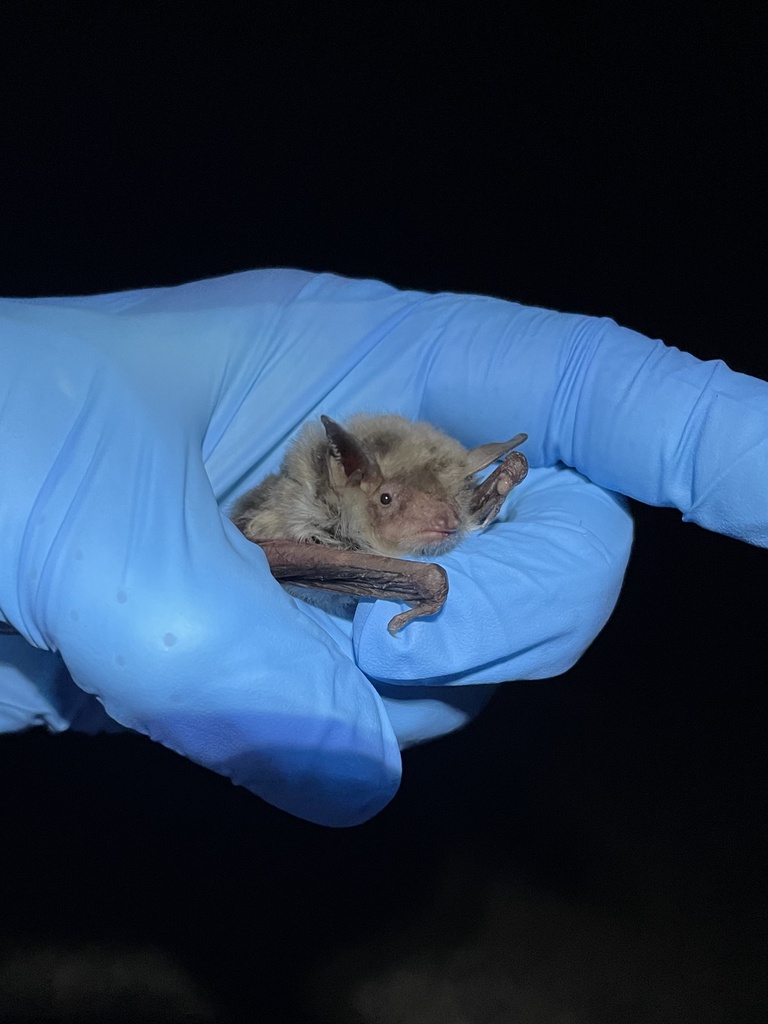
(c) Amelia Tauber, some rights reserved (CC BY) · licence
Family: Vespertilionidae · Class: Mammalia · Order: Chiroptera
Conservation status: G4G5 S1
Myotis velifer (Cave Myotis) is a California animal in the Vespertilionidae family.
The Cave myotis is a medium-sized bat with distinctive features that distinguish it from other western Myotis species. Adults measure 45 to 55 mm (1.8 to 2.2 inches) in body length with a wingspan ranging from 275 to 300 mm (10.8 to 11.8 inches). The species weighs between 8 to 15 grams (0.28 to 0.53 ounces). The dorsal fur is dull brown to grayish-brown, while the ventral surface is lighter, ranging from pale brown to whitish. The ears are relatively large and extend beyond the nose when laid forward. The wing membranes are dark brown to blackish, and the interfemoral membrane is well-developed, extending to the tip of the tail. Historically, Cave myotis ranged from the southwestern United States through Mexico and into Central America. In California, the species was documented from desert and semi-arid regions of the southeastern counties, including Imperial, Riverside, and San Bernardino counties. Current distribution appears severely restricted, with few recent confirmed records in the state. The species reaches its northwestern range limit in California, making state populations particularly vulnerable to extirpation. Cave myotis inhabits arid and semi-arid landscapes, typically at elevations below 1,500 meters (4,900 feet). The species demonstrates a strong preference for roosting in caves, abandoned mines, and similar underground structures, as suggested by its common name. Day roosts are established in dark, humid areas of caves or mine tunnels, often in chambers with stable temperatures. Night roosts may include bridges, culverts, and buildings. Foraging occurs over open areas including desert washes, agricultural fields, and riparian corridors where insect prey is concentrated. Cave myotis are insectivorous, capturing prey through aerial hawking and gleaning from surfaces. Their diet consists primarily of moths, beetles, flies, and other small insects. The species exhibits seasonal migration patterns, with northern populations moving south to warmer regions during winter months. Mating occurs in fall, followed by delayed fertilization and spring birth of typically one pup per female. Maternity colonies form in warm cave chambers or mine shafts, with females giving birth from May through July after a gestation period of approximately 60 days. Cave myotis holds a Global Heritage Rank of G4G5, indicating the species is apparently secure to secure globally. However, the California Heritage Rank of S1 designates it as critically imperiled within the state, with five or fewer occurrences documented. The species faces multiple threats in California, including habitat loss from development, disturbance of roost sites, closure of mine entrances for safety reasons, and climate change affecting water availability in arid environments. White-nose syndrome, while not yet documented in western Cave myotis populations, poses a potential future threat. Conservation efforts focus on protecting known roost sites and maintaining access to suitable underground refugia while ensuring human safety around abandoned mines.
Classification
Class: Mammalia · Order: Chiroptera · Family: Vespertilionidae
Conservation status
G4G5 S1
Frequently asked questions
How is Myotis velifer classified?
Myotis velifer belongs to class Mammalia, order Chiroptera, family Vespertilionidae.
What family does Myotis velifer belong to?
Myotis velifer is in the Vespertilionidae family.
Is Myotis velifer protected or of conservation concern?
Myotis velifer carries the following status: G4G5 S1.
What is Myotis velifer?
The Cave myotis is a medium-sized bat with distinctive features that distinguish it from other western Myotis species.
Is Myotis velifer found in California?
Yes. Myotis velifer is recorded in California in The California Species Project's catalogue.
Related species
Other California species in the same genus, family, or bioregion.
Data from The California Species Project — 14,000+ California species with verified data from CNPS, CDFW, USFWS, and more.