Myotis yumanensis
Yuma Myotis
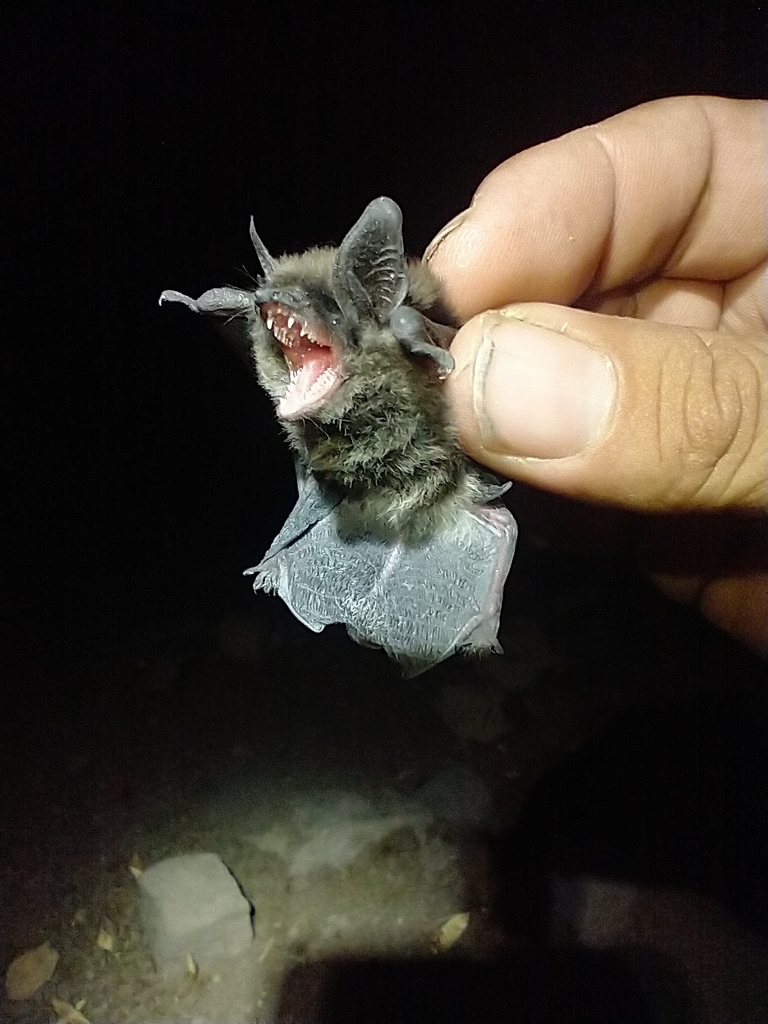
(c) Juan Cruzado Cortés, some rights reserved (CC BY-SA) · licence
Family: Vespertilionidae · Class: Mammalia · Order: Chiroptera
Conservation status: G5 S4
Myotis yumanensis (Yuma Myotis) is a California animal in the Vespertilionidae family.
The Yuma myotis is a small to medium-sized bat with distinctive features that separate it from other Myotis species. Adults have a forearm length of 32 to 38 mm (1.3 to 1.5 inches) and weigh 4 to 8 grams (0.14 to 0.28 ounces). The dorsal fur is dull brown to grayish-brown, while the ventral surface is lighter, ranging from pale brown to whitish. The ears are relatively short and rounded, extending only slightly beyond the nose when laid forward. The calcar lacks a distinct keel, and the wing membranes are dark brown to black. The interfemoral membrane is densely furred on the basal third. The Yuma myotis ranges from southern British Columbia through western North America to central Mexico. In California, the species occurs throughout most of the state except for the northwestern coastal regions and high elevations of the Sierra Nevada above 2,400 meters (7,900 feet). The species is found in diverse habitats from sea level to montane forests, with documented occurrences in the Central Valley, coastal ranges, Mojave and Sonoran deserts, and lower elevation areas of the Sierra Nevada. This species shows a strong association with water sources and typically roosts in structures near streams, rivers, lakes, and reservoirs. Day roosts include buildings, bridges, mines, caves, cliff crevices, and tree cavities. Maternity colonies form in warm, protected sites such as attics, barn lofts, and abandoned buildings. The species demonstrates flexibility in habitat use, occurring in riparian woodlands, desert scrub, chaparral, oak woodlands, and agricultural areas, provided suitable roosting sites and water sources are available. Yuma myotis are insectivorous, foraging primarily over water surfaces where they capture emerging aquatic insects including midges, mayflies, caddisflies, and small moths. Their flight is characterized by slow, maneuverable patterns close to water surfaces, typically within 1 to 3 meters of the substrate. Mating occurs in fall, with delayed fertilization and birth of typically one pup in late spring or early summer. Maternity colonies can contain several hundred individuals. The species is active year-round in warmer regions but may enter torpor during cold periods in northern areas. The Yuma myotis is not federally or state-listed in California. The species receives a global rank of G5 (secure) and a California rank of S4 (apparently secure), indicating stable populations. However, local populations may face threats from habitat modification, water diversions affecting foraging areas, and disturbance of roosting sites. Loss of riparian habitat and changes to water management practices can impact foraging success. The species' adaptability to human-modified environments, including use of artificial structures for roosting, has likely contributed to its overall stability. White-nose syndrome, a fungal disease affecting bats, has not significantly impacted western bat populations as of December 2025, but remains a potential future concern for the species.
Classification
Class: Mammalia · Order: Chiroptera · Family: Vespertilionidae
Conservation status
G5 S4
Frequently asked questions
How is Myotis yumanensis classified?
Myotis yumanensis belongs to class Mammalia, order Chiroptera, family Vespertilionidae.
What family does Myotis yumanensis belong to?
Myotis yumanensis is in the Vespertilionidae family.
Is Myotis yumanensis protected or of conservation concern?
Myotis yumanensis carries the following status: G5 S4.
What is Myotis yumanensis?
The Yuma myotis is a small to medium-sized bat with distinctive features that separate it from other Myotis species.
Is Myotis yumanensis found in California?
Yes. Myotis yumanensis is recorded in California in The California Species Project's catalogue.
Related species
Other California species in the same genus, family, or bioregion.
Data from The California Species Project — 14,000+ California species with verified data from CNPS, CDFW, USFWS, and more.