Myrmeleon exitialis
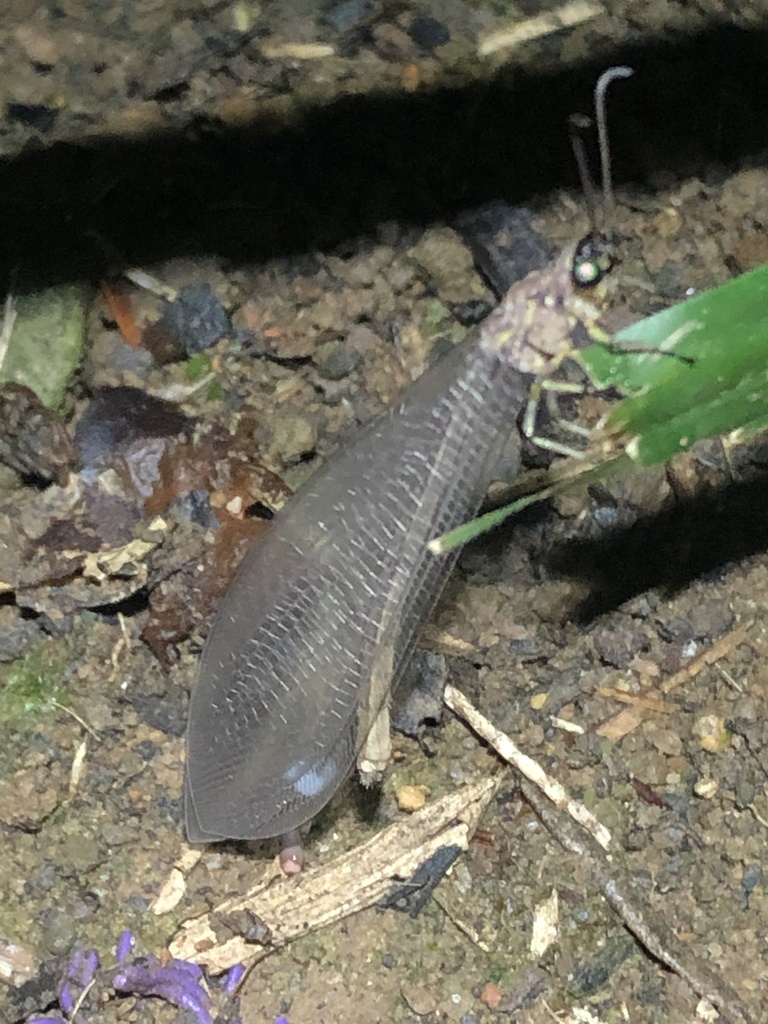
(c) Jared Shorma, some rights reserved (CC BY) · licence
Family: Myrmeleontidae · Class: Insecta · Order: Neuroptera
Myrmeleon exitialis is a California animal in the Myrmeleontidae family.
Myrmeleon exitialis is an antlion species belonging to the family Myrmeleontidae within the order Neuroptera. Adult antlions are winged insects resembling damselflies, with elongated bodies and four narrow, net-veined wings typically held roof-like over the body at rest. The larvae, commonly known as doodlebugs, are distinctive predators with robust, flattened bodies and large, sickle-shaped mandibles. According to the U.S. Fish and Wildlife Service ECOS database, Myrmeleon exitialis has a broad distribution across the eastern and central United States. The species occurs in numerous counties throughout Maryland, Ohio, and extends into other states across this region. Despite this extensive range documented by federal agencies, the species' presence and status in California remains undocumented in available databases, suggesting it may not occur naturally in the state or has not been thoroughly surveyed. Antlions in the genus Myrmeleon typically inhabit areas with loose, sandy soil where larvae can construct their characteristic funnel-shaped pit traps. These conical depressions, usually 1-2 inches in diameter, are excavated in protected locations such as under overhangs, building eaves, or in sandy washes. The larvae position themselves at the bottom of these pits, buried in sand with only their mandibles exposed, waiting for small arthropods to tumble down the steep sides. The larval stage represents the primary feeding period for antlions. When prey falls into the pit, the larva uses its mandibles to inject digestive enzymes and consume the liquefied contents. Common prey includes ants, beetles, and other small insects. The larvae may spend one to three years in this stage, depending on food availability and environmental conditions. Pupation occurs in a spherical cocoon constructed of sand grains and silk within the soil. Adult antlions are weak fliers, typically active during twilight hours. Mating occurs after adults emerge, usually in late spring or summer. Females deposit eggs individually in sandy soil, and the resulting larvae begin excavating pits shortly after hatching. Adults are short-lived, generally surviving only long enough to reproduce. The conservation status of Myrmeleon exitialis has not been formally assessed by state or federal agencies. The species does not appear on the U.S. Fish and Wildlife Service's lists of threatened or endangered species, nor does it have a designated conservation rank from NatureServe or other monitoring organizations. Given its apparently broad distribution across multiple states in the eastern United States, the species may be relatively stable, though specific population data are not available. The primary threats to antlion species generally include habitat loss due to development and changes in soil composition from human activities. Climate change may also affect suitable habitat availability, particularly the sandy soil conditions required for larval pit construction.
Classification
Class: Insecta · Order: Neuroptera · Family: Myrmeleontidae
Frequently asked questions
How is Myrmeleon exitialis classified?
Myrmeleon exitialis belongs to class Insecta, order Neuroptera, family Myrmeleontidae.
What family does Myrmeleon exitialis belong to?
Myrmeleon exitialis is in the Myrmeleontidae family.
What is Myrmeleon exitialis?
Myrmeleon exitialis is an antlion species belonging to the family Myrmeleontidae within the order Neuroptera.
Is Myrmeleon exitialis found in California?
Yes. Myrmeleon exitialis is recorded in California in The California Species Project's catalogue.
Related species
Other California species in the same genus, family, or bioregion.
Data from The California Species Project — 14,000+ California species with verified data from CNPS, CDFW, USFWS, and more.