Mytilus californianus
California Mussel
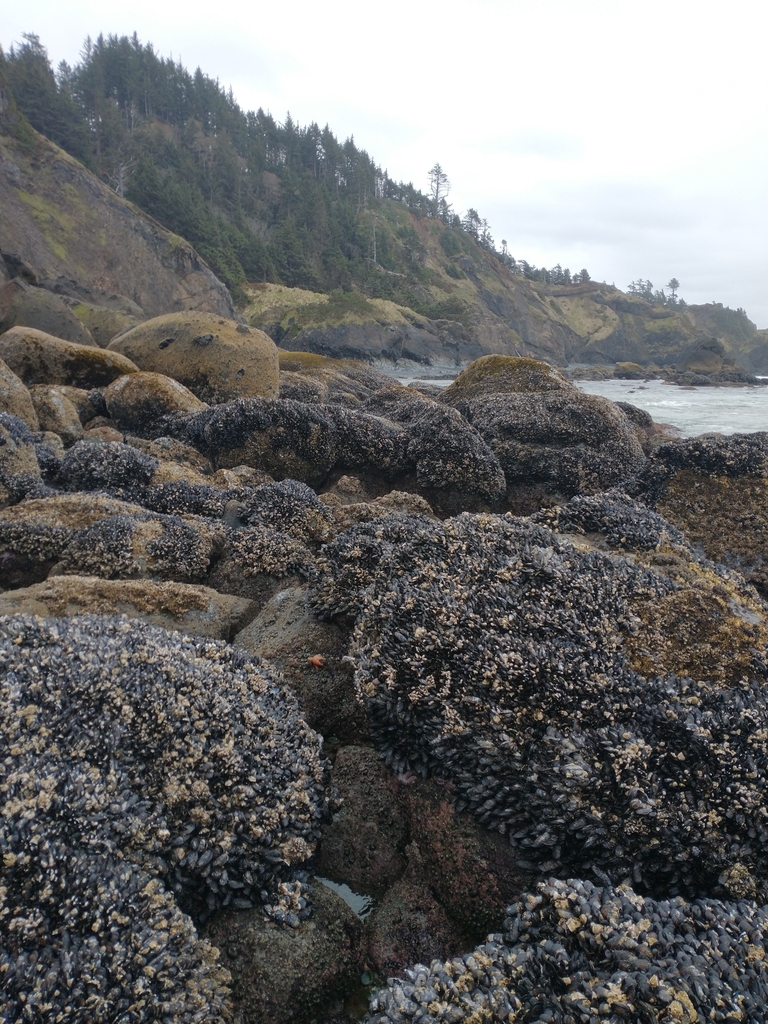
no rights reserved · CC0
Family: Mytilidae · Class: Bivalvia · Order: Mytiloida
Mytilus californianus (California Mussel) is a California animal in the Mytilidae family.
The California mussel is a large marine bivalve mollusk that forms extensive beds along the Pacific coast. Adults typically reach 150-250 mm (6-10 inches) in length, with shells displaying a distinctive blue-black to dark brown exterior and pearlescent interior surface. The elongated shell is characterized by prominent growth rings and a pointed umbo at the anterior end. Strong byssal threads anchor individuals to hard substrates, allowing them to withstand powerful wave action. California mussels range from Alaska to Baja California, Mexico, with their primary distribution centered along the California coast. They are particularly abundant from central California northward, where they form dense aggregations that can extend for hundreds of meters along suitable rocky shorelines. The species occurs throughout the entire California coastline, from the Oregon border south to the Mexican border. This species inhabits rocky intertidal and shallow subtidal zones, typically occurring from the middle intertidal zone down to depths of 24 meters (79 feet). California mussels favor exposed surf zones where wave action is strong, attaching to hard surfaces including bedrock, boulders, and artificial structures such as piers and jetties. They form extensive beds that create three-dimensional habitat structure, providing shelter and attachment sites for numerous other marine organisms including barnacles, sea anemones, and various algae. California mussels are filter feeders, extracting plankton and organic particles from seawater using their gills. They spawn during spring and summer months, releasing gametes into the water column where external fertilization occurs. Larvae spend several weeks in the plankton before settling and metamorphosing into juvenile mussels. Adults can live for decades, with some individuals reaching ages exceeding 50 years. The species serves as a critical ecosystem engineer, with their beds supporting diverse communities of invertebrates, fish, and seabirds. Sea otters, sea stars, and various shorebirds are important predators of California mussels. California mussels are not federally or state listed as threatened or endangered. However, they face various pressures including harvest for human consumption, ocean acidification, warming sea temperatures, and pollution. Ocean acidification poses a particular concern as it can weaken shell formation and make mussels more vulnerable to predation and wave damage. The species serves as an indicator organism for coastal ecosystem health, with mussel populations monitored as part of various marine protected area and water quality assessment programs. Research has documented their role as bioaccumulators of marine pollutants and pathogens, making them valuable sentinels for environmental contamination. Climate change effects on upwelling patterns and sea surface temperatures may alter their distribution and recruitment success in coming decades.
Classification
Class: Bivalvia · Order: Mytiloida · Family: Mytilidae
Frequently asked questions
How is Mytilus californianus classified?
Mytilus californianus belongs to class Bivalvia, order Mytiloida, family Mytilidae.
What family does Mytilus californianus belong to?
Mytilus californianus is in the Mytilidae family.
What is Mytilus californianus?
The California mussel is a large marine bivalve mollusk that forms extensive beds along the Pacific coast.
Is Mytilus californianus found in California?
Yes. Mytilus californianus is recorded in California in The California Species Project's catalogue.
More California species
This species has no close relatives in our California data — here are other species to explore.
Data from The California Species Project — 14,000+ California species with verified data from CNPS, CDFW, USFWS, and more.