Nannopterum brasilianum
Neotropic Cormorant
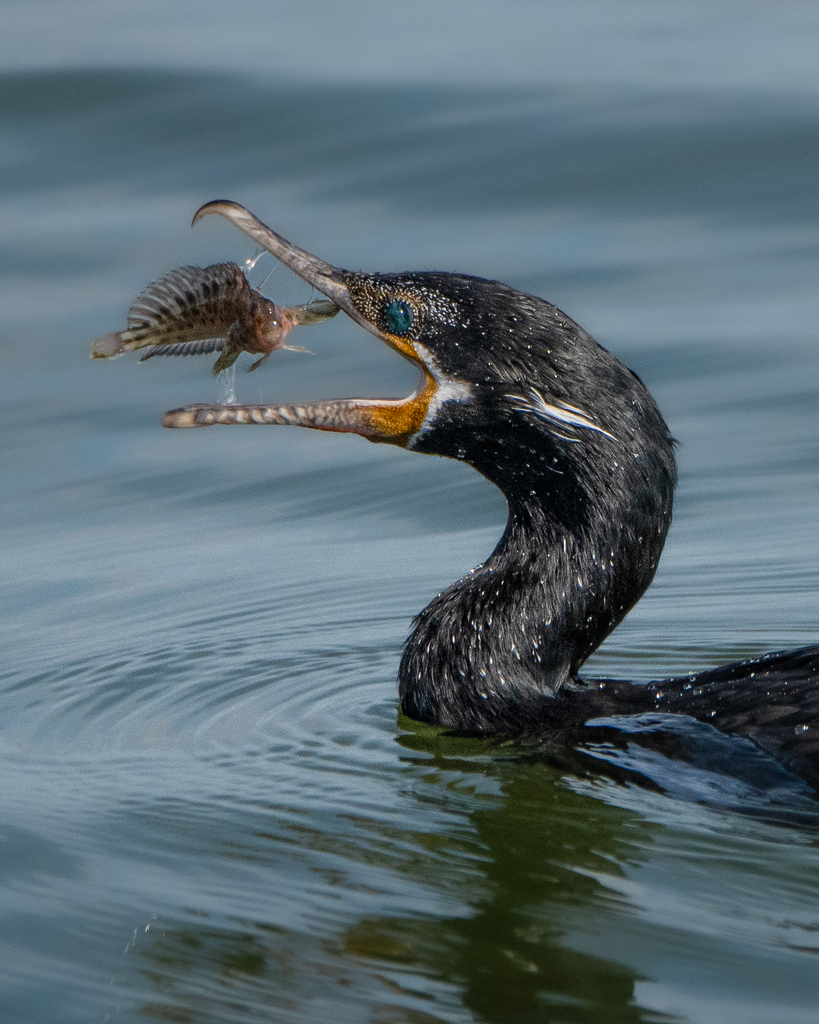
(c) Becca, some rights reserved (CC BY) · licence
Family: Phalacrocoracidae · Class: Aves · Order: Suliformes
Nannopterum brasilianum (Neotropic Cormorant) is a California animal in the Phalacrocoracidae family.
The Neotropic Cormorant is a medium-sized waterbird measuring 58-73 cm (23-29 inches) in length with a wingspan of 100-110 cm (39-43 inches). Adults weigh 1.0-1.8 kg (2.2-4.0 pounds). The species displays dark brownish-black plumage with a greenish gloss during breeding season. The long, slender neck and hooked bill are characteristic of cormorants. Breeding adults develop a distinctive white border around the gular pouch and white plumes on the head and neck. The gular pouch is yellow-orange with a white posterior margin. Juveniles are brownish with lighter underparts and lack the adult's glossy sheen. Historically, Neotropic Cormorants were primarily distributed from Mexico through Central and South America. The species has expanded its range northward since the 1960s, reaching the southwestern United States. In California, Neotropic Cormorants are now regular but uncommon visitors, primarily observed in the Salton Sea region of Imperial and Riverside counties. Occasional sightings occur along the Colorado River and in southern coastal areas. The species continues to expand its range in Texas, Louisiana, Arizona, and New Mexico. Neotropic Cormorants inhabit freshwater and brackish wetlands, including lakes, ponds, marshes, slow-moving rivers, and estuaries. They prefer shallow waters with abundant fish populations and suitable perching sites such as dead trees, posts, or rock formations. The species typically occurs at elevations below 1,500 meters (4,920 feet) but can be found at higher elevations in suitable habitat. In California, they are most commonly observed around the Salton Sea and associated wetlands. These cormorants are skilled underwater pursuit predators, diving from the surface to depths of 1-8 meters to capture fish, which comprise 85-90% of their diet. They also consume crustaceans, amphibians, and aquatic insects. Neotropic Cormorants are gregarious, often foraging in loose flocks and roosting communally. Breeding occurs in colonies, typically in trees or shrubs near water. Nesting season varies geographically but generally occurs from March through August. Females lay 2-4 pale blue eggs in a stick nest lined with vegetation. Incubation lasts 25-30 days, and young fledge after 35-40 days. The Neotropic Cormorant is not federally listed and has no special conservation status in California. Globally, the species is classified as Least Concern by the International Union for Conservation of Nature due to stable or increasing populations and expanding range. In California, the species remains uncommon but appears to be increasing in frequency of occurrence. Climate change and habitat modification may facilitate continued range expansion northward. Primary threats include habitat loss, water pollution, and human disturbance at roosting and nesting sites, though these impacts are generally localized.
Classification
Class: Aves · Order: Suliformes · Family: Phalacrocoracidae
Frequently asked questions
How is Nannopterum brasilianum classified?
Nannopterum brasilianum belongs to class Aves, order Suliformes, family Phalacrocoracidae.
What family does Nannopterum brasilianum belong to?
Nannopterum brasilianum is in the Phalacrocoracidae family.
What is Nannopterum brasilianum?
The Neotropic Cormorant is a medium-sized waterbird measuring 58-73 cm (23-29 inches) in length with a wingspan of 100-110 cm (39-43 inches).
Is Nannopterum brasilianum found in California?
Yes. Nannopterum brasilianum is recorded in California in The California Species Project's catalogue.
Related species
Other California species in the same genus, family, or bioregion.
Data from The California Species Project — 14,000+ California species with verified data from CNPS, CDFW, USFWS, and more.