Nathalis iole
Dainty Sulphur
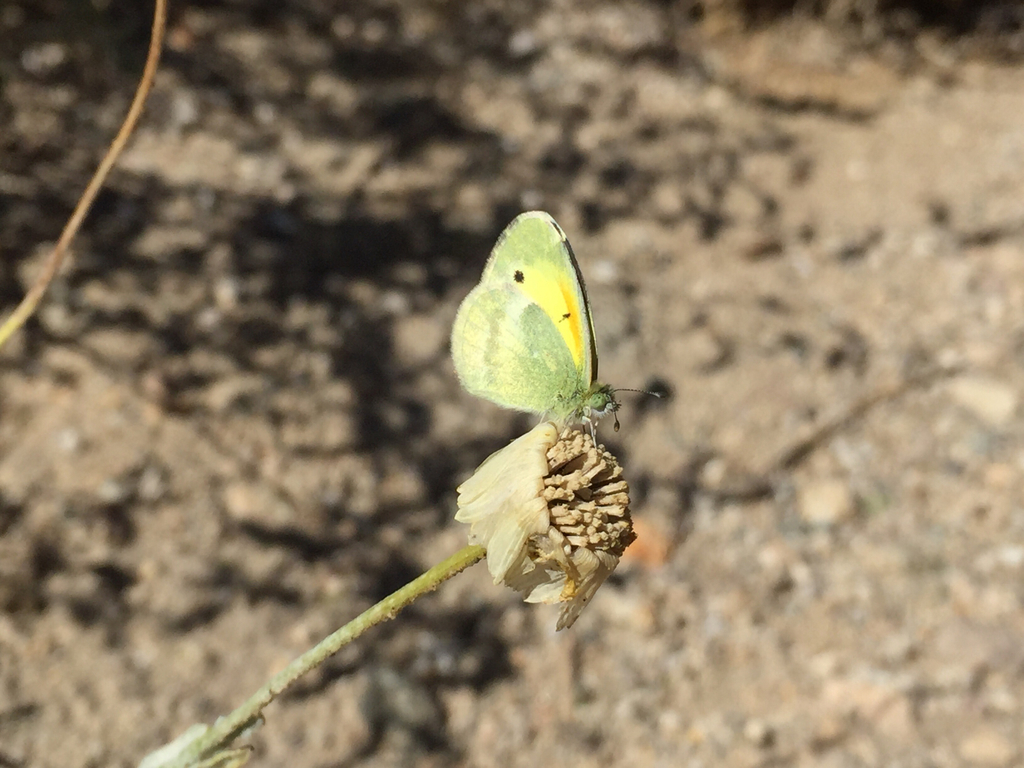
no rights reserved · CC0
Family: Pieridae · Class: Insecta · Order: Lepidoptera
Nathalis iole (Dainty Sulphur) is a California animal in the Pieridae family.
The Dainty Sulphur is a small butterfly in the family Pieridae, with adults measuring 19-25 mm (0.75-1.0 inches) in wingspan. Males display bright yellow forewings with black borders and markings, while the hindwings are pale yellow to white with variable black spotting. Females are typically larger and paler, with extensive white areas on the wings and reduced yellow coloration. The undersides of both sexes show mottled patterns of yellow, white, and black markings. The species can be distinguished from similar sulphur butterflies by its diminutive size and the distinctive pattern of black spots on the wing undersides. The Dainty Sulphur maintains year-round resident populations from Guatemala north to peninsular Florida and throughout the southwestern United States, including California, Arizona, New Mexico, and Texas. The species cannot survive cold winters and therefore recolonizes northern territories annually through summer dispersal. Each summer, populations expand northward through the Great Plains, reaching as far as southeast Washington, southeast Idaho, Wyoming, and Minnesota. In California, the species occurs primarily in the southern counties and Central Valley, with occasional records extending north during favorable years. This butterfly inhabits open, disturbed areas including vacant lots, roadsides, agricultural fields, desert washes, and suburban gardens. The species shows a preference for low-elevation areas below 1,500 meters (4,900 feet), though it occasionally occurs at higher elevations during dispersal events. Adults are frequently observed in areas with abundant flowering plants, particularly in regions with extended growing seasons and minimal frost. Dainty Sulphurs are multivoltine, producing multiple generations per year in suitable climates, with continuous breeding in frost-free areas. Larvae feed exclusively on low-growing plants in the aster family (Asteraceae), with preferred host plants including shepherd's needle (Bidens pilosa), sneezeweed (Helenium species), fetid marigold (Dyssodia species), and cultivated marigold (Tagetes species). Females deposit single, pale yellow eggs on flower buds and young leaves of host plants. The caterpillars are green with pale lateral stripes and feed on flowers, buds, and tender foliage. Adults are active year-round in southern populations, with peak activity during warmer months. Males engage in patrolling behavior to locate mates, often flying close to the ground in areas with suitable host plants. The Dainty Sulphur is not federally or state-listed and maintains stable populations throughout its range. The species benefits from human disturbance that creates open habitats and from the cultivation of ornamental marigolds in gardens and landscaping. Climate change may be facilitating range expansion, as warmer temperatures allow for earlier spring emergence and extended breeding seasons. The primary threats are habitat loss due to urbanization and intensive agriculture, though the species' ability to utilize weedy and cultivated plants provides some resilience. Population monitoring is limited, but the species appears to be maintaining its distribution and abundance across most of its range.
Classification
Class: Insecta · Order: Lepidoptera · Family: Pieridae
Frequently asked questions
How is Nathalis iole classified?
Nathalis iole belongs to class Insecta, order Lepidoptera, family Pieridae.
What family does Nathalis iole belong to?
Nathalis iole is in the Pieridae family.
What is Nathalis iole?
The Dainty Sulphur is a small butterfly in the family Pieridae, with adults measuring 19-25 mm (0.75-1.0 inches) in wingspan.
Is Nathalis iole found in California?
Yes. Nathalis iole is recorded in California in The California Species Project's catalogue.
Related species
Other California species in the same genus, family, or bioregion.
Data from The California Species Project — 14,000+ California species with verified data from CNPS, CDFW, USFWS, and more.