Navanax inermis
California Aglaja
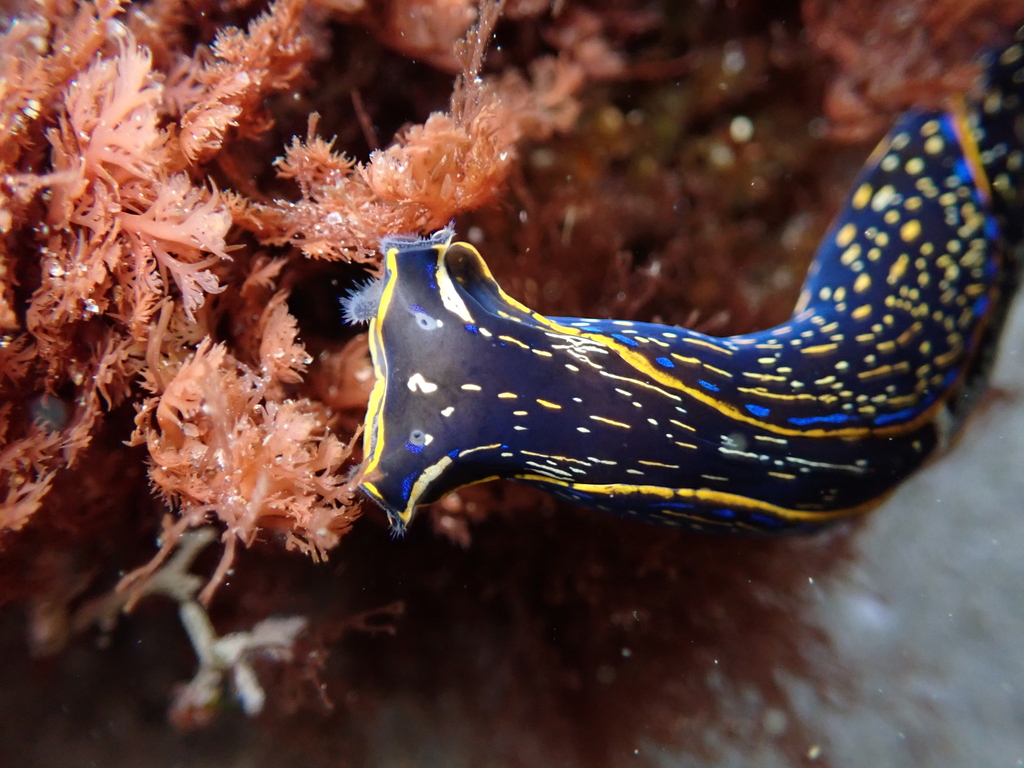
(c) Lisa Biasillo, some rights reserved (CC BY) · licence
Family: Aglajidae · Class: Gastropoda · Order: Cephalaspidea
Navanax inermis (California Aglaja) is a California animal in the Aglajidae family.
The California aglaja (Navanax inermis) is a marine gastropod mollusk belonging to the family Aglajidae within the order Cephalaspidea. This sea slug, also known as a sea hare, is a predatory opisthobranch that inhabits coastal waters of California and other Pacific regions. Navanax inermis displays a distinctive elongated body form typical of cephalaspidean gastropods. The species lacks an external shell, instead possessing a reduced internal shell structure. The body is soft and muscular, with a well-developed head region bearing sensory tentacles. Coloration varies but typically includes translucent to opaque body tones that may provide camouflage in its marine environment. The California aglaja occurs along the Pacific coast, with documented populations in California coastal waters. According to research conducted in Ballona Creek and Ballona Wetlands, the species has been recorded in estuarine environments in Los Angeles County (Merkel 2009). The California Department of Fish and Wildlife has documented its presence in various marine habitats, including areas surveyed as part of the California Halibut Enhanced Status Report, where it was listed among invertebrate species associated with halibut habitat. This marine gastropod inhabits estuarine and coastal marine environments, including areas where freshwater and saltwater mix. Research in Ballona Creek documented Navanax inermis in waters with varying salinity levels, from tidally influenced brackish conditions to more marine salinities (Merkel 2009). The species appears to tolerate a range of environmental conditions, including areas with low turbidity and adequate dissolved oxygen levels. Water temperature tolerances observed in field studies ranged from approximately 18°C to 28°C. Navanax inermis is a carnivorous gastropod that feeds primarily on other mollusks, particularly smaller sea slugs and gastropods. The species is known for its predatory behavior, using its muscular pharynx to consume prey. Like other cephalaspideans, it likely employs chemical detection to locate food sources. Reproduction involves the deposition of gelatinous egg masses, though specific breeding seasons and reproductive cycles in California waters require further documentation. The conservation status of Navanax inermis has not been formally assessed by state or federal agencies, and it does not appear on endangered species lists as of December 2025. The species appears to maintain stable populations in suitable coastal habitats, though like many marine invertebrates, it may face pressures from coastal development, water quality changes, and climate-related alterations to ocean chemistry. Monitoring of invertebrate communities in areas like Ballona Wetlands provides valuable data on population trends, though specific abundance estimates for this species are not well documented. The presence of Navanax inermis in restoration project surveys suggests it may serve as an indicator species for estuarine ecosystem health.
Classification
Class: Gastropoda · Order: Cephalaspidea · Family: Aglajidae
Frequently asked questions
How is Navanax inermis classified?
Navanax inermis belongs to class Gastropoda, order Cephalaspidea, family Aglajidae.
What family does Navanax inermis belong to?
Navanax inermis is in the Aglajidae family.
What is Navanax inermis?
The California aglaja (Navanax inermis) is a marine gastropod mollusk belonging to the family Aglajidae within the order Cephalaspidea.
Is Navanax inermis found in California?
Yes. Navanax inermis is recorded in California in The California Species Project's catalogue.
More California species
This species has no close relatives in our California data — here are other species to explore.
Data from The California Species Project — 14,000+ California species with verified data from CNPS, CDFW, USFWS, and more.