Necrophilus hydrophiloides
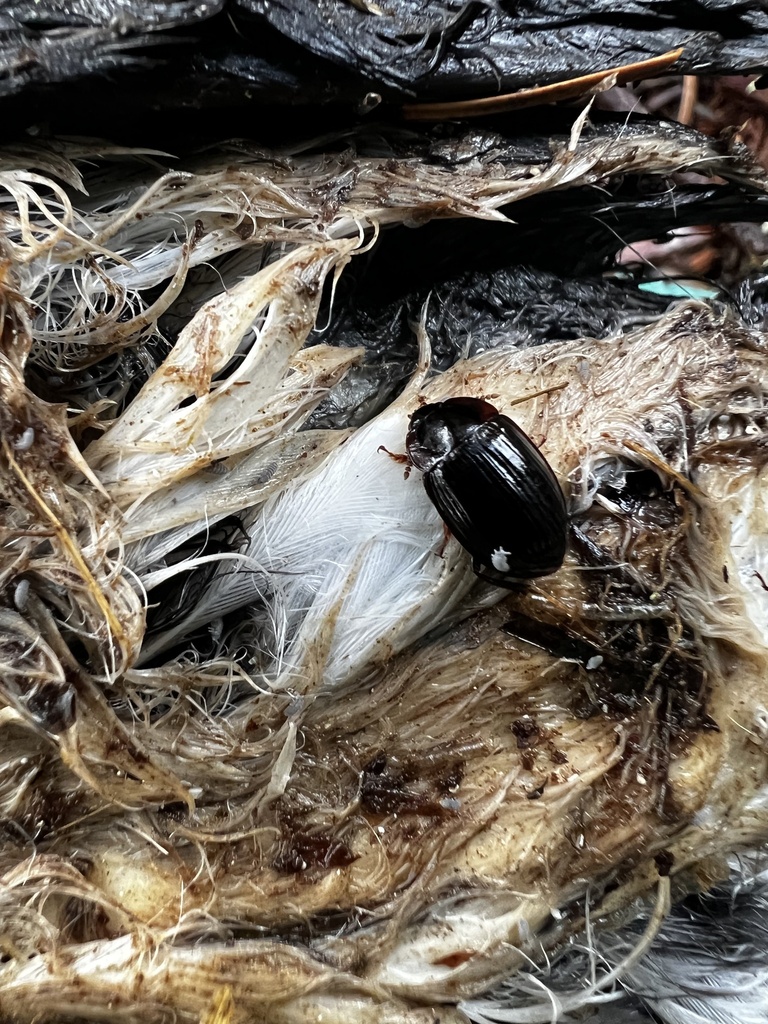
(c) Aiva Noringseth, some rights reserved (CC BY) · licence
Family: Agyrtidae · Class: Insecta · Order: Coleoptera
Necrophilus hydrophiloides is a California animal in the Agyrtidae family.
Necrophilus hydrophiloides, commonly known as the flat brown scavenger beetle, is a small beetle in the primitive carrion beetle family Agyrtidae. Adults measure approximately 11 mm in length and display a characteristic flattened, brown coloration typical of the genus (BugGuide 2012). The species exhibits the distinctive morphology of carrion beetles, with a robust body adapted for accessing decomposing organic matter. This species occurs in western North America, with documented records from California. A specimen was collected in Aromas, San Benito County, demonstrating the species' presence in central coastal California (BugGuide 2012). The full extent of its California distribution requires further documentation, as records for this family are sparse in the scientific literature. Necrophilus hydrophiloides inhabits diverse terrestrial ecosystems, including live oak and chaparral communities. The San Benito County specimen was collected in live oak/chaparral habitat, indicating the species' association with Mediterranean-type vegetation communities characteristic of California's coast ranges (BugGuide 2012). As a member of the carrion beetle complex, the species likely occupies microhabitats where decomposing organic matter accumulates, including forest floor leaf litter, rotting logs, and areas with carrion. Like other members of the family Agyrtidae, N. hydrophiloides functions as a decomposer in ecosystem nutrient cycling. These beetles are attracted to decaying organic matter, where they feed on decomposing plant and animal material. The species exhibits nocturnal activity patterns, as evidenced by its attraction to black light and mercury vapor traps during nighttime collecting efforts (BugGuide 2012). Adults are active during late winter months, with the San Benito County specimen collected in February, suggesting potential winter breeding activity or extended adult longevity. The reproductive biology and larval ecology of this species remain poorly documented. Like related carrion beetles, larvae likely develop in decomposing organic substrates where adults deposit eggs. The family Agyrtidae represents an ancient lineage of beetles with primitive characteristics, making them significant for understanding coleopteran evolution and decomposer community structure. No specific conservation status has been assigned to Necrophilus hydrophiloides at federal or state levels. The species appears in the U.S. Fish and Wildlife Service taxonomic database (TSN 1014324) but lacks formal conservation assessment (USFWS taxonomic tree). Limited occurrence records suggest either genuine rarity or insufficient sampling effort. The species' dependence on natural decomposition processes and undisturbed habitat may make it sensitive to habitat modification and intensive land management practices. Scientific documentation for this species remains extremely limited. The information presented here synthesizes available data from taxonomic databases and community observations. Enhanced survey efforts in appropriate California habitats, particularly oak woodlands and chaparral communities, would improve understanding of this species' distribution, abundance, and ecological requirements.
Classification
Class: Insecta · Order: Coleoptera · Family: Agyrtidae
Frequently asked questions
How is Necrophilus hydrophiloides classified?
Necrophilus hydrophiloides belongs to class Insecta, order Coleoptera, family Agyrtidae.
What family does Necrophilus hydrophiloides belong to?
Necrophilus hydrophiloides is in the Agyrtidae family.
What is Necrophilus hydrophiloides?
Necrophilus hydrophiloides, commonly known as the flat brown scavenger beetle, is a small beetle in the primitive carrion beetle family Agyrtidae.
Is Necrophilus hydrophiloides found in California?
Yes. Necrophilus hydrophiloides is recorded in California in The California Species Project's catalogue.
More California species
This species has no close relatives in our California data — here are other species to explore.
Data from The California Species Project — 14,000+ California species with verified data from CNPS, CDFW, USFWS, and more.