Necydalis cavipennis
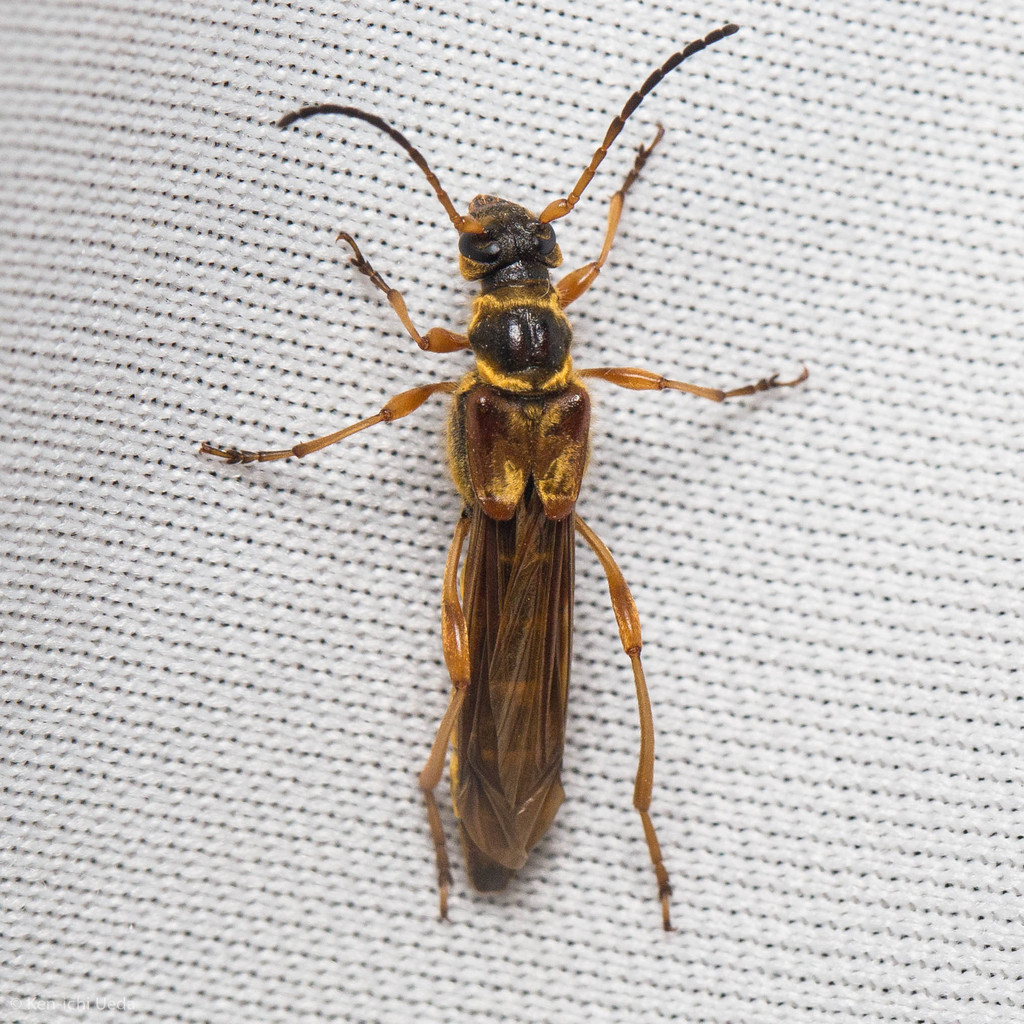
(c) Ken-ichi Ueda, some rights reserved (CC BY) · licence
Family: Cerambycidae · Class: Insecta · Order: Coleoptera
Necydalis cavipennis is a California animal in the Cerambycidae family.
Necydalis cavipennis is a beetle species belonging to the longhorn beetle family Cerambycidae, subfamily Necydalinae. This species represents one of the less well-documented members of the Necydalini tribe, a group characterized by distinctive morphological features that distinguish them from other cerambycid beetles. The physical characteristics of N. cavipennis have not been comprehensively documented in the available scientific literature. Like other members of the Necydalinae subfamily, this species likely exhibits the characteristic elongated antennae and cylindrical body form typical of longhorn beetles. The subfamily Necydalinae is known for species that often have reduced or modified elytra (wing covers), though specific details regarding N. cavipennis morphology require further taxonomic study. The geographic distribution of Necydalis cavipennis remains poorly documented. While the species appears in the U.S. Fish and Wildlife Service taxonomic database, specific range information and occurrence records are not readily available in current scientific literature. This lack of distributional data suggests either a very limited range, extremely low population densities, or insufficient survey effort for this particular species. Habitat requirements for N. cavipennis have not been well characterized. Members of the Cerambycidae family typically develop as wood-boring larvae in dead or dying trees, with different species showing preferences for specific host tree species or wood conditions. Adult longhorn beetles are often found on flowers, tree bark, or vegetation where they feed on pollen, nectar, or plant fluids. Without specific ecological studies, the habitat preferences of N. cavipennis remain unknown. The life cycle and behavioral ecology of this species lack detailed documentation. Longhorn beetles generally undergo complete metamorphosis, with eggs laid in bark crevices or wood surfaces. Larvae develop within wood tissues, creating galleries as they feed and grow over one to several years depending on the species. Adults typically emerge during warmer months and engage in mating behaviors, often involving chemical communication through pheromones. The specific timing of emergence, mating behaviors, and larval development period for N. cavipennis have not been studied. The conservation status of Necydalis cavipennis is not established, as the species lacks federal or state listing status as of December 2025. The absence of population data, distributional information, and ecological studies makes it impossible to assess current conservation needs or population trends. This data gap represents a significant knowledge deficit for California's beetle fauna, particularly given the state's rich biodiversity and the potential for undocumented species decline. Scientific documentation for this species remains extremely limited. The information presented here synthesizes available taxonomic placement from federal databases, but substantial knowledge gaps exist regarding distribution, ecology, and conservation status. Enhanced survey efforts and taxonomic research are needed to better understand this species' role in California's ecosystems and any potential conservation concerns.
Classification
Class: Insecta · Order: Coleoptera · Family: Cerambycidae
Frequently asked questions
How is Necydalis cavipennis classified?
Necydalis cavipennis belongs to class Insecta, order Coleoptera, family Cerambycidae.
What family does Necydalis cavipennis belong to?
Necydalis cavipennis is in the Cerambycidae family.
What is Necydalis cavipennis?
Necydalis cavipennis is a beetle species belonging to the longhorn beetle family Cerambycidae, subfamily Necydalinae.
Is Necydalis cavipennis found in California?
Yes. Necydalis cavipennis is recorded in California in The California Species Project's catalogue.
Related species
Other California species in the same genus, family, or bioregion.
Data from The California Species Project — 14,000+ California species with verified data from CNPS, CDFW, USFWS, and more.