Neduba steindachneri
Steindachner’s Shieldback
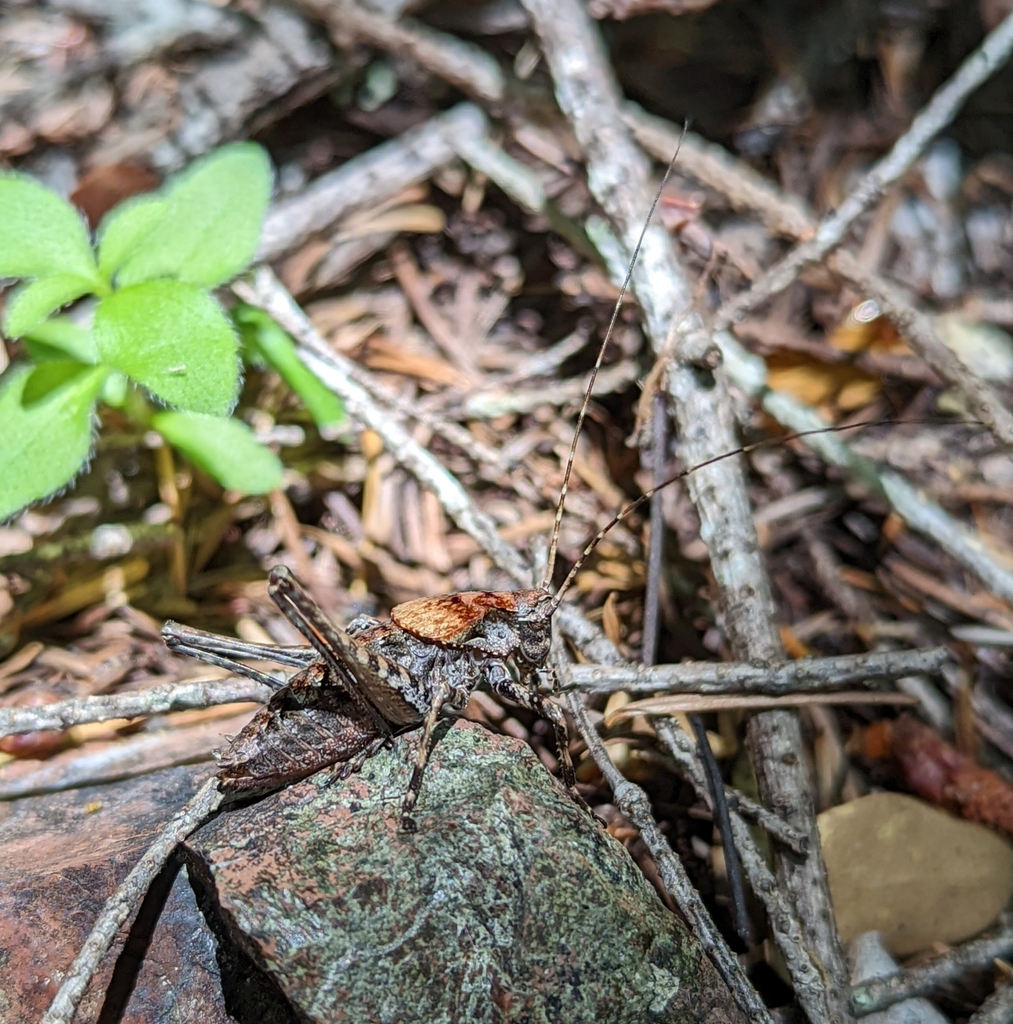
(c) Logan J.L. Bradley, some rights reserved (CC BY) · licence
Family: Tettigoniidae · Class: Insecta · Order: Orthoptera
Neduba steindachneri (Steindachner’s Shieldback) is a California animal in the Tettigoniidae family.
Steindachner's shieldback (Neduba steindachneri) is a flightless katydid in the family Tettigoniidae, subfamily Tettigoniinae. This shield-backed katydid exhibits the characteristic robust build and reduced wing development typical of the genus Neduba. Adults possess a prominent shield-like pronotum that extends over the thorax, giving the group its common name. The species displays the typical orthopteran body plan with powerful hind legs adapted for jumping and long antennae that exceed body length. The species occurs in western North America, though specific distributional data for Neduba steindachneri remains limited in published literature. The genus Neduba is primarily distributed along the Pacific Coast and adjacent mountain ranges from British Columbia south through California (BugGuide 2025). Members of this genus typically inhabit montane and coastal environments (BugGuide 2025), suggesting N. steindachneri likely follows similar biogeographic patterns. Detailed county-level distribution records have not been well documented for this species. Habitat preferences for Steindachner's shieldback have not been comprehensively studied. Based on related Neduba species, this katydid likely occurs in forest understory environments, chaparral, and mixed woodland habitats, as shield-backed katydids generally prefer areas with dense vegetation that provides shelter and foraging opportunities (BugGuide 2025). The genus is associated with both coniferous and mixed deciduous forests, often at moderate to high elevations. Microhabitat selection likely involves areas with leaf litter and woody debris that offer protection during daylight hours. Like other members of Tettigoniinae, Steindachner's shieldback is likely omnivorous, feeding on plant material, fungi, and small invertebrates. Shield-backed katydids are typically nocturnal, emerging at night to forage (BugGuide 2025). The species is probably univoltine, producing one generation per year as is common among montane Orthoptera. Reproductive behavior likely follows the general pattern of tettigoniids, with males producing acoustic signals to attract females, though specific details of mating behavior and seasonal timing for N. steindachneri have not been documented. Based on related species, females presumably deposit eggs in soil or plant material, where they overwinter before hatching in spring or early summer. The conservation status of Neduba steindachneri has not been formally assessed by state or federal agencies. No specific population data or trend information is available for this species. Like many specialized invertebrates, the species may be vulnerable to habitat modification and climate change impacts on montane ecosystems. The limited available information suggests this species, like other members of the genus, may have restricted distributions that could make populations susceptible to environmental changes. Research priorities should include basic distributional surveys, habitat requirement studies, and population assessments to inform conservation planning. Detailed ecological studies of this species are lacking. The above information synthesizes available data from taxonomic references and observations of related species, though comprehensive biological and ecological documentation remains incomplete for this species.
Classification
Class: Insecta · Order: Orthoptera · Family: Tettigoniidae
Frequently asked questions
How is Neduba steindachneri classified?
Neduba steindachneri belongs to class Insecta, order Orthoptera, family Tettigoniidae.
What family does Neduba steindachneri belong to?
Neduba steindachneri is in the Tettigoniidae family.
What is Neduba steindachneri?
Steindachner's shieldback (Neduba steindachneri) is a flightless katydid in the family Tettigoniidae, subfamily Tettigoniinae.
Is Neduba steindachneri found in California?
Yes. Neduba steindachneri is recorded in California in The California Species Project's catalogue.
Related species
Other California species in the same genus, family, or bioregion.
Data from The California Species Project — 14,000+ California species with verified data from CNPS, CDFW, USFWS, and more.