Nemapogon defectella
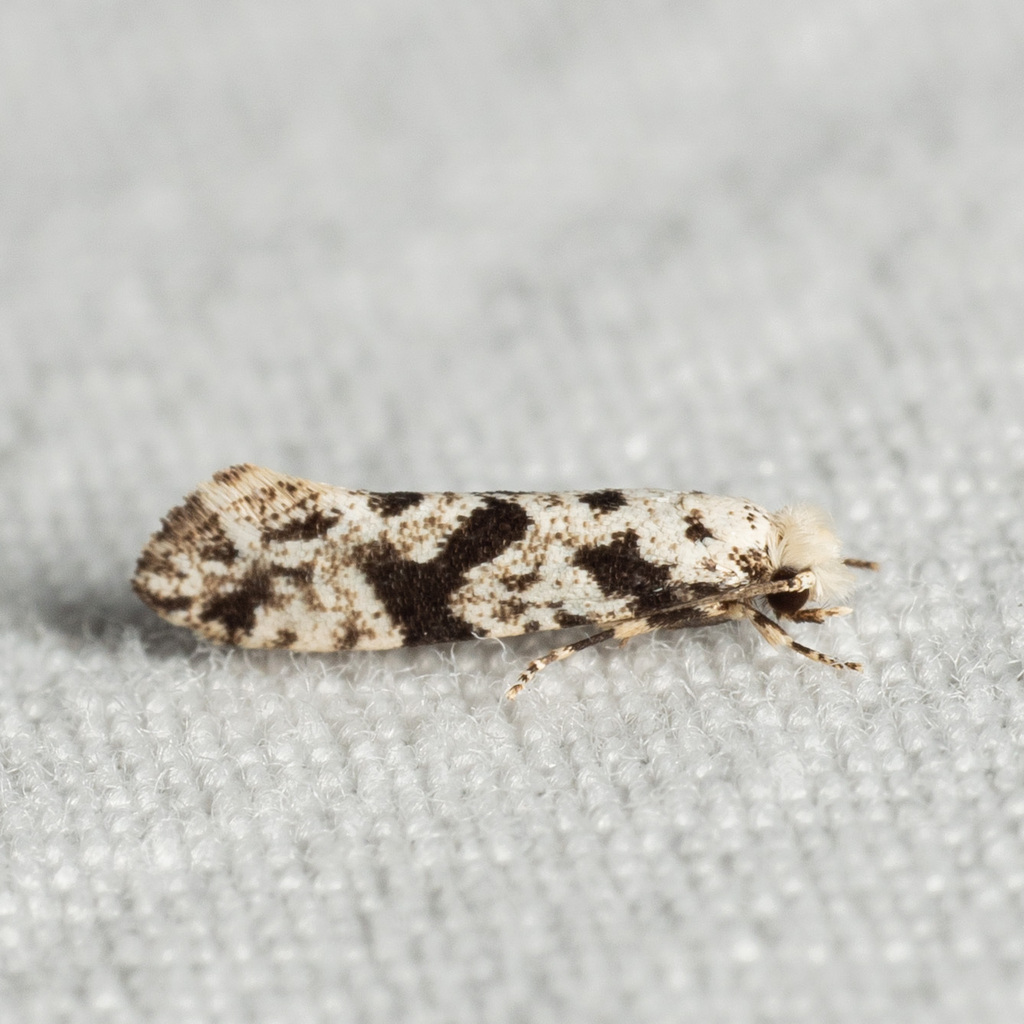
(c) Justin Williams, some rights reserved (CC BY) · licence
Family: Tineidae · Class: Insecta · Order: Lepidoptera
Nemapogon defectella is a California animal in the Tineidae family.
Nemapogon defectella is a small moth in the family Tineidae, commonly known as fungus moths or clothes moths. This species belongs to a genus of microlepidoptera characterized by their association with fungal substrates and organic debris. Adult moths typically measure 8 to 12 millimeters in wingspan, with forewings displaying a mottled brown and gray coloration that provides effective camouflage against bark and decaying organic matter. The forewings often exhibit darker scaling along the costa and distinctive pale patches near the wing tips. The hindwings are typically lighter, ranging from pale gray to whitish, with long fringe scales along the margins characteristic of the Tineidae family. Nemapogon defectella occurs in the southwestern United States, where it has been documented across multiple states in this arid and semi-arid region. The species' distribution appears to follow patterns typical of many Tineidae, which are often associated with specific microhabitat conditions and organic substrate availability. Within its range, the species likely occurs in scattered populations determined by the presence of suitable larval food sources and environmental conditions. The habitat requirements of N. defectella reflect the ecological preferences typical of Nemapogon species, which are generally associated with fungal-rich environments. The species likely inhabits areas where decaying organic matter, including dead wood, leaf litter, and fungal growth, provides suitable conditions for larval development. These microhabitats are commonly found in woodland edges, riparian zones, and areas with accumulated organic debris. The southwestern distribution suggests adaptation to relatively dry conditions compared to many other Tineidae species. Like other members of the genus Nemapogon, this species likely exhibits a lifecycle closely tied to fungal substrates. Larvae are presumed to feed on fungal mycelia and associated organic matter, developing within or beneath decaying wood, bark, or other organic materials. The larval stage likely represents the primary feeding period, with larvae creating silk-lined galleries or chambers within their substrate. Adult moths are typically active during warmer months, with flight periods varying based on local climate conditions. Males may be attracted to artificial lights, a behavior common among many Tineidae species. No specific conservation status has been assigned to Nemapogon defectella at federal or state levels. The species is not currently listed under the Endangered Species Act, nor does it appear on California's special concern species lists. Limited taxonomic and ecological research on many microlepidoptera species means that population trends and conservation needs are poorly understood. The specialized habitat requirements typical of Nemapogon species may make populations vulnerable to habitat modification, particularly the removal of dead wood and organic debris that serve as larval substrates. Climate change impacts on fungal communities in the southwestern United States could potentially affect this species, though specific research on such interactions is lacking.
Classification
Class: Insecta · Order: Lepidoptera · Family: Tineidae
Frequently asked questions
How is Nemapogon defectella classified?
Nemapogon defectella belongs to class Insecta, order Lepidoptera, family Tineidae.
What family does Nemapogon defectella belong to?
Nemapogon defectella is in the Tineidae family.
What is Nemapogon defectella?
Nemapogon defectella is a small moth in the family Tineidae, commonly known as fungus moths or clothes moths.
Is Nemapogon defectella found in California?
Yes. Nemapogon defectella is recorded in California in The California Species Project's catalogue.
Related species
Other California species in the same genus, family, or bioregion.
Data from The California Species Project — 14,000+ California species with verified data from CNPS, CDFW, USFWS, and more.