Nemapogon granella
European Grain Moth
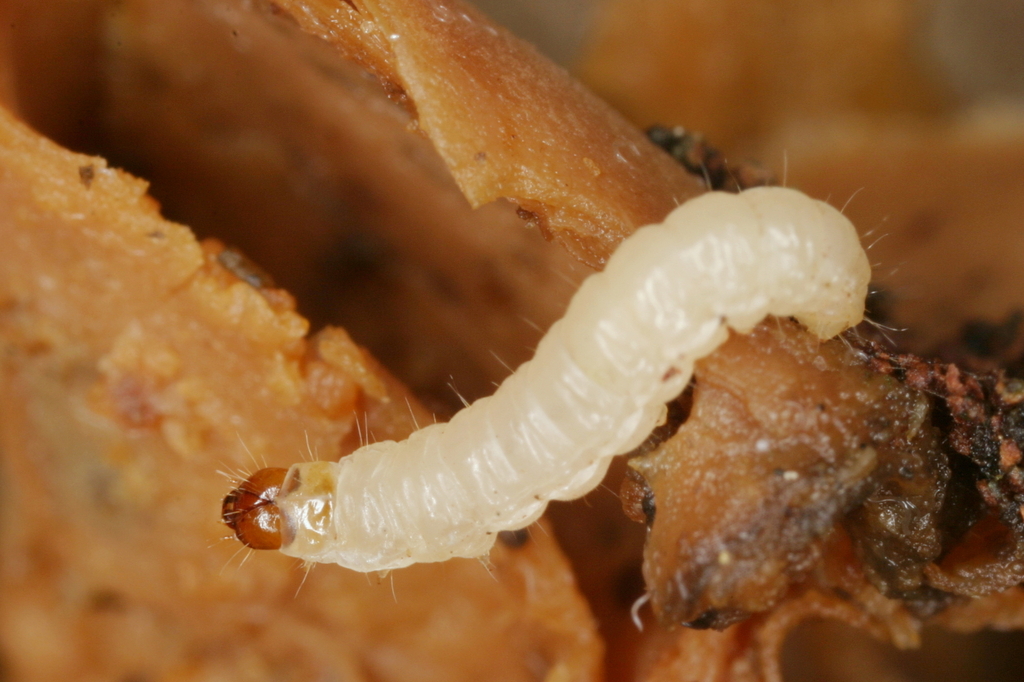
(c) ingridaltmann, some rights reserved (CC BY) · licence
Family: Tineidae · Class: Insecta · Order: Lepidoptera
Nemapogon granella (European Grain Moth) is a California animal in the Tineidae family.
The European grain moth (Nemapogon granella) is a small lepidopteran pest species belonging to the family Tineidae. Adults measure 8 to 14 millimeters (0.31 to 0.55 inches) in wingspan, with forewings displaying a mottled brown and gray coloration marked by darker transverse bands. The hindwings are pale gray to whitish with long fringes characteristic of the Tineidae family. Males can be distinguished from females by their more pronounced antennal segments and slightly smaller size. Originally native to Europe and western Asia, the European grain moth has established populations across temperate regions worldwide through human commerce. The species was first recorded in North America in the early 20th century and has since spread throughout the continental United States and southern Canada. In California, established populations occur primarily in agricultural regions of the Central Valley, coastal areas, and urban centers where stored grain products are present. The moth has been documented in warehouses, grain elevators, and processing facilities from sea level to elevations of approximately 1,500 meters (4,900 feet). This species inhabits indoor environments associated with stored grain products, including wheat, barley, oats, rye, and corn. Adults are commonly found in granaries, flour mills, food processing plants, and residential pantries. The moth can also develop in bird nests and accumulated organic debris in attics or storage areas. Temperature preferences range from 15 to 30 degrees Celsius (59 to 86 degrees Fahrenheit), with optimal development occurring between 20 and 25 degrees Celsius (68 to 77 degrees Fahrenheit). Larvae feed primarily on damaged or deteriorating cereal grains, preferring kernels that have been cracked or partially consumed by other pests. The complete life cycle requires 8 to 12 weeks under favorable conditions, with females depositing 50 to 200 eggs directly on or near food sources. Development occurs through five larval instars, with mature larvae spinning silken cocoons for pupation. Adults are weak fliers and typically remain close to breeding sites. The species exhibits continuous breeding in heated indoor environments, producing 3 to 4 generations annually in California. The European grain moth is not subject to conservation measures, as it is considered an introduced pest species. Management focuses on integrated pest control strategies including sanitation, temperature manipulation, and targeted pesticide applications. The moth causes economic damage through direct feeding on stored products and contamination with silk webbing and frass. In commercial facilities, infestations can result in product rejection and significant economic losses. Regular monitoring using pheromone traps helps detect early population establishment before widespread damage occurs.
Classification
Class: Insecta · Order: Lepidoptera · Family: Tineidae
Frequently asked questions
How is Nemapogon granella classified?
Nemapogon granella belongs to class Insecta, order Lepidoptera, family Tineidae.
What family does Nemapogon granella belong to?
Nemapogon granella is in the Tineidae family.
What is Nemapogon granella?
The European grain moth (Nemapogon granella) is a small lepidopteran pest species belonging to the family Tineidae.
Is Nemapogon granella found in California?
Yes. Nemapogon granella is recorded in California in The California Species Project's catalogue.
Related species
Other California species in the same genus, family, or bioregion.
Data from The California Species Project — 14,000+ California species with verified data from CNPS, CDFW, USFWS, and more.