Nemapogon molybdanella
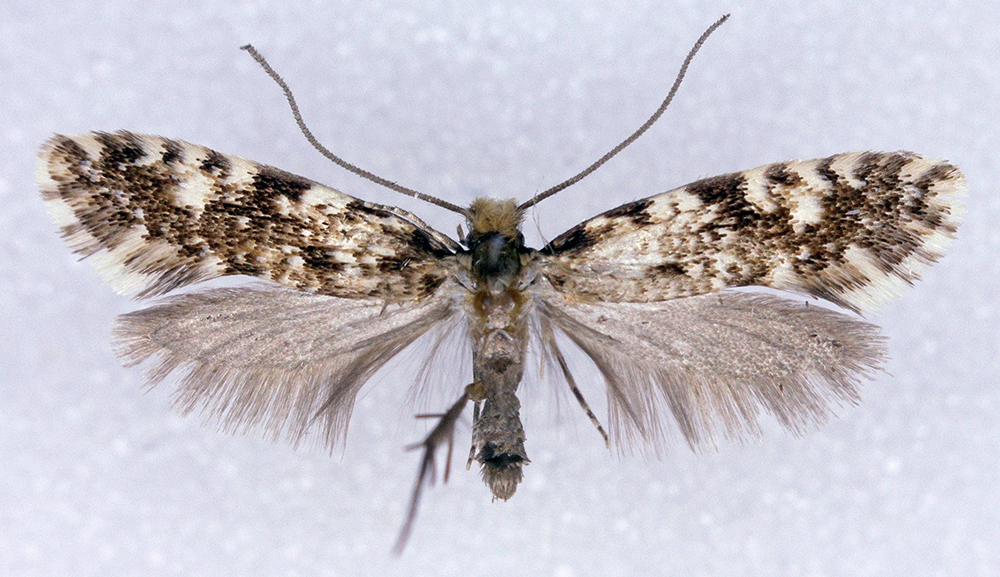
(c) Dave, some rights reserved (CC BY) · licence
Family: Tineidae · Class: Insecta · Order: Lepidoptera
Nemapogon molybdanella is a California animal in the Tineidae family.
Nemapogon molybdanella is a small moth in the family Tineidae, commonly known as fungus moths or tineid moths. This species belongs to a genus of microlepidoptera characterized by their association with fungi and organic debris. Adults typically measure 8 to 12 millimeters in wingspan, with forewings displaying muted coloration patterns of brown, gray, and whitish scales that provide effective camouflage against bark and decaying organic matter. The forewings are narrow and elongated, while the hindwings are typically paler and more translucent. Wing patterns may include subtle striations or mottled appearances, though specific morphological details for this species require further taxonomic study. The distribution and range of Nemapogon molybdanella remain poorly documented in current literature. Members of the genus Nemapogon are found across temperate regions of North America, including California, where they inhabit diverse ecosystems from coastal areas to montane forests. The specific range of N. molybdanella within California has not been comprehensively mapped, reflecting the limited research attention given to many microlepidoptera species. This knowledge gap represents a significant challenge for understanding the species' conservation needs and ecological role. Habitat preferences for Nemapogon molybdanella likely follow patterns observed in related species within the genus. These moths typically inhabit environments rich in decaying organic matter, including forest floors with abundant leaf litter, rotting logs, and areas with fungal growth. They may be found in mixed coniferous and deciduous forests, woodland edges, and areas with significant accumulations of plant debris. The species likely occurs from sea level to moderate elevations, though specific elevation ranges have not been established. Behaviorally, Nemapogon species are generally nocturnal and are attracted to artificial lights during evening hours. Adults are weak fliers and tend to remain close to their larval habitat. The larvae of fungus moths feed on various organic materials including fungi, decaying plant matter, and sometimes stored organic products. Larval development occurs within the substrate, where they create silk-lined galleries or chambers. The species likely has one or two generations per year, depending on local climate conditions, with adults emerging during warmer months. The conservation status of Nemapogon molybdanella has not been formally assessed. Like many microlepidoptera, this species faces potential threats from habitat loss, forest management practices that remove dead wood and organic debris, and climate change effects on fungal communities. The lack of baseline population data and limited taxonomic research hinders conservation planning efforts. Many Tineidae species remain understudied, with their ecological roles and conservation needs poorly understood. Increased survey efforts and taxonomic research are needed to determine the species' distribution, population status, and specific habitat requirements. Forest management practices that maintain diverse microhabitats, including retention of coarse woody debris and leaf litter, likely benefit this and related species.
Classification
Class: Insecta · Order: Lepidoptera · Family: Tineidae
Frequently asked questions
How is Nemapogon molybdanella classified?
Nemapogon molybdanella belongs to class Insecta, order Lepidoptera, family Tineidae.
What family does Nemapogon molybdanella belong to?
Nemapogon molybdanella is in the Tineidae family.
What is Nemapogon molybdanella?
Nemapogon molybdanella is a small moth in the family Tineidae, commonly known as fungus moths or tineid moths.
Is Nemapogon molybdanella found in California?
Yes. Nemapogon molybdanella is recorded in California in The California Species Project's catalogue.
Related species
Other California species in the same genus, family, or bioregion.
Data from The California Species Project — 14,000+ California species with verified data from CNPS, CDFW, USFWS, and more.