Nematocampa resistaria
Horned Spanworm Moth
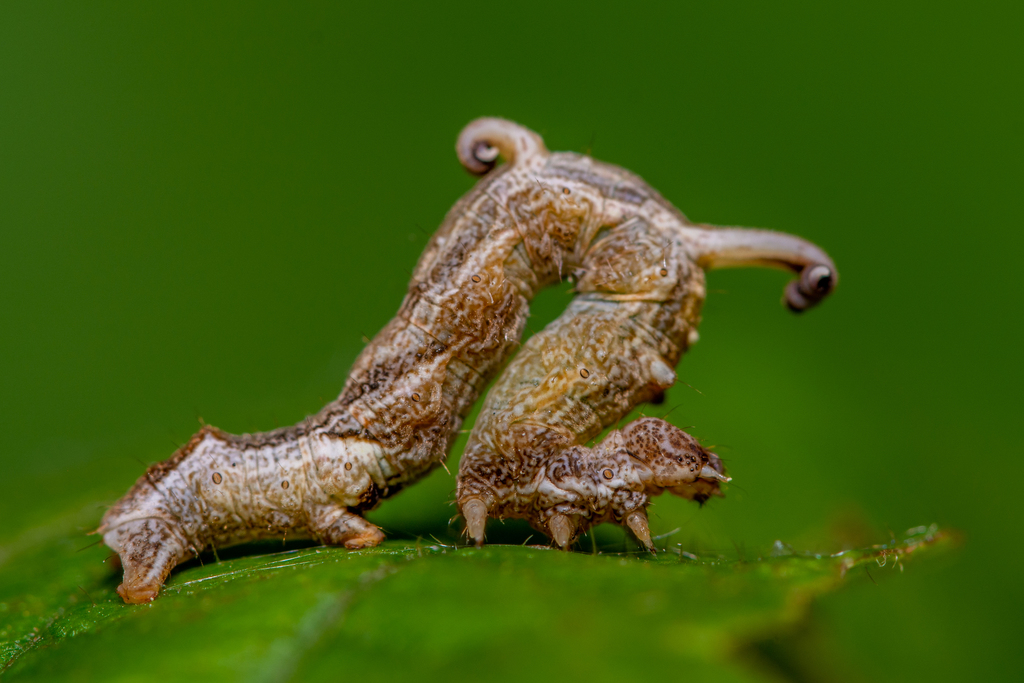
(c) Desislav Iliev, some rights reserved (CC BY) · licence
Family: Geometridae · Class: Insecta · Order: Lepidoptera
Nematocampa resistaria (Horned Spanworm Moth) is a California animal in the Geometridae family.
The Horned Spanworm Moth (Nematocampa resistaria) is a geometrid moth in the subfamily Ennominae, tribe Cassymini. Adults are small moths with distinctive projections on their hindwings that give the species its common name. The forewings typically display a pale ground color with darker cross-lines and markings, while the hindwings feature the characteristic horn-like projections extending from the outer margin. Wing patterns can vary, with some individuals showing white ground coloration while others display yellow tones (Ferguson 1993). This species has a broad distribution across North America, ranging from Nova Scotia to Vancouver Island in Canada, south to Florida and west to Texas and Colorado. The moth also occurs in Utah and Oregon, but notably is absent from California, where it is replaced by the closely related N. brehmeata (Ferguson 1993). According to BugGuide, the species is considered local and uncommon across much of its range, though it appears reasonably common in some areas such as New Brunswick. Nematocampa resistaria inhabits both deciduous and coniferous forests across its range. The species shows considerable ecological flexibility, occurring from lowland areas to mountainous regions. In semi-arid and mountainous areas, it tends to be associated with specific microhabitats that provide suitable conditions for larval development. Larvae are polyphagous, feeding on numerous hardwood and softwood species. Documented host plants include various pines, hemlock, fir, larch, and spruce among conifers, as well as multiple deciduous species including oak, cherry, and honey locust (Gleditsia triacanthos) (Ferguson 1993). This broad host plant range contributes to the species' wide geographic distribution. The species appears to be bivoltine in at least some portions of its range, with peak abundance in July and a partial second generation occurring in August and September on Block Island, Rhode Island (BugGuide). Adults are attracted to lights and can be found flying during summer months, with records extending from July through September depending on location and generation. The species overwinters in the pupal stage, with adults emerging the following summer. Males possess modified hindtibial spurs, a characteristic feature used in taxonomic identification within the genus Nematocampa. Currently, Nematocampa resistaria has no special conservation status at federal or state levels. The species appears stable across its broad range, though local populations may fluctuate due to habitat changes or other environmental factors. Its polyphagous larval feeding habits and tolerance for various forest types likely contribute to its overall stability. Climate change and forest management practices could potentially affect future distribution patterns, particularly in marginal habitats or at range extremes.
Classification
Class: Insecta · Order: Lepidoptera · Family: Geometridae
Frequently asked questions
How is Nematocampa resistaria classified?
Nematocampa resistaria belongs to class Insecta, order Lepidoptera, family Geometridae.
What family does Nematocampa resistaria belong to?
Nematocampa resistaria is in the Geometridae family.
What is Nematocampa resistaria?
The Horned Spanworm Moth (Nematocampa resistaria) is a geometrid moth in the subfamily Ennominae, tribe Cassymini.
Is Nematocampa resistaria found in California?
Yes. Nematocampa resistaria is recorded in California in The California Species Project's catalogue.
Related species
Other California species in the same genus, family, or bioregion.
Data from The California Species Project — 14,000+ California species with verified data from CNPS, CDFW, USFWS, and more.