Nemognatha nigripennis
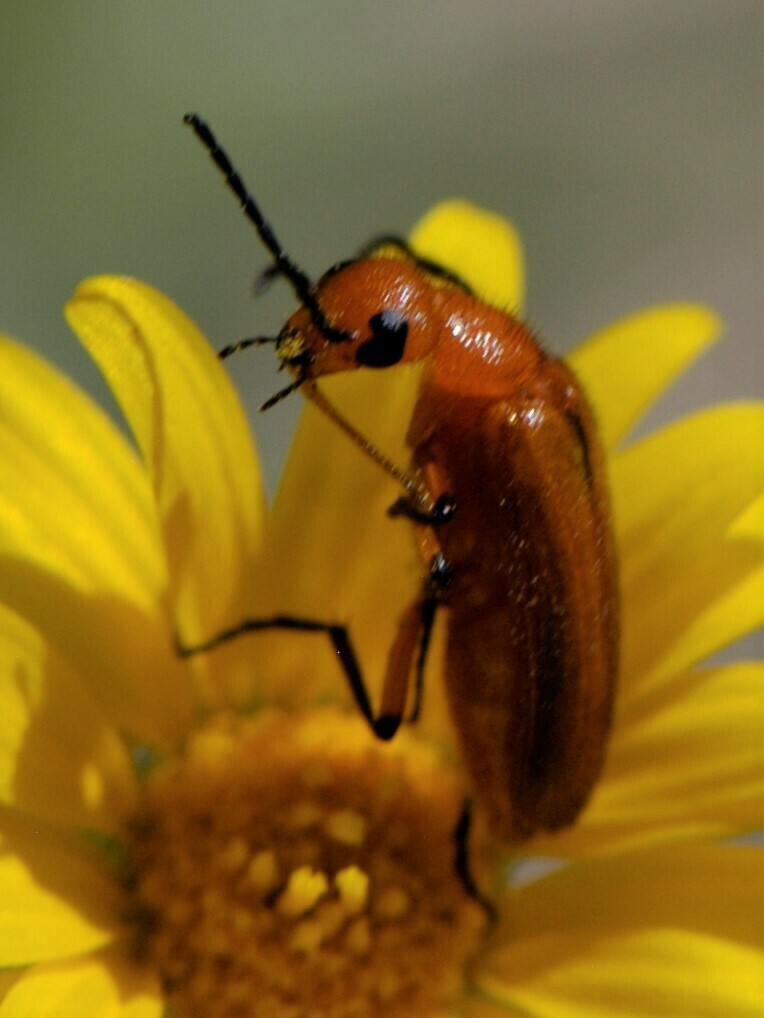
(c) Elliott Gordon, some rights reserved (CC BY) · licence
Family: Meloidae · Class: Insecta · Order: Coleoptera
Nemognatha nigripennis is a California animal in the Meloidae family.
Nemognatha nigripennis is a blister beetle belonging to the family Meloidae, subfamily Nemognathinae. This species is distinguished by its black wing covers (elytra), as indicated by its specific epithet 'nigripennis,' meaning 'black-winged.' Like other members of the genus Nemognatha, this beetle possesses elongated mouthparts adapted for nectar feeding, setting it apart from most other blister beetles which are primarily leaf feeders. The distribution and range of N. nigripennis in California remains poorly documented in published literature. According to BugGuide, the genus Nemognatha is represented by multiple species across North America, but specific distributional data for N. nigripennis is limited in available scientific sources. The species appears in habitat conservation planning documents for certain California regions, suggesting it occurs within areas of conservation concern. Habitat requirements for this species have not been well characterized in the scientific literature. As a member of the Nemognathinae subfamily, N. nigripennis likely inhabits areas where flowering plants provide nectar sources. The inclusion of this species in habitat conservation plans suggests it may be associated with specific plant communities or habitat types that are considered sensitive or of conservation value. The ecology and behavior of N. nigripennis follows the general pattern observed in nemognathine blister beetles. Adults are nectar feeders, using their elongated mouthparts to access floral resources. This feeding behavior makes them potential pollinators of certain plant species. Like other blister beetles, N. nigripennis likely undergoes hypermetamorphosis, a complex developmental process involving multiple larval stages with different ecological roles. Early larval stages typically parasitize bee nests or grasshopper egg masses, while later stages may feed on organic matter in soil. Blister beetles produce cantharidin, a toxic compound that serves as a defense mechanism against predators. This chemical can cause blistering of skin upon contact, giving the family its common name. The compound also plays a role in mating behavior, as males transfer cantharidin to females during copulation, which females then use to protect their eggs. Conservation status information for N. nigripennis is not available from standard federal or state wildlife databases as of December 2025. The species does not appear to have formal protection status under the Endangered Species Act or California Endangered Species Act. However, its inclusion in habitat conservation planning documents suggests it may be considered a species of local concern in certain areas. The limited scientific documentation available for this species reflects a broader challenge in understanding the conservation status of many invertebrate species, particularly lesser-known beetles. Detailed ecological studies of this species are lacking. The above information synthesizes available observations from taxonomic literature and conservation planning documents. We welcome contributions of verified scientific data, photographs, or field observations to enhance this species account. Please contact Species List Pro to share additional information about N. nigripennis distribution, habitat preferences, or ecological relationships.
Classification
Class: Insecta · Order: Coleoptera · Family: Meloidae
Frequently asked questions
How is Nemognatha nigripennis classified?
Nemognatha nigripennis belongs to class Insecta, order Coleoptera, family Meloidae.
What family does Nemognatha nigripennis belong to?
Nemognatha nigripennis is in the Meloidae family.
What is Nemognatha nigripennis?
Nemognatha nigripennis is a blister beetle belonging to the family Meloidae, subfamily Nemognathinae.
Is Nemognatha nigripennis found in California?
Yes. Nemognatha nigripennis is recorded in California in The California Species Project's catalogue.
Related species
Other California species in the same genus, family, or bioregion.
Data from The California Species Project — 14,000+ California species with verified data from CNPS, CDFW, USFWS, and more.