Nemognatha scutellaris
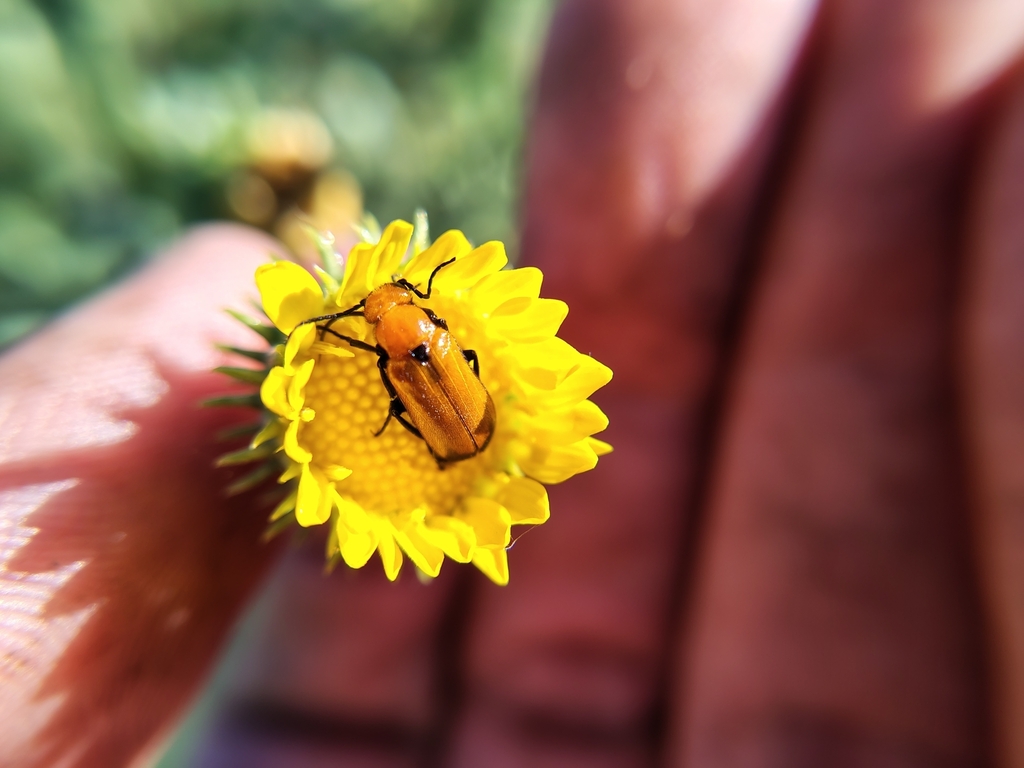
no rights reserved · CC0
Family: Meloidae · Class: Insecta · Order: Coleoptera
Nemognatha scutellaris is a California animal in the Meloidae family.
Nemognatha scutellaris is a small beetle in the family Meloidae, commonly known as blister beetles. This species belongs to the subgenus Pauronemognatha within the genus Nemognatha, which was established through taxonomic revisions of North American Meloidae (Enns 1956). Members of this family are characterized by their ability to produce cantharidin, a defensive chemical compound that can cause blistering in vertebrates. The species was originally described by LeConte and is distinguished from related species through morphological characteristics documented in systematic studies. Like other members of the subfamily Nemognathinae, N. scutellaris possesses elongated mouthparts adapted for nectar feeding, distinguishing it from other meloeid beetles that typically have more generalized mandibulate mouthparts. Nemognatha scutellaris occurs in western North America, with its distribution documented primarily in the southwestern United States. According to Enns (1956), the species' range overlaps with that of the closely related N. punctulata, though specific distributional boundaries require further documentation. The species appears to have a relatively restricted range compared to some other Nemognatha species that occur across broader geographic areas. Habitat requirements for N. scutellaris have not been extensively documented in the scientific literature. Like other members of the genus, the species likely inhabits areas where suitable host flowers are available for adult feeding. Many Nemognatha species are associated with open habitats including grasslands, desert margins, and areas with abundant flowering plants. The specific elevation range and microhabitat preferences for this species remain poorly documented. The ecology of N. scutellaris follows the general pattern observed in other Nemognatha beetles. Adults are typically active during warmer months when flowers are available for nectar feeding. The elongated labial palpi characteristic of the subfamily Nemognathinae allow these beetles to access nectar from deep, tubular flowers that may be inaccessible to other insects. Larval development likely follows the hypermetamorphic pattern typical of Meloidae, with first-instar larvae (triungulins) seeking out bee or grasshopper hosts for development. However, specific host associations and larval biology for N. scutellaris have not been documented. Reproductive behavior and seasonal activity patterns for this species require further study. Many blister beetles exhibit aggregation behaviors during mating periods, and adults may be found in groups on preferred flowering plants. The timing of adult emergence and reproductive activity likely corresponds with the availability of suitable nectar sources and appropriate conditions for larval development. No formal conservation status has been assigned to N. scutellaris at federal or state levels. The species does not appear on conservation concern lists, though this may reflect limited survey efforts rather than population stability. Like many specialized insects, the species could be vulnerable to habitat modification that reduces the availability of native flowering plants or disrupts the complex life cycle relationships with potential hosts. Climate change impacts on flowering phenology and host species distributions represent potential long-term threats. Detailed ecological studies of this species are lacking. The above information synthesizes available taxonomic and distributional data from systematic literature. Additional research is needed to document habitat requirements, host plant associations, larval biology, and population status across the species' range.
Classification
Class: Insecta · Order: Coleoptera · Family: Meloidae
Frequently asked questions
How is Nemognatha scutellaris classified?
Nemognatha scutellaris belongs to class Insecta, order Coleoptera, family Meloidae.
What family does Nemognatha scutellaris belong to?
Nemognatha scutellaris is in the Meloidae family.
What is Nemognatha scutellaris?
Nemognatha scutellaris is a small beetle in the family Meloidae, commonly known as blister beetles.
Is Nemognatha scutellaris found in California?
Yes. Nemognatha scutellaris is recorded in California in The California Species Project's catalogue.
Related species
Other California species in the same genus, family, or bioregion.
Data from The California Species Project — 14,000+ California species with verified data from CNPS, CDFW, USFWS, and more.