Nemoria pulcherrima
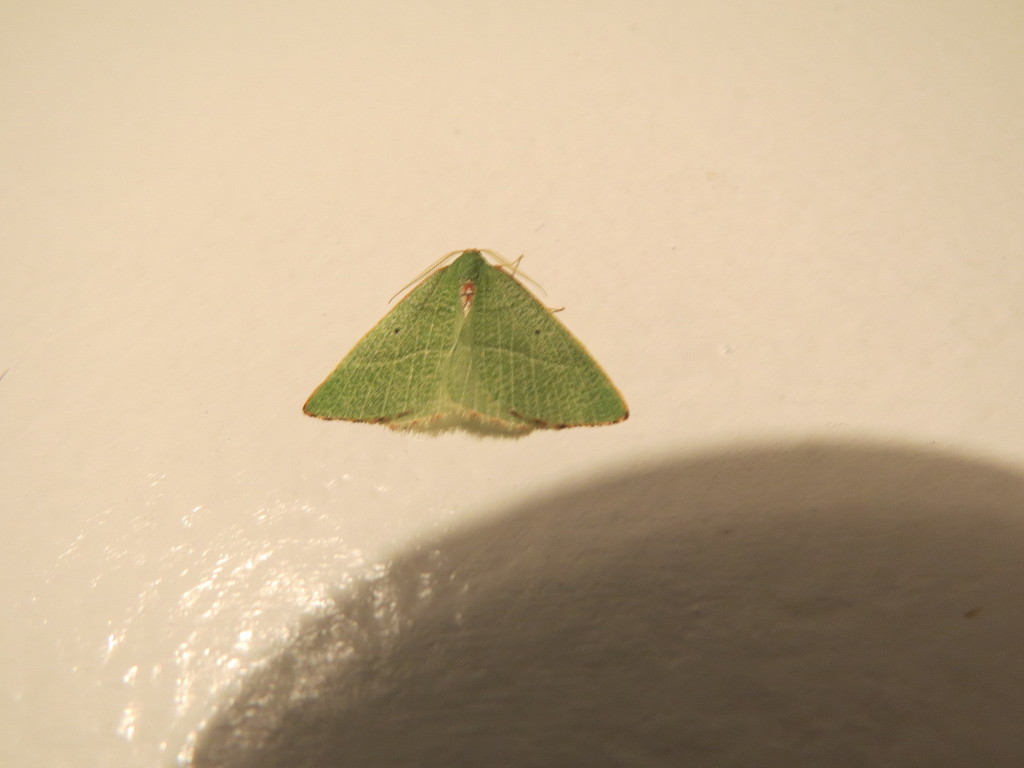
(c) Garth Harwood, some rights reserved (CC BY) · licence
Family: Geometridae · Class: Insecta · Order: Lepidoptera
Nemoria pulcherrima is a California animal in the Geometridae family.
Nemoria pulcherrima is a geometrid moth in the family Geometridae, commonly known as emerald moths or inchworm moths. Adults are small to medium-sized moths with forewings typically measuring 15 to 20 mm in length. The species displays the characteristic delicate build of emerald moths, with relatively broad wings and slender bodies. Coloration patterns vary but generally include pale green to yellowish-green base colors with darker markings, though specific morphological details for this species require further documentation. The species occurs along the Pacific Coast from near Portland, Oregon, south to San Diego County, California, representing a distribution span of approximately 1,500 kilometers. The range extends eastward to include populations on the western slopes of the Sierra Nevada mountain range. This distribution pattern suggests the species is adapted to Mediterranean and coastal climatic conditions characteristic of California and southern Oregon. The moth's presence across such a broad latitudinal range indicates tolerance for varied temperature and precipitation regimes within the Pacific coastal region. Nemoria pulcherrima inhabits oak woodland and mixed forest ecosystems where its host plants occur. The species is found in coast range mountains and foothills, as well as Sierra Nevada western slopes, typically in areas supporting oak species. Elevation ranges likely span from near sea level in coastal areas to mid-elevation zones where oaks persist, potentially reaching 1,500 to 2,000 meters in the Sierra Nevada. The moth requires access to blooming oak trees during its larval development period. This species exhibits specialized feeding behavior, with larvae feeding specifically on oak blossoms. The restriction to oak flowers represents a narrow temporal and resource niche, as oak blooming periods are relatively brief, typically occurring in spring months from March through May depending on elevation and latitude. Adults likely emerge in synchrony with oak flowering to ensure females can locate appropriate oviposition sites. Like other Geometridae moths, larvae are likely geometrid caterpillars or "inchworms" that move in a characteristic looping motion. The species presumably overwinters in pupal stage, emerging as adults during oak blooming season. No federal or state conservation status has been assigned to Nemoria pulcherrima, and population trends are not well documented. As an oak-dependent species, the moth may face habitat pressures from oak woodland conversion, urban development, and climate change impacts on oak distribution and phenology. California oak woodlands have experienced significant habitat loss due to agricultural conversion and development, particularly in coastal and foothill regions. Changes in precipitation patterns and temperature could disrupt synchronization between moth emergence and oak blooming, potentially affecting reproduction success. The species' conservation needs and population status require assessment through targeted surveys across its known range to establish baseline population data and identify potential threats.
Classification
Class: Insecta · Order: Lepidoptera · Family: Geometridae
Frequently asked questions
How is Nemoria pulcherrima classified?
Nemoria pulcherrima belongs to class Insecta, order Lepidoptera, family Geometridae.
What family does Nemoria pulcherrima belong to?
Nemoria pulcherrima is in the Geometridae family.
What is Nemoria pulcherrima?
Nemoria pulcherrima is a geometrid moth in the family Geometridae, commonly known as emerald moths or inchworm moths.
Is Nemoria pulcherrima found in California?
Yes. Nemoria pulcherrima is recorded in California in The California Species Project's catalogue.
Related species
Other California species in the same genus, family, or bioregion.
Data from The California Species Project — 14,000+ California species with verified data from CNPS, CDFW, USFWS, and more.