Neogale frenata
Long-tailed Weasel
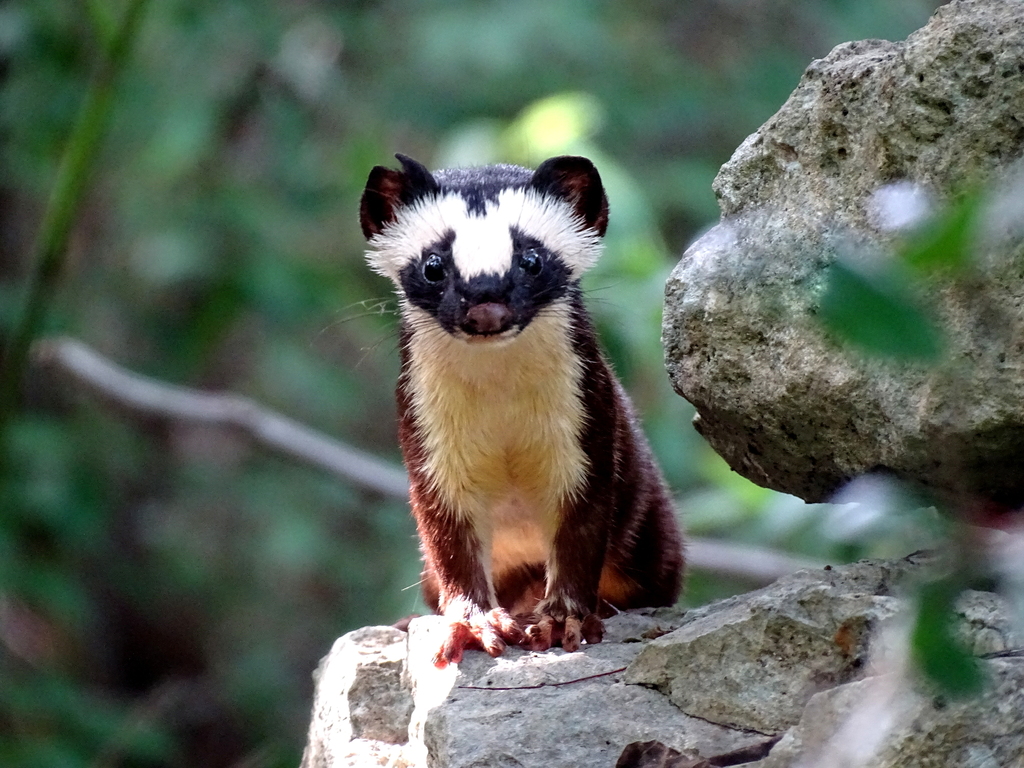
(c) Alexis López Hernández, some rights reserved (CC BY) · licence
Family: Mustelidae · Class: Mammalia · Order: Carnivora
Neogale frenata (Long-tailed Weasel) is a California animal in the Mustelidae family.
The long-tailed weasel is a slender, elongated carnivore and the largest weasel species in North America. Adults measure 300 to 350 millimeters (11.8 to 13.8 inches) in body length, with males significantly larger than females. The distinctive tail comprises 40 to 70 percent of the total body length, measuring 110 to 150 millimeters (4.3 to 5.9 inches) and ending in a prominent black tip. Males weigh 85 to 267 grams (3.0 to 9.4 ounces), while females range from 85 to 198 grams (3.0 to 7.0 ounces). The species exhibits seasonal pelage changes, with brown to chocolate-brown dorsal fur and yellowish-white ventral coloration during summer months. In northern populations, the coat transforms to pure white in winter, except for the black tail tip, while southern California populations may retain brown coloration year-round. Long-tailed weasels occur throughout California, from sea level to elevations exceeding 3,000 meters (9,800 feet) in the Sierra Nevada. The species ranges from the Pacific Coast through the Central Valley and into montane regions, with populations documented in all major mountain ranges including the Coast Ranges, Cascades, and Sierra Nevada. Historically distributed across most of North America from southern Canada to northern South America, the species maintains stable populations throughout much of this range. The species inhabits diverse environments including riparian woodlands, brushlands, grasslands, agricultural areas, and coniferous forests. Long-tailed weasels prefer habitats with adequate ground cover and abundant prey populations. They utilize rock crevices, hollow logs, abandoned burrows, and brush piles for denning sites. The species adapts to human-modified landscapes, often occurring near farms, rural residences, and urban edges where rodent populations are elevated. Long-tailed weasels are primarily nocturnal and crepuscular hunters, though they may be active during daylight hours. Their diet consists predominantly of small mammals, particularly rodents weighing 10 to 100 grams, including voles, mice, rats, ground squirrels, and pocket gophers. They also consume birds, eggs, amphibians, reptiles, and insects when available. Breeding occurs from July through August, with delayed implantation extending gestation to approximately 280 days. Females produce litters of 4 to 9 kits in late April or May, with young reaching independence at 7 to 10 weeks of age. The long-tailed weasel currently holds no federal or state conservation listing in California. Populations appear stable throughout most of the species' range, though localized declines may occur due to habitat loss, rodenticide poisoning, and vehicle strikes. The species benefits from habitat diversity and abundant prey populations, making it relatively resilient to moderate environmental changes. Agricultural practices that maintain hedgerows and minimize pesticide use support weasel populations by preserving prey species and reducing secondary poisoning risks.
Classification
Class: Mammalia · Order: Carnivora · Family: Mustelidae
Frequently asked questions
How is Neogale frenata classified?
Neogale frenata belongs to class Mammalia, order Carnivora, family Mustelidae.
What family does Neogale frenata belong to?
Neogale frenata is in the Mustelidae family.
What is Neogale frenata?
The long-tailed weasel is a slender, elongated carnivore and the largest weasel species in North America.
Is Neogale frenata found in California?
Yes. Neogale frenata is recorded in California in The California Species Project's catalogue.
Related species
Other California species in the same genus, family, or bioregion.
Data from The California Species Project — 14,000+ California species with verified data from CNPS, CDFW, USFWS, and more.