Neolarra alba
White Cuckoo Bee
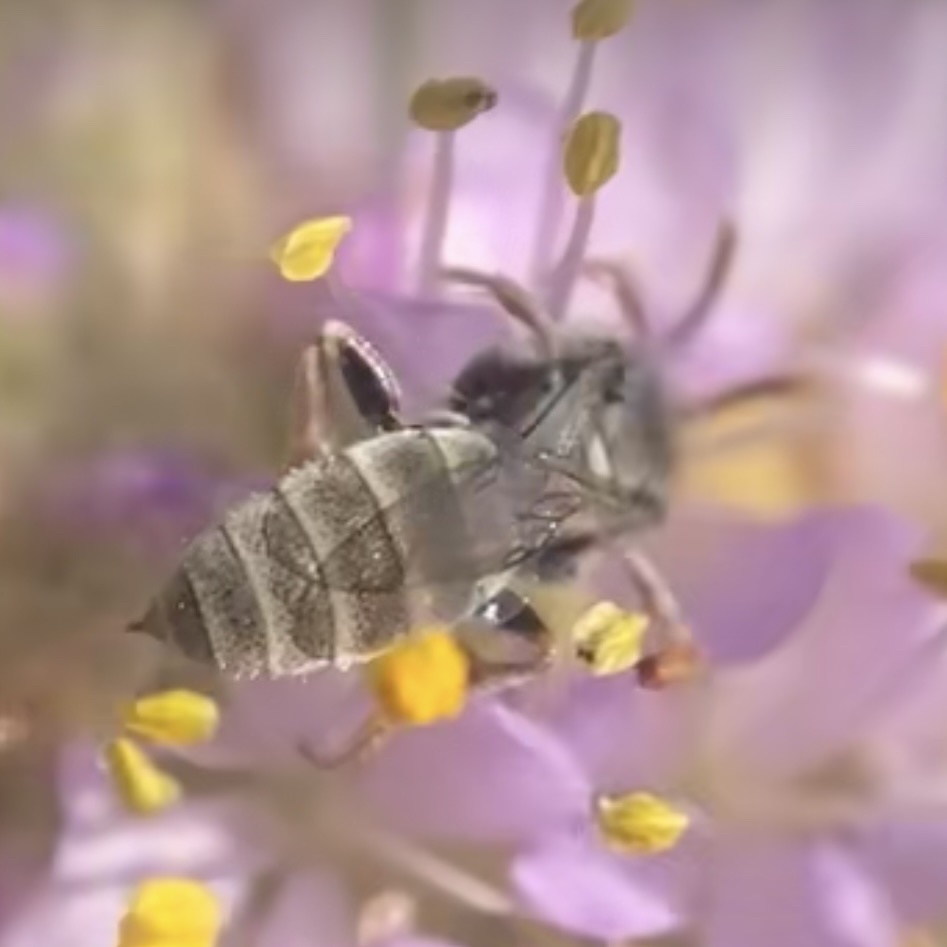
(c) Michelle Orcutt, some rights reserved (CC BY) · licence
Family: Apidae · Class: Insecta · Order: Hymenoptera
Conservation status: GH SH
Neolarra alba (White Cuckoo Bee) is a California animal in the Apidae family.
Neolarra alba is a small cuckoo bee in the family Apidae, subfamily Nomadinae, tribe Neolarrini. This species belongs to a specialized group of parasitic bees that do not construct their own nests or collect pollen, instead laying their eggs in the nests of other bee species. The physical characteristics of N. alba have not been extensively documented in the scientific literature, reflecting the limited research on this obscure species. The distribution and range of the white cuckoo bee remain poorly documented. Based on the limited available records, this species appears to occur in western North America, though specific geographic boundaries and habitat preferences have not been comprehensively studied. The global and state conservation ranks of GH (Global Historic) and SH (State Historic) indicate that N. alba has not been observed in recent decades and may potentially be extinct, though insufficient survey effort makes definitive status assessment difficult. Habitat requirements for N. alba are largely unknown due to the scarcity of ecological studies. Like other members of the genus Neolarra, this species likely inhabits areas where its host bee species are present, as cuckoo bees are entirely dependent on their hosts for reproduction. The specific host relationships for N. alba have not been documented, though related Neolarra species are known to parasitize ground-nesting bees in various families. As a cuckoo bee, N. alba exhibits brood parasitic behavior typical of the subfamily Nomadinae. Adult females seek out the nests of host bees, where they lay their eggs in the host's brood cells. The N. alba larvae then consume the host's provisions and may also consume the host larvae. This parasitic lifestyle means that N. alba does not collect pollen or nectar for its offspring, lacking the specialized pollen-collecting structures found in non-parasitic bees. Flight periods, mating behaviors, and other aspects of the species' life cycle remain undocumented. The conservation status of N. alba reflects the broader challenges facing many specialized bee species. The GH/SH rankings suggest this species has experienced significant decline or potential extirpation, though the lack of recent surveys makes current status uncertain. Like many cuckoo bees, N. alba likely faces threats related to habitat loss and the decline of its host bee populations. The specialized nature of brood parasitic relationships makes cuckoo bees particularly vulnerable to ecosystem disruption, as they depend not only on suitable habitat but also on stable populations of their specific host species. Scientific documentation for this species remains extremely limited. The information presented here is based on available taxonomic records and general knowledge of cuckoo bee biology. If you have additional verified information about N. alba's biology, distribution, or ecology, please contact us to help improve this species account.
Classification
Class: Insecta · Order: Hymenoptera · Family: Apidae
Conservation status
GH SH
Frequently asked questions
How is Neolarra alba classified?
Neolarra alba belongs to class Insecta, order Hymenoptera, family Apidae.
What family does Neolarra alba belong to?
Neolarra alba is in the Apidae family.
Is Neolarra alba protected or of conservation concern?
Neolarra alba carries the following status: GH SH.
What is Neolarra alba?
Neolarra alba is a small cuckoo bee in the family Apidae, subfamily Nomadinae, tribe Neolarrini.
Is Neolarra alba found in California?
Yes. Neolarra alba is recorded in California in The California Species Project's catalogue.
Related species
Other California species in the same genus, family, or bioregion.
Data from The California Species Project — 14,000+ California species with verified data from CNPS, CDFW, USFWS, and more.