Neoligia invenusta
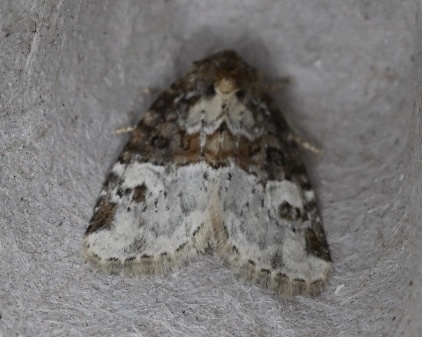
(c) Alan Macnaughton, some rights reserved (CC BY) · licence
Family: Noctuidae · Class: Insecta · Order: Lepidoptera
Neoligia invenusta is a California animal in the Noctuidae family.
Neoligia invenusta is a moth in the family Noctuidae, commonly known as owlet moths or cutworm moths. This species belongs to a diverse family of primarily nocturnal lepidopterans that includes over 12,000 described species worldwide. The genus Neoligia comprises several North American species that are closely related and often difficult to distinguish without detailed examination of wing patterns and genitalia. Adult moths in the genus Neoligia typically display cryptic coloration with forewings that are various shades of brown, gray, or tan, often marked with subtle lines, spots, or bands that provide camouflage during daytime rest periods. Wing patterns frequently include reniform and orbicular spots characteristic of noctuids, though these markings may be indistinct or absent in some species. The hindwings are generally paler than the forewings and may show darker marginal bands. Wingspan measurements for related Neoligia species typically range from 30 to 40 mm (1.2 to 1.6 inches), though specific measurements for N. invenusta are not well documented in available literature. The distribution and habitat preferences of Neoligia invenusta remain poorly documented in scientific literature. Many Neoligia species are associated with specific host plants or plant families, and their larvae typically feed on herbaceous vegetation. The genus includes species found across various North American ecosystems, from grasslands to woodland edges, suggesting adaptability to different habitat types. Like other noctuids, N. invenusta likely follows a typical moth life cycle with complete metamorphosis. Adults are presumed to be nocturnal, becoming active at dusk to seek mates and nectar sources. Females would deposit eggs on or near suitable host plants, where larvae would develop through several instars before pupating. Many noctuid species overwinter as pupae in soil or leaf litter, emerging as adults during specific seasonal windows that may be synchronized with host plant phenology or environmental conditions. The conservation status of Neoligia invenusta is not established, as comprehensive population assessments have not been conducted for this species. The lack of detailed ecological information reflects a broader challenge in lepidopteran conservation, where many species remain understudied despite their important roles as pollinators, herbivores, and components of food webs. Without baseline population data, habitat requirements, or threat assessments, it is difficult to evaluate whether N. invenusta faces conservation concerns or maintains stable populations. The limited available information about Neoligia invenusta highlights the need for additional taxonomic and ecological research on North American noctuid moths. Comprehensive surveys, life history studies, and genetic analyses would help clarify the species' distribution, habitat needs, and conservation status. Such research becomes increasingly important as habitat modification, climate change, and other anthropogenic factors continue to affect insect populations across North America.
Classification
Class: Insecta · Order: Lepidoptera · Family: Noctuidae
Frequently asked questions
How is Neoligia invenusta classified?
Neoligia invenusta belongs to class Insecta, order Lepidoptera, family Noctuidae.
What family does Neoligia invenusta belong to?
Neoligia invenusta is in the Noctuidae family.
What is Neoligia invenusta?
Neoligia invenusta is a moth in the family Noctuidae, commonly known as owlet moths or cutworm moths.
Is Neoligia invenusta found in California?
Yes. Neoligia invenusta is recorded in California in The California Species Project's catalogue.
Related species
Other California species in the same genus, family, or bioregion.
Data from The California Species Project — 14,000+ California species with verified data from CNPS, CDFW, USFWS, and more.