Neomochtherus willistoni
Williston Bladetail
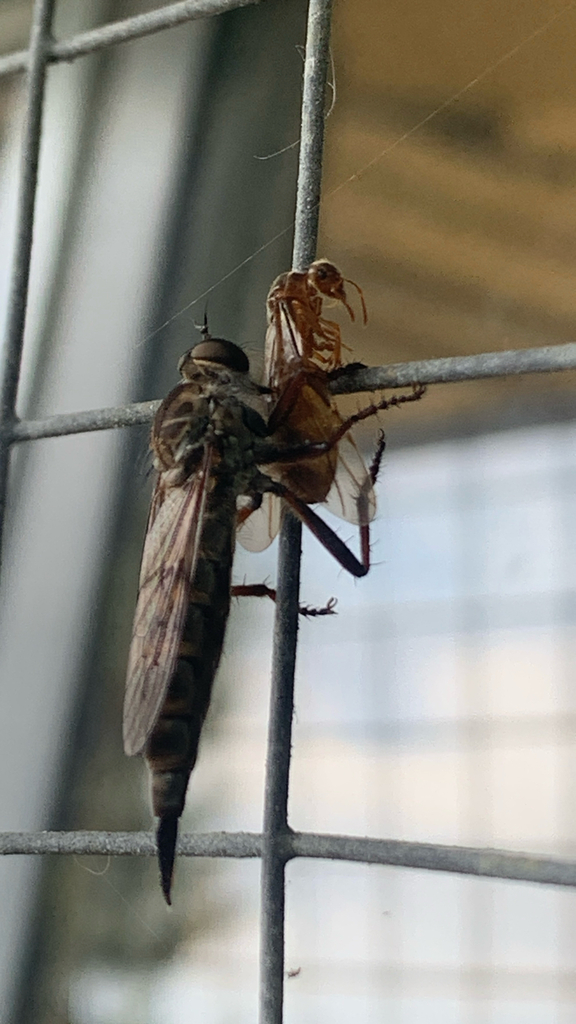
(c) Liam Steele, some rights reserved (CC BY) · licence
Family: Asilidae · Class: Insecta · Order: Diptera
Neomochtherus willistoni (Williston Bladetail) is a California animal in the Asilidae family.
Neomochtherus willistoni, commonly known as the Williston Bladetail, is a robber fly in the family Asilidae. This dipteran species belongs to a group of predatory flies characterized by their hunting behavior and distinctive morphological features. Robber flies in the genus Neomochtherus typically possess elongated bodies with prominent bristles, large compound eyes, and a prominent proboscis adapted for piercing prey. The specific morphological characteristics distinguishing N. willistoni from other Neomochtherus species have not been comprehensively documented in accessible literature. The range and distribution of Neomochtherus willistoni remain poorly documented in current scientific literature. The species appears to be known from limited records, with its specific geographic distribution within California requiring further taxonomic and biogeographic investigation. Many robber flies in this genus exhibit restricted ranges and specialized habitat requirements, suggesting that N. willistoni may have similarly specific distribution patterns. Habitat requirements for this species have not been well documented. Members of the family Asilidae typically inhabit diverse environments including grasslands, scrublands, forest edges, and open woodlands. Robber flies generally prefer areas with suitable perching sites such as bare ground, low vegetation, or exposed branches from which they can launch hunting flights. The specific microhabitat preferences of N. willistoni await detailed ecological study. Like other robber flies, N. willistoni is presumed to be a predatory species that captures other insects in flight. Asilidae employ a sit-and-wait hunting strategy, perching in elevated positions to scan for prey before launching rapid pursuit flights. These flies inject enzymes through their proboscis to liquefy internal tissues of captured prey, which they then consume. Seasonal activity patterns, mating behavior, larval development, and specific prey preferences for N. willistoni have not been documented in available literature. The conservation status of Neomochtherus willistoni has not been formally assessed. The species lacks federal or state listing status, and population trends remain unknown due to limited scientific study. Many insects, particularly specialized predators like robber flies, face threats from habitat loss, pesticide use, and climate change, though specific threats to N. willistoni have not been evaluated. The apparent rarity of records for this species may indicate either genuine scarcity or insufficient survey effort within suitable habitats. Detailed ecological studies of this species are lacking. The information presented here synthesizes available taxonomic knowledge with general understanding of robber fly biology. Comprehensive field studies are needed to document the distribution, habitat requirements, life history, and conservation needs of N. willistoni. We welcome contributions of verified scientific data, photographs, or field observations to enhance this species account.
Classification
Class: Insecta · Order: Diptera · Family: Asilidae
Frequently asked questions
How is Neomochtherus willistoni classified?
Neomochtherus willistoni belongs to class Insecta, order Diptera, family Asilidae.
What family does Neomochtherus willistoni belong to?
Neomochtherus willistoni is in the Asilidae family.
What is Neomochtherus willistoni?
Neomochtherus willistoni, commonly known as the Williston Bladetail, is a robber fly in the family Asilidae.
Is Neomochtherus willistoni found in California?
Yes. Neomochtherus willistoni is recorded in California in The California Species Project's catalogue.
Related species
Other California species in the same genus, family, or bioregion.
Data from The California Species Project — 14,000+ California species with verified data from CNPS, CDFW, USFWS, and more.