Neophasia menapia
Pine White
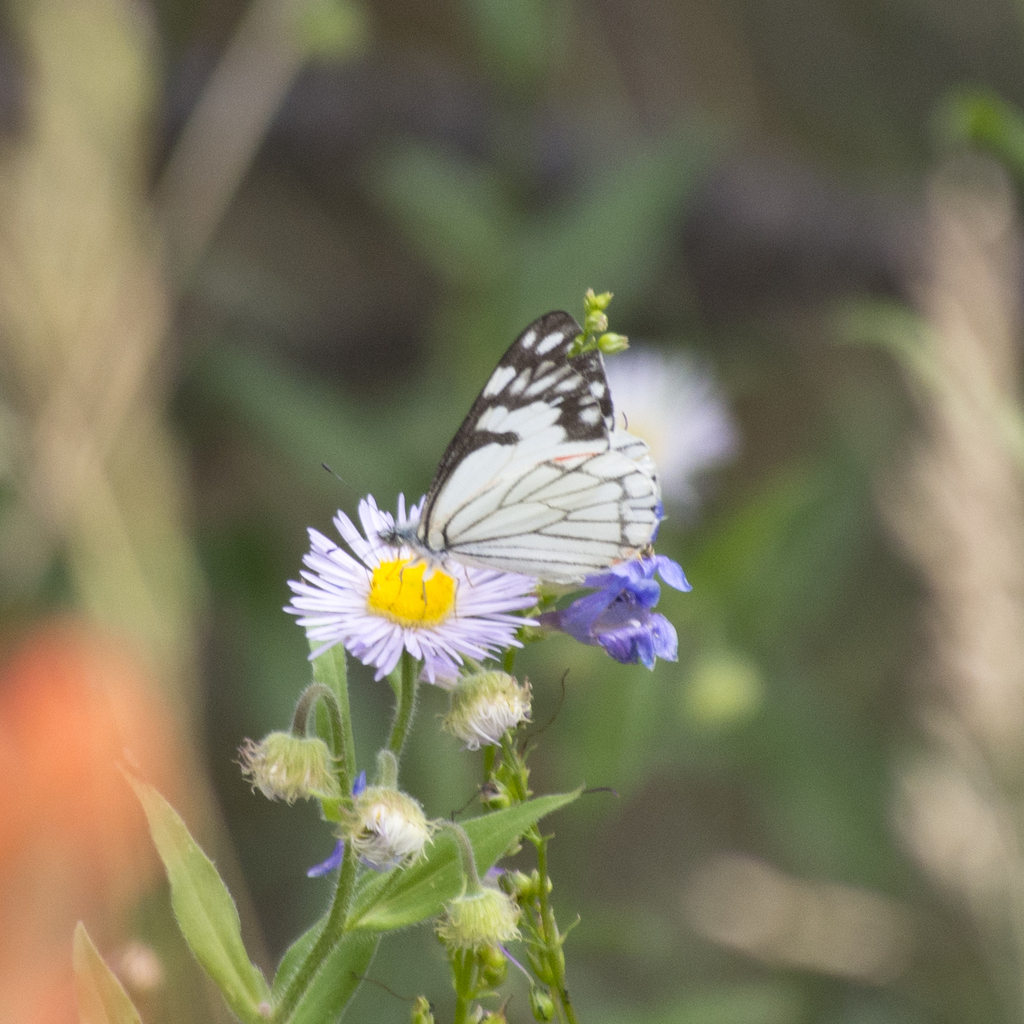
no rights reserved · CC0
Family: Pieridae · Class: Insecta · Order: Lepidoptera
Neophasia menapia (Pine White) is a California animal in the Pieridae family.
The Pine White (Neophasia menapia) is a medium-sized butterfly in the family Pieridae, with adults displaying a distinctive white coloration marked by black wing borders and veining. Males typically measure 45-55 mm (1.8-2.2 inches) in wingspan, while females are slightly larger at 50-60 mm (2.0-2.4 inches). The dorsal forewings are white with prominent black borders along the outer margins and black veining. Males exhibit a distinctive orange patch on the hindwing underside, while females display a more subdued yellowish marking in this area. The underside of both sexes shows yellow-green veining against the white ground color. The Pine White ranges from British Columbia east to Alberta, extending south through Rocky Mountain states and California to Mexico. The species' range extends marginally into western South Dakota and western Nebraska, representing the easternmost extent of its distribution. In California, populations occur primarily in montane coniferous forests throughout the Sierra Nevada, Cascade Range, and mountainous regions of northern California. The species exhibits a patchy distribution pattern corresponding to suitable coniferous habitat. Pine Whites inhabit coniferous forests dominated by their host plants, typically occurring at elevations ranging from 1,200 to 3,000 meters (3,900 to 9,800 feet). The species requires mature coniferous stands containing pines (Pinus species), Douglas-fir (Pseudotsuga menziesii), and true firs (Abies species). Adults are most commonly observed in forest openings, along forest edges, and in areas with partial canopy cover that provide both sunlight for thermoregulation and access to host trees. Adults are active from late June through September, with peak flight periods typically occurring in July and August. Males patrol territories around host trees and engage in hilltopping behavior, congregating on elevated ridges and peaks to locate mates. Females lay single eggs on the needles of host conifers, preferentially selecting younger needles on branch tips. Larvae feed exclusively on conifer needles and overwinter as partially grown caterpillars, resuming feeding the following spring before pupating in late spring or early summer. The species exhibits cyclical population fluctuations, with some years producing large emergences followed by periods of lower abundance. The Pine White is not currently listed under federal or state endangered species legislation and appears to maintain stable populations throughout most of its range. However, the species faces potential threats from forest management practices that alter coniferous forest structure, climate change affecting montane ecosystems, and periodic defoliation events that may impact host tree health. Fire suppression policies have modified natural forest dynamics, potentially affecting habitat quality in some regions. Long-term population monitoring data is limited, making assessment of population trends challenging.
Classification
Class: Insecta · Order: Lepidoptera · Family: Pieridae
Frequently asked questions
How is Neophasia menapia classified?
Neophasia menapia belongs to class Insecta, order Lepidoptera, family Pieridae.
What family does Neophasia menapia belong to?
Neophasia menapia is in the Pieridae family.
What is Neophasia menapia?
The Pine White (Neophasia menapia) is a medium-sized butterfly in the family Pieridae, with adults displaying a distinctive white coloration marked by black wing borders and veining.
Is Neophasia menapia found in California?
Yes. Neophasia menapia is recorded in California in The California Species Project's catalogue.
Related species
Other California species in the same genus, family, or bioregion.
Data from The California Species Project — 14,000+ California species with verified data from CNPS, CDFW, USFWS, and more.