Neotamias panamintinus acrus
Kingston Mountain Chipmunk
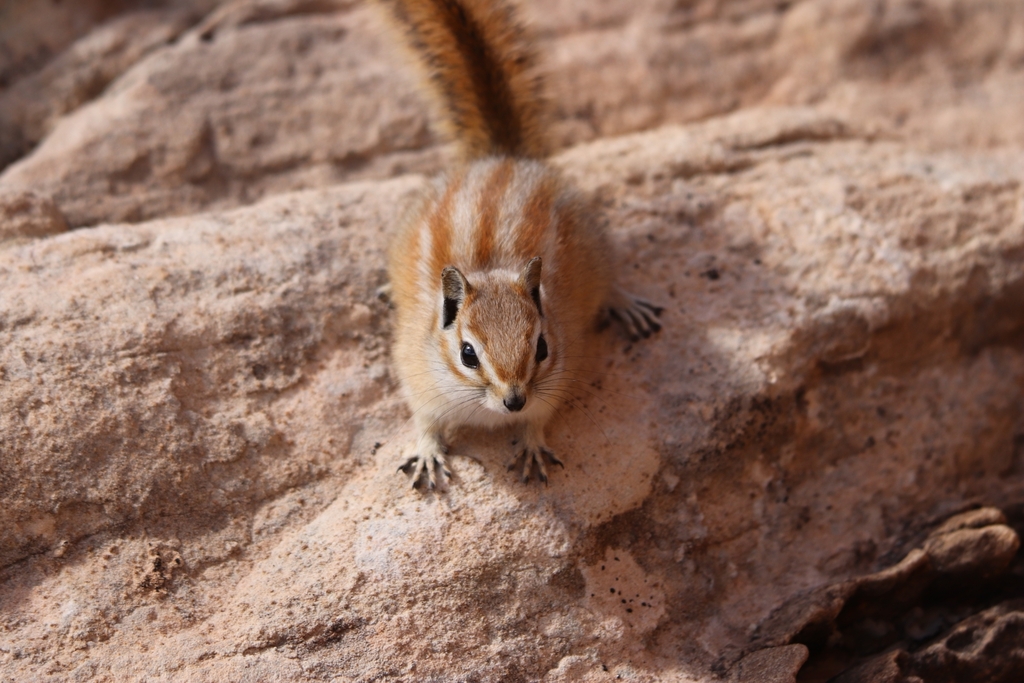
(c) Roland Godon, some rights reserved (CC BY) · licence
Family: Sciuridae · Class: Mammalia · Order: Rodentia
Conservation status: G4T1T2 S1S2
Neotamias panamintinus acrus (Kingston Mountain Chipmunk) is a California animal in the Sciuridae family.
The Kingston Mountain chipmunk (Neotamias panamintinus acrus) is a subspecies of the Panamint chipmunk endemic to the Kingston Range in southeastern California. This small rodent exhibits typical chipmunk characteristics with alternating light and dark stripes along the back and sides, though detailed morphological descriptions specific to this subspecies remain limited in published literature. The subspecies is restricted to the Kingston Mountains in San Bernardino County, California, representing one of the most geographically limited chipmunk populations in North America. The Kingston Range is located in the eastern Mojave Desert, near the California-Nevada border. This isolated mountain range rises from the surrounding desert floor to elevations exceeding 7,000 feet, creating a sky island ecosystem that supports this endemic population. Kingston Mountain chipmunks inhabit montane environments within the Kingston Range, likely occupying rocky areas, canyon systems, and areas with suitable vegetation cover. The specific elevational range and habitat requirements for this subspecies have not been thoroughly documented in scientific literature. The Kingston Range's pinyon-juniper woodlands and associated shrubland communities likely provide the primary habitat, similar to other Panamint chipmunk populations in the region. Like other chipmunk species, the Kingston Mountain chipmunk presumably maintains an omnivorous diet consisting of seeds, nuts, berries, and occasionally insects. Reproductive behavior and seasonal activity patterns specific to this subspecies have not been well studied. Most chipmunk species are active during daylight hours and enter periods of reduced activity during winter months, though they do not undergo true hibernation. The Kingston Mountain chipmunk currently holds no federal listing status but is recognized with a Global/State rank of G4T1T2 S1S2, indicating it is critically imperiled to imperiled in California. The T1T2 ranking signifies that this subspecies is at high risk due to its extremely restricted range and small population size. Primary conservation concerns likely include habitat degradation, climate change impacts on montane ecosystems, and the inherent vulnerability associated with such a limited geographic distribution. The isolated nature of the Kingston Range population makes it particularly susceptible to environmental changes and prevents genetic exchange with other chipmunk populations. Fire, drought, and human activities in the region could pose additional threats to this endemic subspecies. The lack of detailed ecological studies hampers comprehensive conservation planning efforts. Scientific documentation for this subspecies remains limited despite its conservation concern status. Research priorities should include population surveys, habitat assessment, and detailed ecological studies to better understand the specific requirements and vulnerabilities of this endemic chipmunk population.
Classification
Class: Mammalia · Order: Rodentia · Family: Sciuridae
Conservation status
G4T1T2 S1S2
Frequently asked questions
How is Neotamias panamintinus acrus classified?
Neotamias panamintinus acrus belongs to class Mammalia, order Rodentia, family Sciuridae.
What family does Neotamias panamintinus acrus belong to?
Neotamias panamintinus acrus is in the Sciuridae family.
Is Neotamias panamintinus acrus protected or of conservation concern?
Neotamias panamintinus acrus carries the following status: G4T1T2 S1S2.
What is Neotamias panamintinus acrus?
The Kingston Mountain chipmunk (Neotamias panamintinus acrus) is a subspecies of the Panamint chipmunk endemic to the Kingston Range in southeastern California.
Is Neotamias panamintinus acrus found in California?
Yes. Neotamias panamintinus acrus is recorded in California in The California Species Project's catalogue.
Related species
Other California species in the same genus, family, or bioregion.
Data from The California Species Project — 14,000+ California species with verified data from CNPS, CDFW, USFWS, and more.