Neoterpes ephelidaria
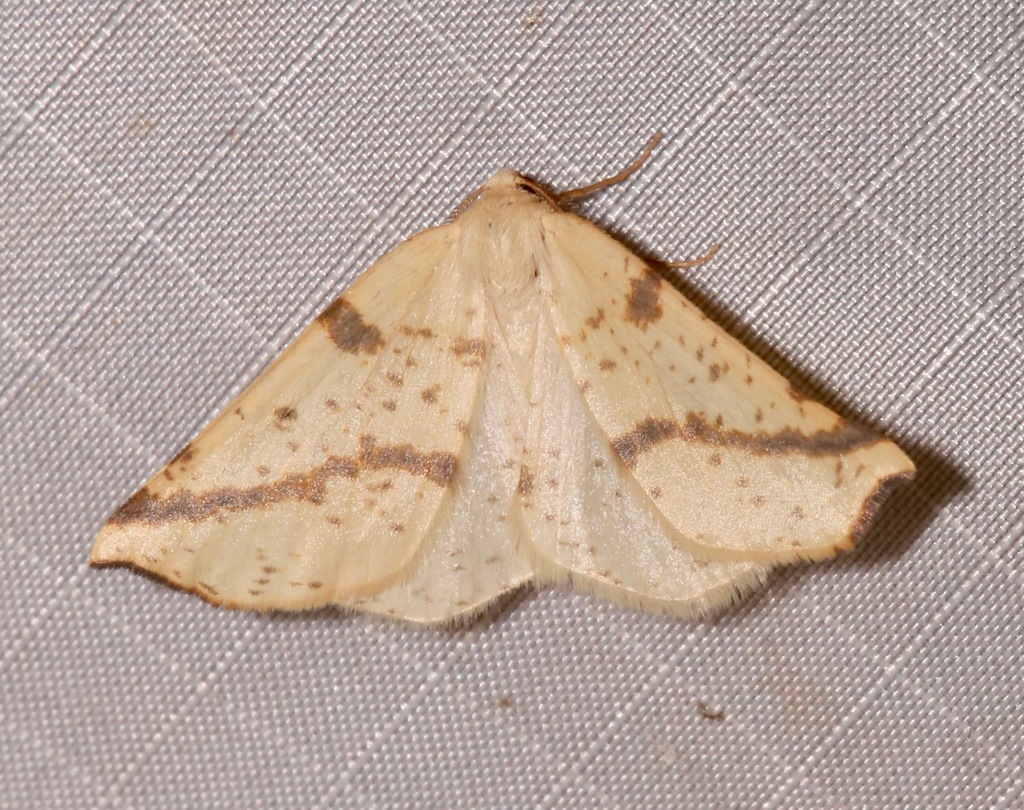
(c) Laura Gaudette, some rights reserved (CC BY) · licence
Family: Geometridae · Class: Insecta · Order: Lepidoptera
Neoterpes ephelidaria is a California animal in the Geometridae family.
Neoterpes ephelidaria is a moth species belonging to the family Geometridae, commonly known as geometer moths or measuring worms. This species is part of a diverse family characterized by larvae that move in a distinctive looping motion, extending and contracting their bodies as they crawl. As a member of the Geometridae family, adult N. ephelidaria likely displays the typical moth characteristics of this group, including relatively broad wings held horizontally when at rest and slender bodies. Geometer moths generally range from small to medium size, with wingspans typically measuring 15 to 40 millimeters, though specific measurements for N. ephelidaria are not well documented in available literature. The wing patterns and coloration of many geometrid species provide camouflage against bark, leaves, or other natural substrates. The geographic distribution of Neoterpes ephelidaria appears to be poorly documented in current scientific literature. Many geometrid moths have restricted ranges, particularly those in western North America, where numerous species are endemic to specific mountain ranges, coastal areas, or other distinct habitats. Without specific collection records or range maps, the precise distribution of this species remains unclear. Habitat requirements for N. ephelidaria are not well established in available sources. Geometridae moths typically inhabit areas where their larval host plants occur, as larvae are generally specialized feeders on specific plant families or genera. Many western geometrid species are associated with shrublands, oak woodlands, coniferous forests, or chaparral communities, depending on their host plant relationships. The life cycle of N. ephelidaria likely follows the typical geometrid pattern, with eggs laid on or near host plants, followed by several larval instars that feed on foliage. Geometrid larvae are known for their cryptic appearance, often resembling twigs or plant parts when at rest. Pupation typically occurs in soil litter or attached to vegetation. Adult flight periods vary among species but often correspond with host plant phenology and favorable environmental conditions. The conservation status of Neoterpes ephelidaria is not established, as this species lacks federal or state listing status. The limited available information suggests this may be a poorly studied or rarely encountered species. Many geometrid moths face threats from habitat loss, particularly those with narrow host plant requirements or restricted distributions. Urban development, agricultural conversion, and climate change can significantly impact moth populations, especially species dependent on specific plant communities. Further research is needed to establish basic biological and ecological information for N. ephelidaria, including its distribution, host plant relationships, habitat requirements, and population status. Comprehensive surveys and taxonomic studies would help clarify the conservation needs of this and other poorly known geometrid species in California and western North America.
Classification
Class: Insecta · Order: Lepidoptera · Family: Geometridae
Frequently asked questions
How is Neoterpes ephelidaria classified?
Neoterpes ephelidaria belongs to class Insecta, order Lepidoptera, family Geometridae.
What family does Neoterpes ephelidaria belong to?
Neoterpes ephelidaria is in the Geometridae family.
What is Neoterpes ephelidaria?
Neoterpes ephelidaria is a moth species belonging to the family Geometridae, commonly known as geometer moths or measuring worms.
Is Neoterpes ephelidaria found in California?
Yes. Neoterpes ephelidaria is recorded in California in The California Species Project's catalogue.
Related species
Other California species in the same genus, family, or bioregion.
Data from The California Species Project — 14,000+ California species with verified data from CNPS, CDFW, USFWS, and more.