Neoterpes trianguliferata
Canary Thorn
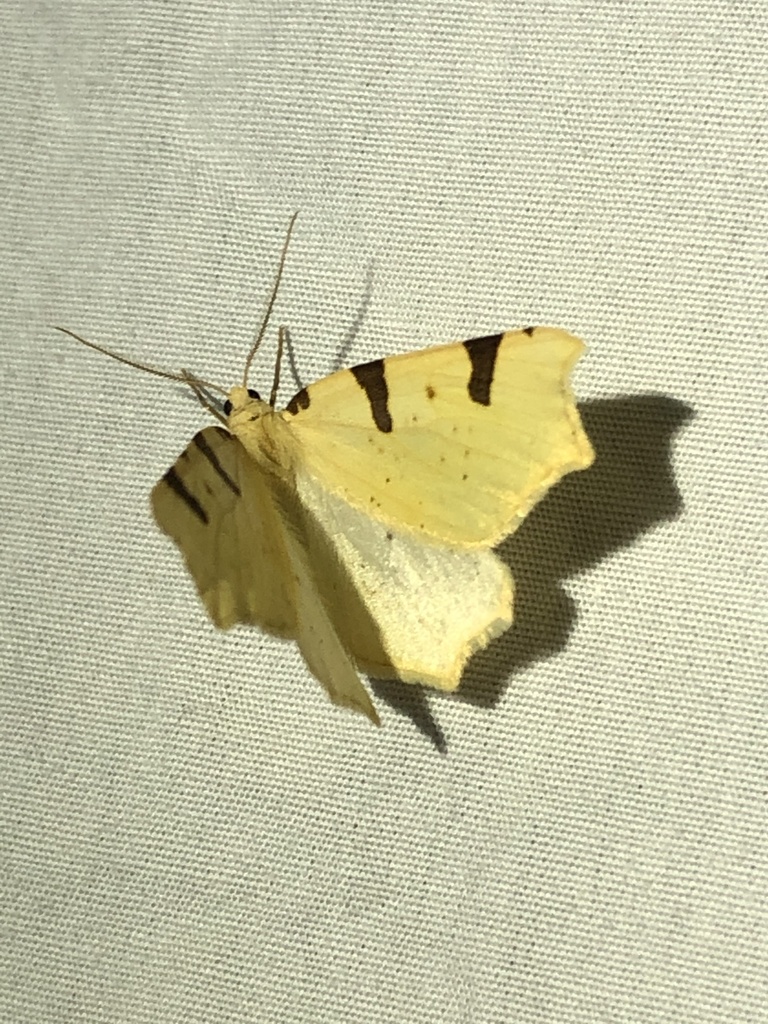
(c) Jared Shorma, some rights reserved (CC BY) · licence
Family: Geometridae · Class: Insecta · Order: Lepidoptera
Neoterpes trianguliferata (Canary Thorn) is a California animal in the Geometridae family.
The Canary Thorn (Neoterpes trianguliferata) is a geometrid moth in the subfamily Ennominae, tribe Ourapterygini. Adults are medium-sized moths with forewings measuring 14 to 20 mm in length (BugGuide 2024). The species displays the typical angular wing shape characteristic of thorn moths, with cryptic coloration that provides effective camouflage when resting on bark or vegetation during daylight hours. Neoterpes trianguliferata occurs across a broad range from southern British Columbia east to southwestern Alberta, extending south through the western United States to California, Utah, and Colorado. This species represents one of four Neoterpes species found in North America north of Mexico (BugGuide 2024). Recent collection records document the species from various locations including Idaho's Deadwood Campground in Boise County and Ferry County, Washington, indicating active populations throughout its range (Lepidopterists' Society 2019, 2011). The species inhabits diverse habitats across its range, from coastal lowlands to montane environments. Collections have been made at campgrounds and natural areas, suggesting the moth utilizes both semi-developed and pristine habitats. The broad elevational and latitudinal range indicates considerable ecological flexibility, allowing the species to occupy various forest types and woodland communities from British Columbia to California. Like other geometrid moths, Neoterpes trianguliferata larvae are caterpillars known as inchworms or loopers due to their distinctive method of locomotion. Adult flight periods vary geographically, with collection records from Idaho spanning from mid-June through July (Lepidopterists' Society 2019, 2011). The species appears to be univoltine in most areas, producing one generation per year. Adults are nocturnal and are attracted to artificial lights, which facilitates detection and study by lepidopterists. Specific host plant relationships and larval ecology remain poorly documented in the literature, representing a knowledge gap for this widespread species. Neoterpes trianguliferata does not appear on federal or state endangered species lists and lacks formal conservation status rankings. The species' broad geographic range and presence in multiple states and provinces suggest stable populations. However, like many moths, the Canary Thorn may face localized threats from habitat loss, light pollution, and climate change. The species' ability to persist across diverse habitats from sea level to mountainous regions may provide some resilience against environmental changes. Collection records from recent decades indicate the species remains detectable throughout its historical range, though systematic population monitoring has not been conducted. Detailed ecological studies of Neoterpes trianguliferata remain limited. The information presented here synthesizes available data from taxonomic databases and lepidopterist surveys. Additional research on host plant relationships, life cycle timing, and habitat requirements would enhance understanding of this widespread western North American geometrid moth.
Classification
Class: Insecta · Order: Lepidoptera · Family: Geometridae
Frequently asked questions
How is Neoterpes trianguliferata classified?
Neoterpes trianguliferata belongs to class Insecta, order Lepidoptera, family Geometridae.
What family does Neoterpes trianguliferata belong to?
Neoterpes trianguliferata is in the Geometridae family.
What is Neoterpes trianguliferata?
The Canary Thorn (Neoterpes trianguliferata) is a geometrid moth in the subfamily Ennominae, tribe Ourapterygini.
Is Neoterpes trianguliferata found in California?
Yes. Neoterpes trianguliferata is recorded in California in The California Species Project's catalogue.
Related species
Other California species in the same genus, family, or bioregion.
Data from The California Species Project — 14,000+ California species with verified data from CNPS, CDFW, USFWS, and more.