Neothremma genella
Golden-horned Caddisfly
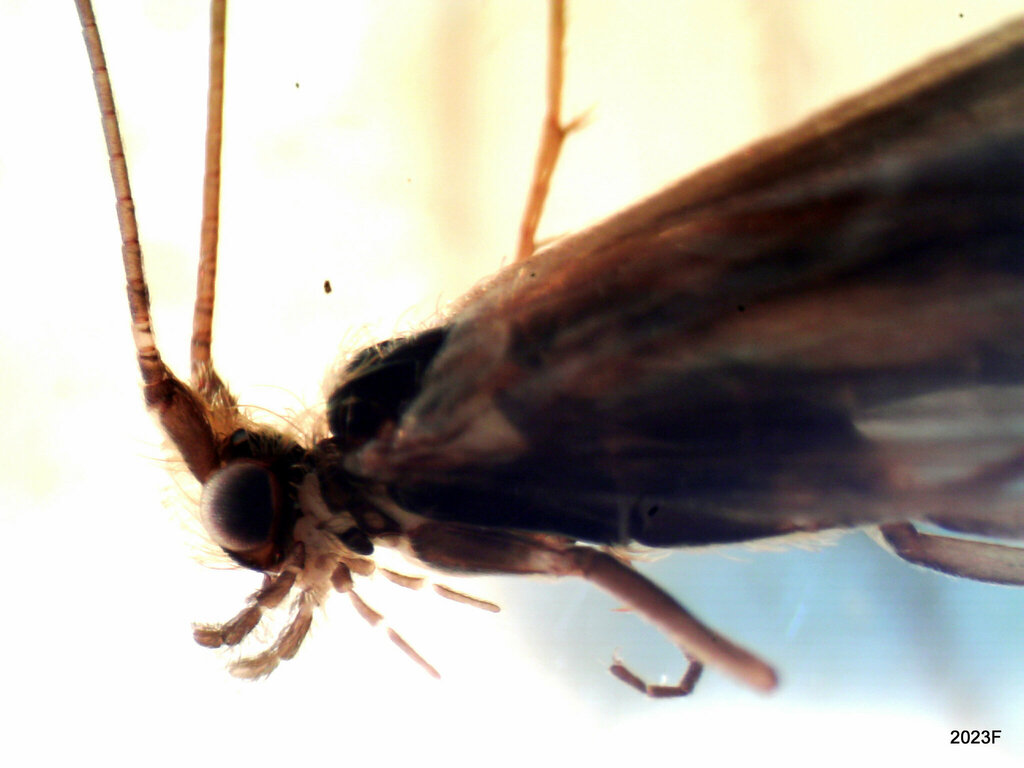
no rights reserved · CC0
Family: Uenoidae · Class: Insecta · Order: Trichoptera
Conservation status: G1G2 S2S3
Neothremma genella (Golden-horned Caddisfly) is a California animal in the Uenoidae family.
The Golden-horned caddisfly is an aquatic insect in the family Uenoidae, order Trichoptera. This species belongs to the genus Neothremma, which comprises seven species, three of which are of conservation concern to the U.S. Fish and Wildlife Service. Adult caddisflies are characterized by their tent-like wing posture when at rest and their long, thread-like antennae that often exceed body length. The "golden-horned" common name likely refers to the yellowish coloration of the antennae, though detailed morphological descriptions of this species remain limited in the scientific literature. Neothremma genella has a restricted distribution, contributing to its conservation status. The species occurs in western North America, though specific range information is not well documented in available sources. The U.S. Fish and Wildlife Service maintains records for this species but has not provided detailed range maps or county-specific occurrence data. The limited distribution appears to be a primary factor in the species' vulnerable conservation status. Like other members of the family Uenoidae, Golden-horned caddisflies are associated with cold, well-oxygenated mountain streams and springs. These aquatic insects typically inhabit areas with rocky substrates and swift-flowing water. The larval stage is entirely aquatic, constructing protective cases from small stones, sand grains, or organic debris. Adult emergence likely occurs during warmer months, though specific timing has not been well documented for this species. The association with high-quality aquatic habitats makes these insects sensitive indicators of stream ecosystem health. The life cycle follows the typical holometabolous development pattern of caddisflies, with egg, larval, pupal, and adult stages. Larvae are likely detrivorous or herbivorous, feeding on organic matter, algae, and small particles in the stream environment. Adults are generally short-lived and focus primarily on reproduction. Mating typically occurs near water sources, with females depositing eggs in or near streams where larvae will develop. The specific duration of larval development for N. genella has not been documented, but related species often require one to two years to complete development in cold mountain streams. The Golden-horned caddisfly is designated as a Species of Concern by the U.S. Fish and Wildlife Service, indicating that the agency has information suggesting listing under the Endangered Species Act may be warranted but lacks sufficient data for a formal listing proposal. The global rank of G1G2 indicates the species is critically imperiled to imperiled globally, while the state rank of S2S3 suggests it is imperiled to vulnerable at the state level. Primary threats likely include habitat degradation from water diversions, climate change impacts on mountain stream ecosystems, and potential effects from mining or logging activities in watersheds. The species' apparent rarity and restricted distribution make it particularly vulnerable to environmental changes. Conservation efforts would benefit from additional research to better understand the species' distribution, habitat requirements, and population status to inform future management decisions.
Classification
Class: Insecta · Order: Trichoptera · Family: Uenoidae
Conservation status
G1G2 S2S3
Frequently asked questions
How is Neothremma genella classified?
Neothremma genella belongs to class Insecta, order Trichoptera, family Uenoidae.
What family does Neothremma genella belong to?
Neothremma genella is in the Uenoidae family.
Is Neothremma genella protected or of conservation concern?
Neothremma genella carries the following status: G1G2 S2S3.
What is Neothremma genella?
The Golden-horned caddisfly is an aquatic insect in the family Uenoidae, order Trichoptera.
Is Neothremma genella found in California?
Yes. Neothremma genella is recorded in California in The California Species Project's catalogue.
Related species
Other California species in the same genus, family, or bioregion.
Data from The California Species Project — 14,000+ California species with verified data from CNPS, CDFW, USFWS, and more.