Neotoma albigula
White-throated Woodrat
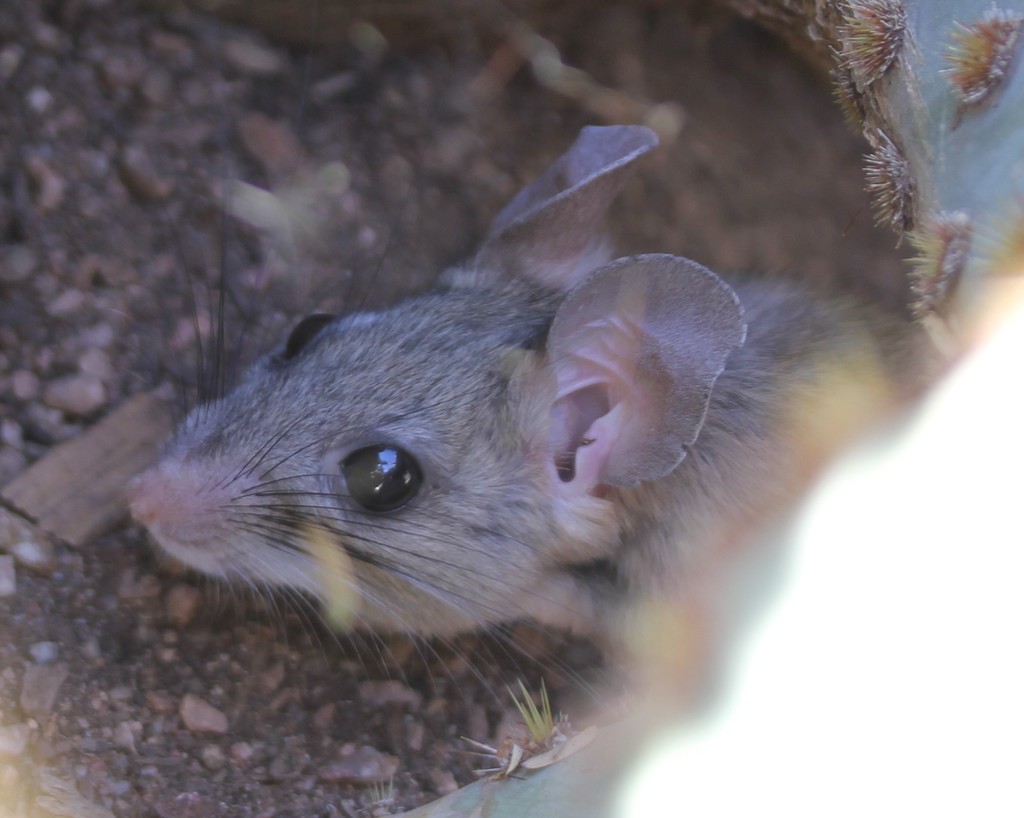
(c) Even Dankowicz, some rights reserved (CC BY) · licence
Family: Cricetidae · Class: Mammalia · Order: Rodentia
Neotoma albigula (White-throated Woodrat) is a California animal in the Cricetidae family.
The White-throated Woodrat is a medium-sized rodent measuring 230 to 260 millimeters (9.0 to 10.2 inches) in total length, with a tail length of 110 to 130 millimeters (4.3 to 5.1 inches). Adults typically weigh between 150 to 230 grams (5.3 to 8.1 ounces). The species is characterized by its grayish-brown dorsal pelage with darker guard hairs, while the ventral surface is white to pale gray. The throat and chest are distinctly white, giving the species its common name. The tail is bicolored, dark above and light below, and is well-furred but not heavily bushy like some congeners. The ears are large and prominent, measuring 20 to 25 millimeters in length. The White-throated Woodrat occurs primarily in the southwestern United States and northwestern Mexico. In California, the species is found in the southeastern desert regions, including portions of the Mojave Desert in San Bernardino County and along the Colorado River valley in Riverside and Imperial counties. The distribution extends eastward through Arizona, New Mexico, and into western Texas, with populations also present in Nevada and Utah. This species inhabits arid and semi-arid environments, typically associated with rocky outcrops, canyon walls, and desert scrub communities. White-throated Woodrats construct their stick houses, or middens, in rock crevices, cliff faces, and among large boulder formations at elevations ranging from below sea level to approximately 1,200 meters (3,940 feet). The surrounding vegetation is characterized by creosote bush scrub, desert wash woodland, and mixed desert shrub communities. Common plant associates include creosote bush, burrobush, desert willow, and various cacti species. White-throated Woodrats are primarily nocturnal and herbivorous, feeding on a variety of plant materials including leaves, stems, fruits, and seeds. Their diet includes prickly pear cactus pads, mesquite pods, jojoba seeds, and green vegetation from shrubs and forbs. The species is known for its ability to consume succulent plants high in oxalates and secondary compounds that would be toxic to many other mammals. Breeding occurs primarily from February through May, with females producing one to three litters per year. Litter size ranges from one to four young, with an average of two to three offspring. Gestation period is approximately 30 to 35 days. The White-throated Woodrat is not currently listed under the federal Endangered Species Act or by the state of California. Populations appear to be stable throughout most of the species' range, though local declines may occur due to habitat modification and urban development. Primary threats include residential and commercial development in desert areas, off-road vehicle use that damages habitat structure, and grazing by domestic livestock that alters vegetation communities. Climate change may pose future challenges through altered precipitation patterns and increased temperatures affecting food plant availability and water resources in desert ecosystems.
Classification
Class: Mammalia · Order: Rodentia · Family: Cricetidae
Frequently asked questions
How is Neotoma albigula classified?
Neotoma albigula belongs to class Mammalia, order Rodentia, family Cricetidae.
What family does Neotoma albigula belong to?
Neotoma albigula is in the Cricetidae family.
What is Neotoma albigula?
The White-throated Woodrat is a medium-sized rodent measuring 230 to 260 millimeters (9.0 to 10.2 inches) in total length, with a tail length of 110 to 130 millimeters (4.3 to 5.1 inches).
Is Neotoma albigula found in California?
Yes. Neotoma albigula is recorded in California in The California Species Project's catalogue.
Related species
Other California species in the same genus, family, or bioregion.
Data from The California Species Project — 14,000+ California species with verified data from CNPS, CDFW, USFWS, and more.