Neotoma bryanti
Bryant’s Woodrat
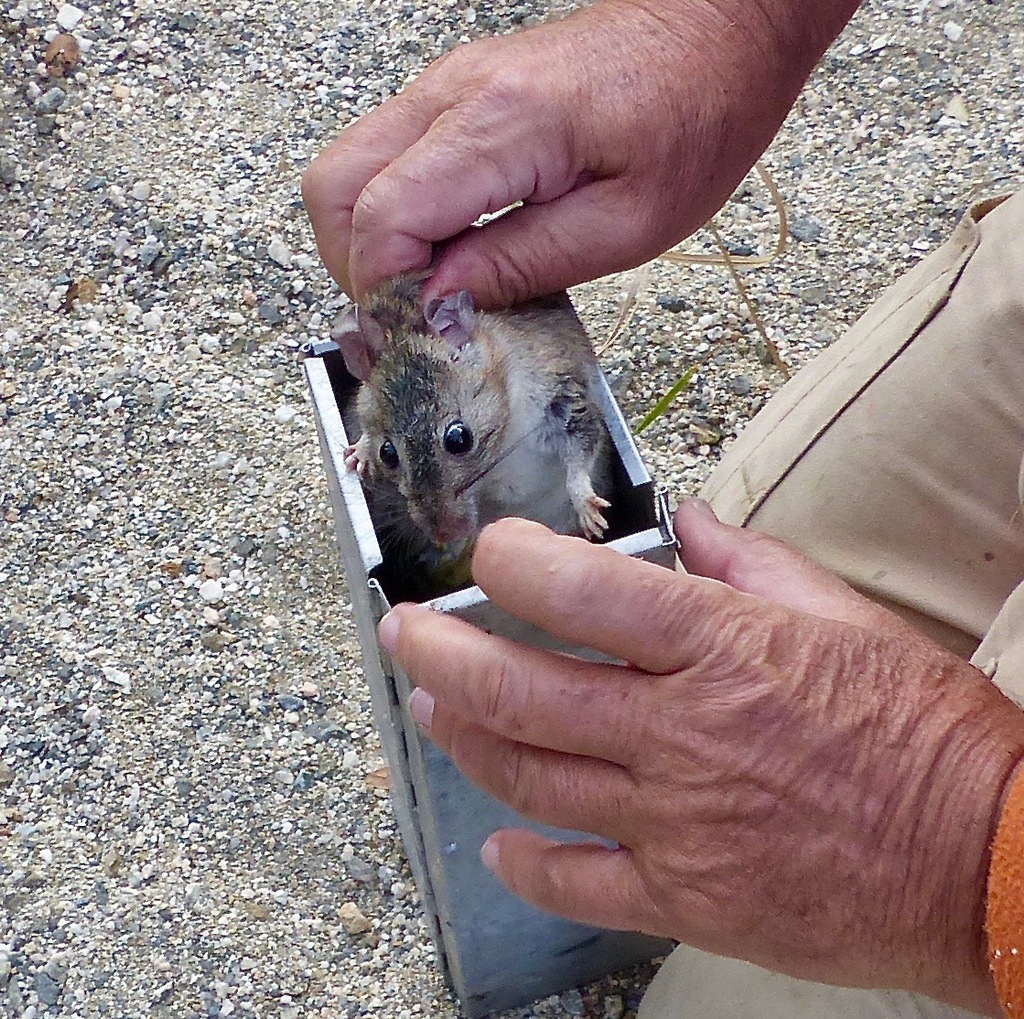
(c) Bill Levine, some rights reserved (CC BY) · licence
Family: Cricetidae · Class: Mammalia · Order: Rodentia
Neotoma bryanti (Bryant’s Woodrat) is a California animal in the Cricetidae family.
Bryant's woodrat (Neotoma bryanti), also known as the Cedros Island wood rat, is a medium-sized rodent endemic to Cedros Island off the Pacific coast of Baja California, Mexico. Adults typically measure 280 to 350 mm (11 to 14 inches) in total length, with the tail comprising approximately half of this measurement. The body weight ranges from 200 to 300 grams (7 to 11 ounces). The species exhibits the characteristic woodrat build with large ears, prominent black eyes, and a long, densely furred tail that is darker above and lighter below. The dorsal pelage is grayish-brown to brownish-gray, while the ventral surface is white to pale gray. The feet are white, and the tail displays a distinct bicolored pattern with dark upper surfaces and white undersides. Bryant's woodrat is restricted to Cedros Island, a 348-square-kilometer (134-square-mile) island located approximately 20 kilometers (12 miles) off the west coast of Baja California's central peninsula. This represents one of the most geographically limited distributions of any woodrat species. The species occurs from sea level to the island's highest elevations of approximately 1,200 meters (3,900 feet). The species inhabits diverse vegetation communities across Cedros Island, including coastal sage scrub, desert scrub, and oak woodland areas. Primary vegetation includes manzanita (Arctostaphylos), ceanothus, and oak species at higher elevations, transitioning to drought-adapted shrubs and cacti in lower areas. Bryant's woodrat constructs large stick houses, or middens, typically positioned in rock crevices, under dense shrubs, or against cliff faces. These structures serve as shelter, food storage sites, and protection from predators. Bryant's woodrat is nocturnal and primarily herbivorous, feeding on leaves, stems, flowers, and fruits of various shrubs and trees. The diet varies seasonally based on plant availability, with succulent plants providing important moisture during dry periods. Breeding occurs primarily from spring through early fall, with females producing one to three litters annually. Litter size typically ranges from two to four young, with a gestation period of approximately 30 to 35 days. Young reach sexual maturity at three to four months of age. The conservation status of Bryant's woodrat reflects its extremely restricted range. While not federally listed in the United States due to its occurrence entirely within Mexico, the species faces potential threats from habitat modification, introduced species, and climate change impacts on island ecosystems. The Mexican government recognizes the species under its national wildlife protection framework. Cedros Island's isolation has historically protected the species from many mainland threats, but this same isolation makes populations vulnerable to catastrophic events. Current population estimates are not well documented, though the species appears to maintain stable numbers across suitable habitat on the island. Conservation efforts focus on habitat protection and monitoring of potential threats to the island's ecosystem integrity.
Classification
Class: Mammalia · Order: Rodentia · Family: Cricetidae
Frequently asked questions
How is Neotoma bryanti classified?
Neotoma bryanti belongs to class Mammalia, order Rodentia, family Cricetidae.
What family does Neotoma bryanti belong to?
Neotoma bryanti is in the Cricetidae family.
What is Neotoma bryanti?
Bryant's woodrat (Neotoma bryanti), also known as the Cedros Island wood rat, is a medium-sized rodent endemic to Cedros Island off the Pacific coast of Baja California, Mexico.
Is Neotoma bryanti found in California?
Yes. Neotoma bryanti is recorded in California in The California Species Project's catalogue.
Related species
Other California species in the same genus, family, or bioregion.
Data from The California Species Project — 14,000+ California species with verified data from CNPS, CDFW, USFWS, and more.