Neotoma fuscipes annectens
San Francisco Dusky-footed Woodrat
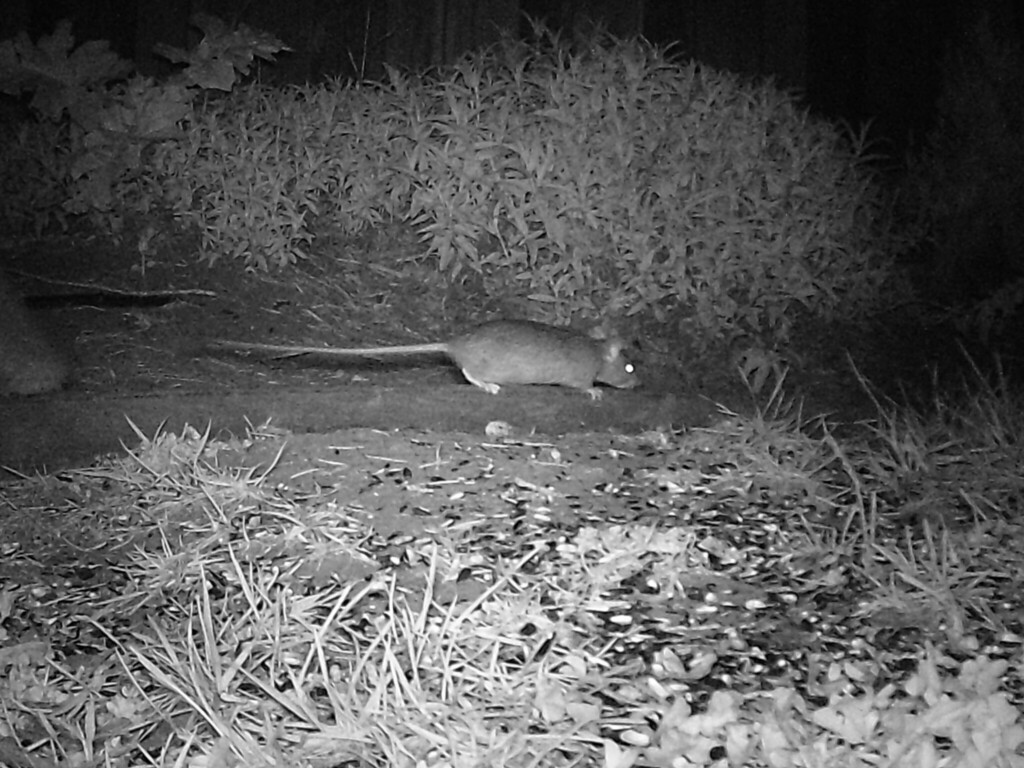
(c) Jason Hill, some rights reserved (CC BY) · licence
Family: Cricetidae · Class: Mammalia · Order: Rodentia
Conservation status: G5T2T3 S2S3
Neotoma fuscipes annectens (San Francisco Dusky-footed Woodrat) is a California animal in the Cricetidae family.
The San Francisco dusky-footed woodrat (Neotoma fuscipes annectens) is a medium-sized rodent subspecies endemic to the San Francisco Bay Area. Adults typically measure 160-240 mm (6.3-9.4 inches) in body length with tails ranging 180-250 mm (7.1-9.8 inches). The species weighs between 200-400 grams (7.1-14.1 ounces). The dorsal pelage is grayish-brown to dusky brown, while the ventral surface is lighter grayish-white. The distinctive dusky-colored hind feet give the species its common name. The tail is bicolored, dark above and lighter below, with a prominent tuft at the tip. This subspecies is restricted to the San Francisco Bay Area in California, including portions of Marin, San Francisco, San Mateo, Santa Clara, Alameda, and Contra Costa counties. The range represents a significant reduction from historical distribution, with populations now fragmented across the urbanized landscape. The subspecies occurs from sea level to approximately 600 meters (1,970 feet) elevation in areas surrounding San Francisco Bay. San Francisco dusky-footed woodrats inhabit chaparral, oak woodlands, riparian forests, and coastal scrub communities. They show strong preference for areas with dense understory vegetation and abundant woody debris. The species requires complex three-dimensional habitat structure, utilizing both ground-level cover and shrub canopy layers. Riparian corridors and oak-dominated habitats provide optimal conditions, particularly areas with coast live oak, California bay laurel, and associated native shrubs. These nocturnal rodents are primarily herbivorous, feeding on green vegetation, fungi, seeds, and bark. They construct elaborate stick houses called middens, which can reach 1-2 meters in height and serve multiple generations. These structures provide protection from predators and weather while serving as food storage sites. Breeding occurs primarily from February through September, with females producing 1-3 litters annually. Litter size ranges from 2-4 young after a gestation period of approximately 33 days. Young remain in natal territories for several months before dispersing. The subspecies is classified with a Global/State Rank of G5T2T3 S2S3, indicating the full species is secure globally but this subspecies faces moderate to high risk of extirpation. Primary threats include habitat loss and fragmentation due to urban development, which has eliminated much of the historical range. Remaining populations are increasingly isolated, limiting gene flow and making populations vulnerable to local extinctions. Invasive plant species alter habitat structure and reduce native food sources. Vehicle strikes affect dispersing individuals crossing roads between habitat fragments. Fire suppression has altered natural fire regimes, leading to changes in vegetation structure that may impact habitat quality. Climate change poses additional threats through altered precipitation patterns and increased wildfire risk. Conservation efforts focus on habitat protection, corridor establishment to connect fragmented populations, and restoration of native plant communities within the subspecies' range.
Classification
Class: Mammalia · Order: Rodentia · Family: Cricetidae
Conservation status
G5T2T3 S2S3
Frequently asked questions
How is Neotoma fuscipes annectens classified?
Neotoma fuscipes annectens belongs to class Mammalia, order Rodentia, family Cricetidae.
What family does Neotoma fuscipes annectens belong to?
Neotoma fuscipes annectens is in the Cricetidae family.
Is Neotoma fuscipes annectens protected or of conservation concern?
Neotoma fuscipes annectens carries the following status: G5T2T3 S2S3.
What is Neotoma fuscipes annectens?
The San Francisco dusky-footed woodrat (Neotoma fuscipes annectens) is a medium-sized rodent subspecies endemic to the San Francisco Bay Area.
Is Neotoma fuscipes annectens found in California?
Yes. Neotoma fuscipes annectens is recorded in California in The California Species Project's catalogue.
Related species
Other California species in the same genus, family, or bioregion.
Data from The California Species Project — 14,000+ California species with verified data from CNPS, CDFW, USFWS, and more.