Neotoma lepida
Desert Woodrat
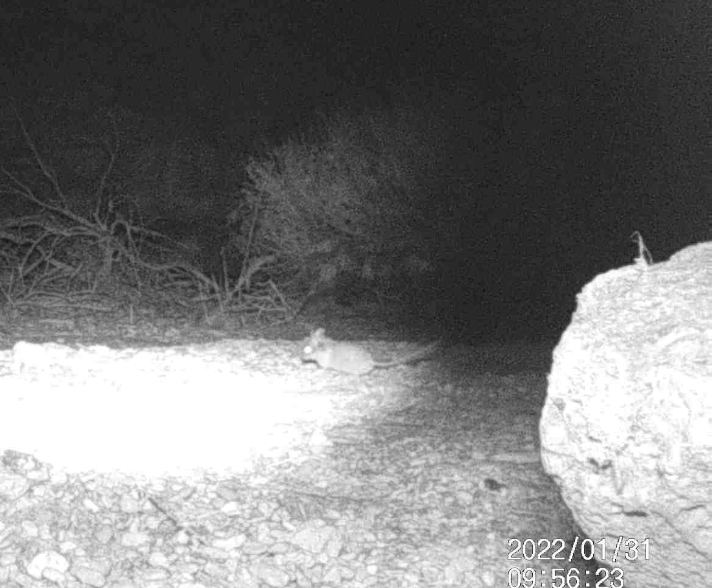
(c) Matt Berger, some rights reserved (CC BY) · licence
Family: Cricetidae · Class: Mammalia · Order: Rodentia
Neotoma lepida (Desert Woodrat) is a California animal in the Cricetidae family.
The desert woodrat is a medium-sized rodent endemic to arid regions of western North America, including southeastern California. Adults measure 230 to 260 mm (9.1 to 10.2 inches) in total length, with the tail comprising approximately half of this measurement. Body weight ranges from 120 to 180 grams (4.2 to 6.3 ounces). The dorsal pelage is grayish-brown to buff-colored, while the ventral surface is white or cream. The tail is distinctly bicolored, dark above and light below, with a conspicuous tuft of long hairs at the tip. Large ears and prominent dark eyes are characteristic features, with the hind feet measuring 28 to 35 mm in length. In California, desert woodrats occur primarily in the Mojave and Sonoran deserts of the southeastern counties, including Imperial, Riverside, San Bernardino, and Inyo counties. The species ranges from sea level to approximately 1,200 meters (3,900 feet) elevation. Historical records extend throughout suitable habitat in these desert regions, though current distribution may be more fragmented due to habitat modification. Desert woodrats inhabit arid shrublands, desert scrub, and rocky areas with adequate cover. They show strong association with dense shrub growth, particularly areas dominated by creosote bush, Joshua trees, cholla cactus, and desert broom. Rocky outcrops, boulder fields, and areas with fallen logs or debris provide essential nesting sites. The species requires areas with sufficient woody material for constructing their characteristic stick houses, which can reach 1.5 meters in height and contain multiple chambers. These nocturnal rodents are herbivorous, feeding primarily on green vegetation, fruits, seeds, and bark. Cactus pads and fruits constitute important food sources, with the animals capable of processing high-water-content succulent materials. Desert woodrats are known for their elaborate stick houses or middens, constructed from twigs, cactus joints, and other plant materials. These structures serve as shelter, food storage sites, and protection from predators. Breeding occurs primarily from February through May, with females producing one to three litters per year. Gestation lasts approximately 30 to 36 days, with litter sizes ranging from one to five young, typically two to three. Desert woodrats exhibit territorial behavior, with individuals defending their stick houses and surrounding foraging areas. They are excellent climbers and can navigate vertical rock faces and thorny vegetation with ease. Water requirements are met primarily through metabolic water production and moisture obtained from vegetation, though they will drink free water when available. The species currently lacks federal or state conservation listing status and appears to maintain stable populations across much of its range. However, habitat degradation from urban development, off-road vehicle use, and invasive plant species may impact local populations. Solar energy development in desert regions poses an emerging threat to suitable habitat. Climate change effects, including increased temperatures and altered precipitation patterns, may influence future population dynamics and habitat suitability in the region's arid ecosystems.
Classification
Class: Mammalia · Order: Rodentia · Family: Cricetidae
Frequently asked questions
How is Neotoma lepida classified?
Neotoma lepida belongs to class Mammalia, order Rodentia, family Cricetidae.
What family does Neotoma lepida belong to?
Neotoma lepida is in the Cricetidae family.
What is Neotoma lepida?
The desert woodrat is a medium-sized rodent endemic to arid regions of western North America, including southeastern California.
Is Neotoma lepida found in California?
Yes. Neotoma lepida is recorded in California in The California Species Project's catalogue.
Related species
Other California species in the same genus, family, or bioregion.
Data from The California Species Project — 14,000+ California species with verified data from CNPS, CDFW, USFWS, and more.