Neotoma macrotis
Big-eared Woodrat
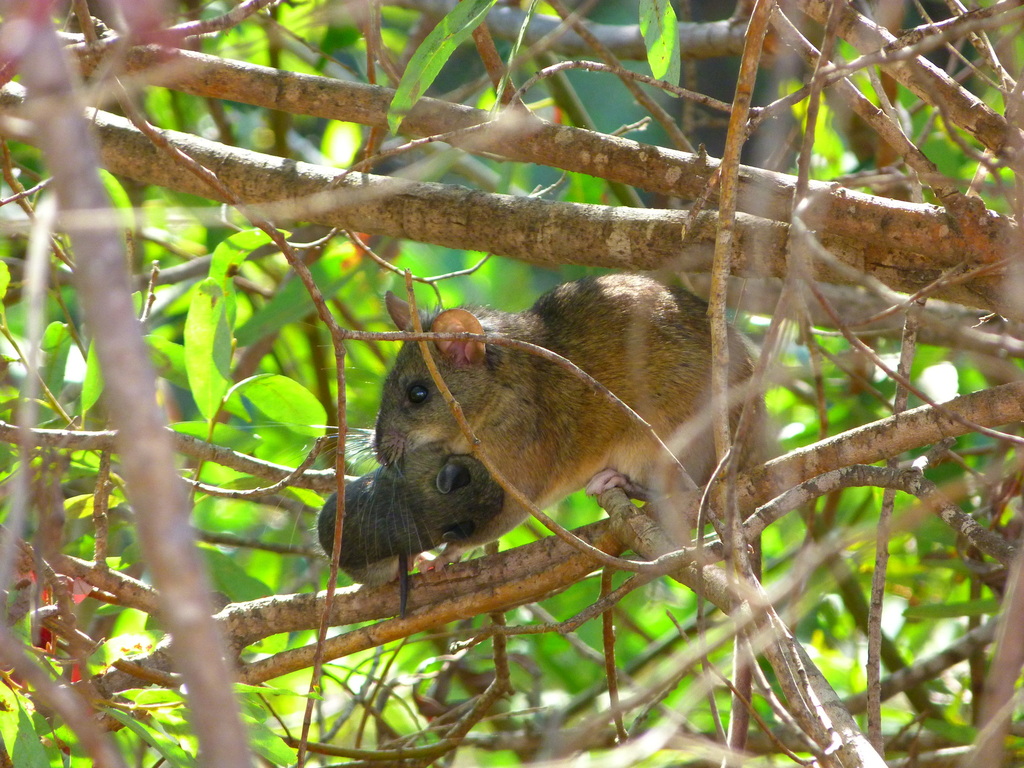
(c) Zack Abbey, some rights reserved (CC BY) · licence
Family: Cricetidae · Class: Mammalia · Order: Rodentia
Neotoma macrotis (Big-eared Woodrat) is a California animal in the Cricetidae family.
The big-eared woodrat is a medium-sized rodent distinguished by its exceptionally large ears and long, densely furred tail. Adults measure 250 to 350 mm (9.8 to 13.8 inches) in total length, with the tail comprising approximately half of this measurement. Body weight ranges from 180 to 350 grams (6.3 to 12.3 ounces). The species exhibits grayish-brown to buff-colored dorsal fur with white to pale gray ventral coloration. The ears are notably large, measuring 25 to 35 mm (1.0 to 1.4 inches) in length, and are sparsely haired. The tail is bicolored, dark above and light below, and is well-furred rather than scaly like many rodent species. Big-eared woodrats historically occurred throughout much of California, from sea level to approximately 2,400 meters (7,900 feet) elevation. Their range extended from the northern Central Valley south through the Sierra Nevada foothills, Coast Ranges, and into southern California. However, current distribution is significantly more fragmented, with populations persisting primarily in foothill and montane regions. The species has experienced substantial range contractions, particularly in the Central Valley and coastal areas where habitat conversion has been extensive. This species inhabits oak woodlands, chaparral, and mixed coniferous forests, showing a strong preference for areas with dense shrub cover and rocky outcrops. Big-eared woodrats construct distinctive stick houses or dens in caves, rock crevices, and beneath dense vegetation. These structures, built from twigs, bark, and other plant materials, can measure up to 1.5 meters (5 feet) in diameter and serve as nests, food storage areas, and protection from predators. The species demonstrates strong site fidelity, with dens often used by successive generations. Big-eared woodrats are primarily nocturnal and herbivorous, feeding on leaves, stems, bark, and fruits of various plant species. They show particular preference for oak leaves and acorns when available. The species exhibits unusual dietary adaptations, including the ability to consume plants with high concentrations of secondary compounds that are toxic to other mammals. Breeding typically occurs from February through September, with females producing one to three litters annually. Litter size ranges from one to four young, with a gestation period of approximately 30 to 35 days. While not federally listed, big-eared woodrats face significant conservation challenges throughout their California range. Primary threats include habitat loss due to urban development, agricultural conversion, and altered fire regimes. Fragmentation of oak woodland and chaparral habitats has isolated populations, potentially reducing genetic diversity and population viability. Climate change poses additional concerns through increased wildfire frequency and shifts in vegetation communities. Several subspecies within California are considered sensitive by the California Department of Fish and Wildlife, reflecting the species' vulnerability to continued habitat modifications.
Classification
Class: Mammalia · Order: Rodentia · Family: Cricetidae
Frequently asked questions
How is Neotoma macrotis classified?
Neotoma macrotis belongs to class Mammalia, order Rodentia, family Cricetidae.
What family does Neotoma macrotis belong to?
Neotoma macrotis is in the Cricetidae family.
What is Neotoma macrotis?
The big-eared woodrat is a medium-sized rodent distinguished by its exceptionally large ears and long, densely furred tail.
Is Neotoma macrotis found in California?
Yes. Neotoma macrotis is recorded in California in The California Species Project's catalogue.
Related species
Other California species in the same genus, family, or bioregion.
Data from The California Species Project — 14,000+ California species with verified data from CNPS, CDFW, USFWS, and more.