Neotoma macrotis luciana
Monterey Dusky-footed Woodrat
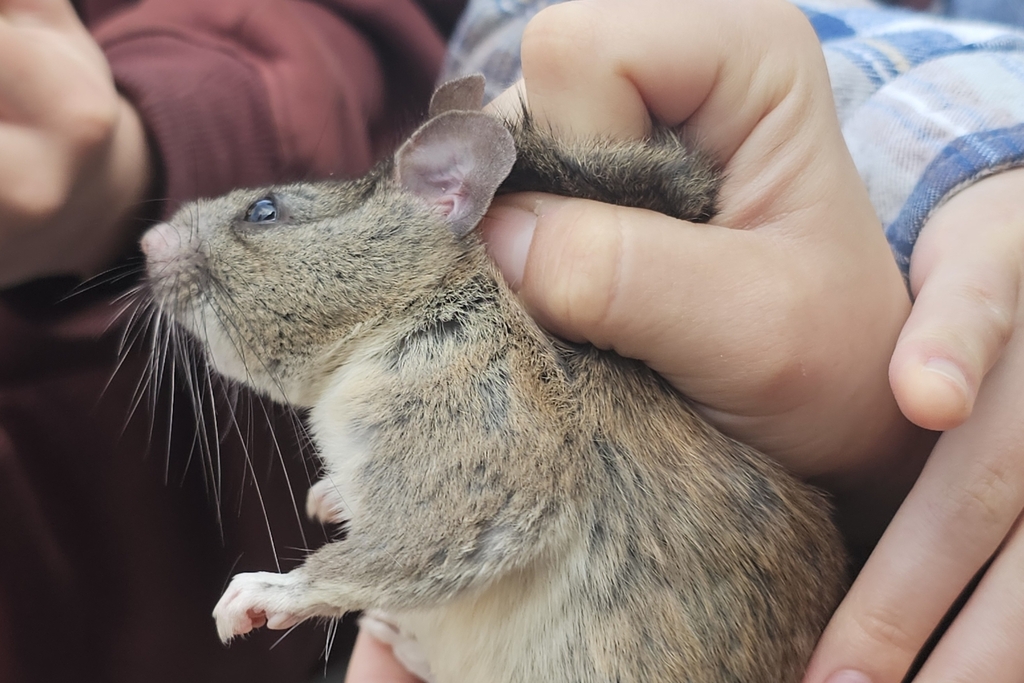
no rights reserved · CC0
Family: Cricetidae · Class: Mammalia · Order: Rodentia
Conservation status: G5T3 S3
Neotoma macrotis luciana (Monterey Dusky-footed Woodrat) is a California animal in the Cricetidae family.
The Monterey dusky-footed woodrat (Neotoma macrotis luciana) is a medium-sized rodent subspecies endemic to coastal central California. Adults typically measure 23 to 28 centimeters (9 to 11 inches) in body length with tails reaching 20 to 25 centimeters (8 to 10 inches). The subspecies is characterized by relatively large ears, dense grayish-brown dorsal fur, and lighter-colored ventral surfaces. The tail is moderately bushy and typically darker above than below, distinguishing it from other woodrat subspecies in the region. According to NatureServe Explorer, the Monterey dusky-footed woodrat occurs along coastal California from Monterey Bay to Morro Bay. This narrow endemic range encompasses portions of Monterey, San Luis Obispo, and Santa Barbara counties. The subspecies is restricted to coastal terraces, hillsides, and canyon bottoms within approximately 25 kilometers of the Pacific Ocean. The subspecies inhabits dense chaparral, coastal scrub, and oak woodland communities. Primary vegetation associations include chamise chaparral, coyote brush scrub, coast live oak woodlands, and riparian corridors. The species shows strong preference for areas with dense understory vegetation and rocky outcrops that provide cover and nesting sites. Elevations typically range from sea level to 600 meters (2,000 feet), though most populations occur below 300 meters. Monterey dusky-footed woodrats are nocturnal and primarily herbivorous, feeding on green vegetation, bark, twigs, and fruits. The subspecies is known for constructing elaborate stick nests, called houses, which can reach 1.5 meters in height and diameter. These structures serve as shelter, food storage, and nursery sites. Breeding occurs primarily from February through September, with females producing one to four litters annually. Litter sizes range from one to five young, with an average of two to three offspring per litter. The subspecies has experienced significant population declines due to habitat loss and fragmentation. Urban development, agricultural conversion, and altered fire regimes have eliminated or degraded much of the coastal scrub and chaparral habitat. The Global/State Rank of G5T3 S3 indicates the subspecies is vulnerable to extirpation, with 21 to 100 occurrences remaining. According to Animal Diversity Web, habitat destruction in chaparral areas due to anthropogenic development represents the primary conservation concern for big-eared woodrats generally. Conservation efforts focus on habitat protection and restoration within the subspecies' limited range. Several populations occur on protected lands, including state parks and university properties. Fire management that maintains natural burn cycles while preventing catastrophic wildfire is essential for preserving chaparral habitat. The subspecies is considered in various habitat conservation plans throughout its range, recognizing its role as an indicator species for coastal scrub ecosystems and its importance as prey for raptors and other predators.
Classification
Class: Mammalia · Order: Rodentia · Family: Cricetidae
Conservation status
G5T3 S3
Frequently asked questions
How is Neotoma macrotis luciana classified?
Neotoma macrotis luciana belongs to class Mammalia, order Rodentia, family Cricetidae.
What family does Neotoma macrotis luciana belong to?
Neotoma macrotis luciana is in the Cricetidae family.
Is Neotoma macrotis luciana protected or of conservation concern?
Neotoma macrotis luciana carries the following status: G5T3 S3.
What is Neotoma macrotis luciana?
The Monterey dusky-footed woodrat (Neotoma macrotis luciana) is a medium-sized rodent subspecies endemic to coastal central California.
Is Neotoma macrotis luciana found in California?
Yes. Neotoma macrotis luciana is recorded in California in The California Species Project's catalogue.
Related species
Other California species in the same genus, family, or bioregion.
Data from The California Species Project — 14,000+ California species with verified data from CNPS, CDFW, USFWS, and more.