Nepytia lagunata
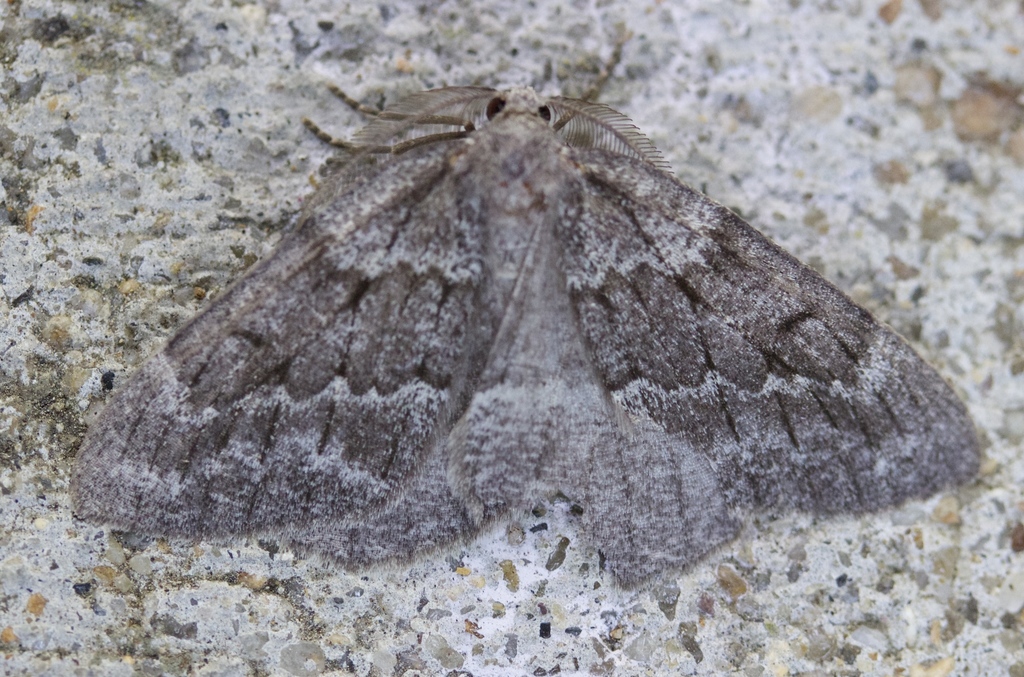
(c) John Hibbard, some rights reserved (CC BY) · licence
Family: Geometridae · Class: Insecta · Order: Lepidoptera
Nepytia lagunata is a California animal in the Geometridae family.
Nepytia lagunata is a geometrid moth in the family Geometridae, belonging to the order Lepidoptera. This species represents one of many endemic moths found within California's diverse ecosystems, though detailed morphological descriptions remain limited in the scientific literature. As a member of the Geometridae family, commonly known as geometer moths or inchworm moths, N. lagunata likely exhibits the characteristic features of this group. Adult geometrids typically display relatively broad wings held horizontally when at rest, with wing patterns that often provide effective camouflage against tree bark or foliage. The forewings and hindwings are usually similar in size, and many species show cryptic coloration with intricate patterns of lines, bands, or mottled designs. Without specific morphological data available, the exact size, wingspan, and coloration patterns of N. lagunata remain undocumented in accessible literature. The geographic distribution of Nepytia lagunata appears to be restricted to California, though precise range boundaries have not been thoroughly documented. Many geometrid species exhibit limited distributions, particularly those adapted to specific host plants or habitat conditions. The species' occurrence within California suggests it may be associated with particular vegetation communities or elevation zones, but specific locality records require further investigation. Habitat requirements for N. lagunata remain largely uncharacterized. Geometridae moths typically inhabit forested or woodland environments where their larvae can access appropriate host plants. Many species in this family show strong associations with specific plant families or genera, with larvae feeding on leaves, flowers, or developing seeds. The caterpillars, known as inchworms or loopers due to their distinctive locomotion, often demonstrate remarkable camouflage, resembling twigs or leaf stems. The life cycle and ecological behavior of N. lagunata follow the typical geometrid pattern, though specific details remain undocumented. Most Geometridae species are univoltine, producing one generation per year, though some may have two broods in favorable conditions. Adults are generally nocturnal, attracted to artificial lights, and feed on nectar from flowers or tree sap. Mating typically occurs during specific seasonal windows, often coinciding with optimal environmental conditions for larval development. Larvae likely undergo several instars before pupating, either in soil or attached to vegetation. The timing of adult emergence probably corresponds with the availability of host plants and suitable weather conditions for reproduction. Many geometrid species show synchronized emergence patterns that maximize mating opportunities within local populations. The conservation status of Nepytia lagunata has not been formally assessed by federal or state agencies. The species lacks federal or state listing status, and no specific population monitoring programs appear to be in place. This absence of conservation attention may reflect either stable populations or insufficient scientific study rather than actual conservation security. Many endemic California moths face threats from habitat loss, climate change, and altered fire regimes, though the specific vulnerabilities of N. lagunata remain unknown. Further taxonomic and ecological research would be necessary to evaluate this species' conservation needs and develop appropriate management strategies if required.
Classification
Class: Insecta · Order: Lepidoptera · Family: Geometridae
Frequently asked questions
How is Nepytia lagunata classified?
Nepytia lagunata belongs to class Insecta, order Lepidoptera, family Geometridae.
What family does Nepytia lagunata belong to?
Nepytia lagunata is in the Geometridae family.
What is Nepytia lagunata?
Nepytia lagunata is a geometrid moth in the family Geometridae, belonging to the order Lepidoptera.
Is Nepytia lagunata found in California?
Yes. Nepytia lagunata is recorded in California in The California Species Project's catalogue.
Related species
Other California species in the same genus, family, or bioregion.
Data from The California Species Project — 14,000+ California species with verified data from CNPS, CDFW, USFWS, and more.