Nerodia fasciata
Southern Watersnake
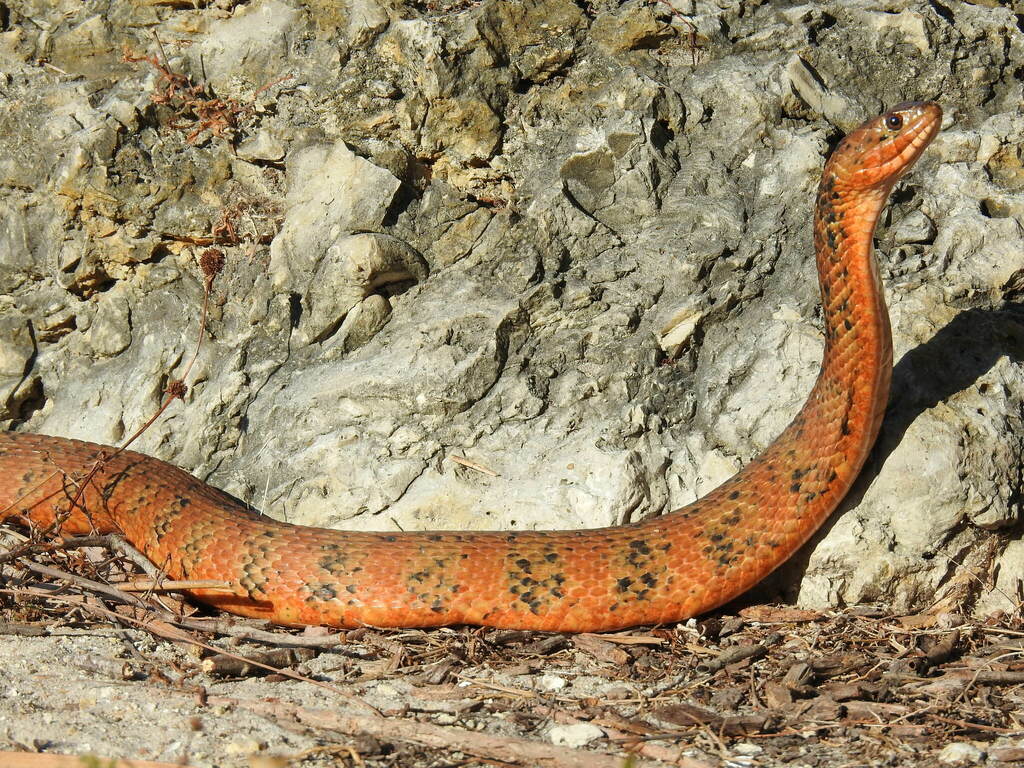
(c) Andrew Durso, some rights reserved (CC BY) · licence
Family: Colubridae · Class: Reptilia · Order: Squamata
Nerodia fasciata (Southern Watersnake) is a California animal in the Colubridae family.
The Southern Watersnake is a medium-sized, semi-aquatic serpent native to the southeastern United States. Adults typically measure 610 to 1,070 mm (24 to 42 inches) in total length, with females generally larger than males. The body is moderately heavy with a distinct head and keeled scales. Coloration varies considerably, ranging from light brown to dark brown or reddish-brown with darker crossbands across the back and sides. These bands are most prominent in juveniles and may become obscured in older adults, particularly females. The belly is cream to yellow with dark square or rectangular markings. When threatened, the species flattens its body and may release a foul-smelling musk. Historically, the Southern Watersnake ranged from the coastal plains of North Carolina south through Florida and west to eastern Texas and southeastern Oklahoma. The species occurs in two disjunct populations: the eastern subspecies (N. f. fasciata) inhabits the Atlantic and Gulf coastal plains, while the western subspecies (N. f. confluens) occurs in portions of Texas, Louisiana, Arkansas, and Oklahoma. In California, this species is not native and any occurrences would represent introduced populations or escaped captive animals. Southern Watersnakes inhabit freshwater and brackish aquatic environments including swamps, marshes, ponds, lakes, streams, and rivers. They show strong preference for areas with abundant aquatic vegetation and basking sites such as fallen logs, stumps, and overhanging branches. The species tolerates a range of water conditions from clear to turbid and from still to moderately flowing waters. They are commonly found in cypress swamps, bottomland hardwood forests, and coastal marshes at elevations from sea level to approximately 200 meters. This species is primarily diurnal and semi-aquatic, spending considerable time both in water and on adjacent land. Southern Watersnakes are excellent swimmers and divers, capable of remaining submerged for extended periods. Their diet consists almost entirely of fish and amphibians, including catfish, sunfish, bass, frogs, and salamanders. Prey is captured underwater and swallowed whole. Mating occurs in spring, typically from March through May. Females are ovoviviparous, giving birth to live young after a gestation period of approximately 4 to 5 months. Litter sizes range from 8 to 57 offspring, with an average of 20 to 30 young. Neonates measure 190 to 250 mm (7.5 to 10 inches) at birth. The Southern Watersnake is not federally listed and maintains stable populations throughout most of its native range. The species faces localized threats from habitat destruction, wetland drainage, and water pollution. Urban development and agricultural conversion of wetlands have reduced suitable habitat in some areas. Climate change may affect the species through altered precipitation patterns and increased frequency of extreme weather events affecting aquatic habitats.
Classification
Class: Reptilia · Order: Squamata · Family: Colubridae
Frequently asked questions
How is Nerodia fasciata classified?
Nerodia fasciata belongs to class Reptilia, order Squamata, family Colubridae.
What family does Nerodia fasciata belong to?
Nerodia fasciata is in the Colubridae family.
What is Nerodia fasciata?
The Southern Watersnake is a medium-sized, semi-aquatic serpent native to the southeastern United States.
Is Nerodia fasciata found in California?
Yes. Nerodia fasciata is recorded in California in The California Species Project's catalogue.
Related species
Other California species in the same genus, family, or bioregion.
Data from The California Species Project — 14,000+ California species with verified data from CNPS, CDFW, USFWS, and more.