Neurotrichus gibbsii
Shrew-mole
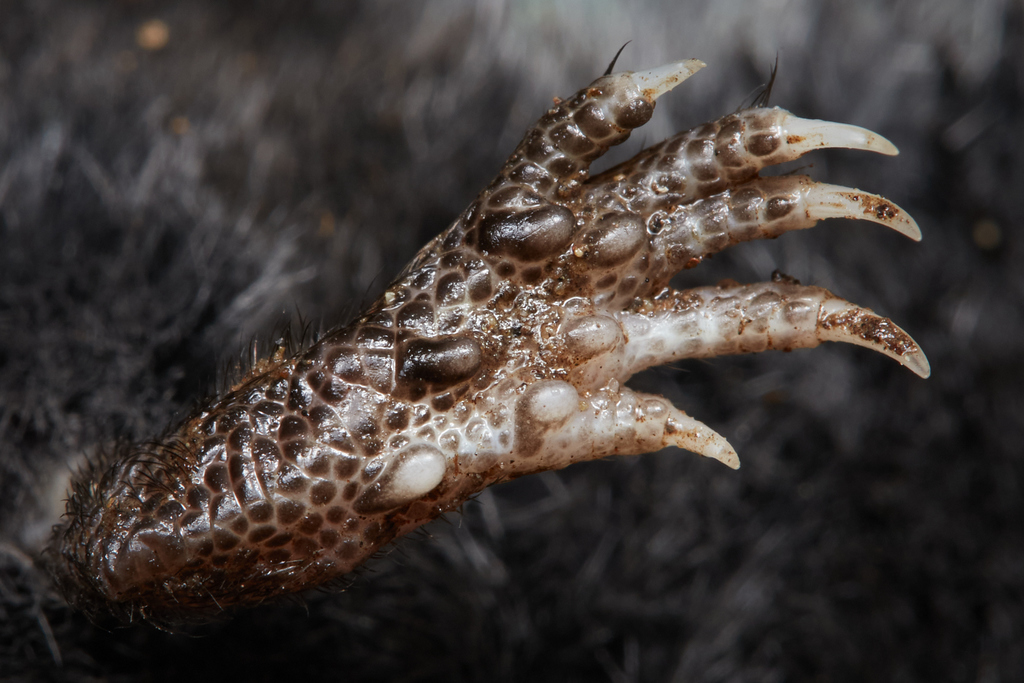
(c) Ken-ichi Ueda, some rights reserved (CC BY) · licence
Family: Talpidae · Class: Mammalia · Order: Soricomorpha
Neurotrichus gibbsii (Shrew-mole) is a California animal in the Talpidae family.
The American shrew-mole (Neurotrichus gibbsii) is the smallest member of the mole family (Talpidae) in North America, measuring 100 to 140 mm (3.9 to 5.5 inches) in total length with a tail comprising approximately one-third of this measurement. Adults weigh between 6 to 11 grams (0.2 to 0.4 ounces). The species exhibits a distinctive elongated snout, small eyes hidden beneath dense fur, and enlarged forefeet adapted for digging. The pelage is dark gray to black with a glossy sheen, and the tail is well-haired and constricted at the base. Unlike other North American moles, the American shrew-mole retains visible external ears and functional eyes. The American shrew-mole occurs along the Pacific Coast from southwestern British Columbia through western Washington and Oregon to northwestern California. In California, the species reaches its southern range limit in Humboldt and Del Norte counties, with populations documented in coastal redwood forests and adjacent mixed coniferous habitats. The species occupies a narrow geographic range, typically within 160 kilometers (100 miles) of the Pacific Ocean. This species inhabits moist, well-drained soils in dense coniferous and mixed forests, particularly areas dominated by Douglas fir, western hemlock, and coast redwood. American shrew-moles prefer sites with thick layers of leaf litter and decaying organic matter, typically at elevations from sea level to 900 meters (2,950 feet). The species constructs shallow tunnel systems in the upper soil layers and utilizes natural spaces beneath logs, rocks, and root systems. Optimal habitat contains loose, loamy soil that facilitates burrowing while maintaining adequate moisture levels. American shrew-moles are semi-fossorial, spending time both above and below ground. Unlike fully fossorial moles, they actively forage on the surface, particularly during nighttime hours. The diet consists primarily of small invertebrates including earthworms, beetle larvae, centipedes, and various soil arthropods. Breeding occurs from February through September, with females producing one to two litters annually. Litter size ranges from one to four young, with an average of 2.5 offspring per litter. The gestation period is approximately 28 days, and juveniles reach sexual maturity at 10 months of age. The American shrew-mole is not federally listed under the Endangered Species Act and lacks specific state protection status in California. However, the species faces habitat loss pressure from timber harvesting, residential development, and forest management practices that alter soil structure and moisture regimes. Climate change poses additional threats through potential shifts in precipitation patterns that could affect the moist soil conditions essential for the species' survival. Population trends remain poorly documented due to the species' secretive nature and limited research focus. The restricted geographic range and specific habitat requirements make American shrew-mole populations potentially vulnerable to localized habitat disturbances, though comprehensive population assessments have not been conducted in California.
Classification
Class: Mammalia · Order: Soricomorpha · Family: Talpidae
Frequently asked questions
How is Neurotrichus gibbsii classified?
Neurotrichus gibbsii belongs to class Mammalia, order Soricomorpha, family Talpidae.
What family does Neurotrichus gibbsii belong to?
Neurotrichus gibbsii is in the Talpidae family.
What is Neurotrichus gibbsii?
The American shrew-mole (Neurotrichus gibbsii) is the smallest member of the mole family (Talpidae) in North America, measuring 100 to 140 mm (3.9 to 5.5 inches) in total length with a tail comprising approximately one-third of this measurement.
Is Neurotrichus gibbsii found in California?
Yes. Neurotrichus gibbsii is recorded in California in The California Species Project's catalogue.
Related species
Other California species in the same genus, family, or bioregion.
Data from The California Species Project — 14,000+ California species with verified data from CNPS, CDFW, USFWS, and more.