Nicrophorus nigrita
Black Burying Beetle
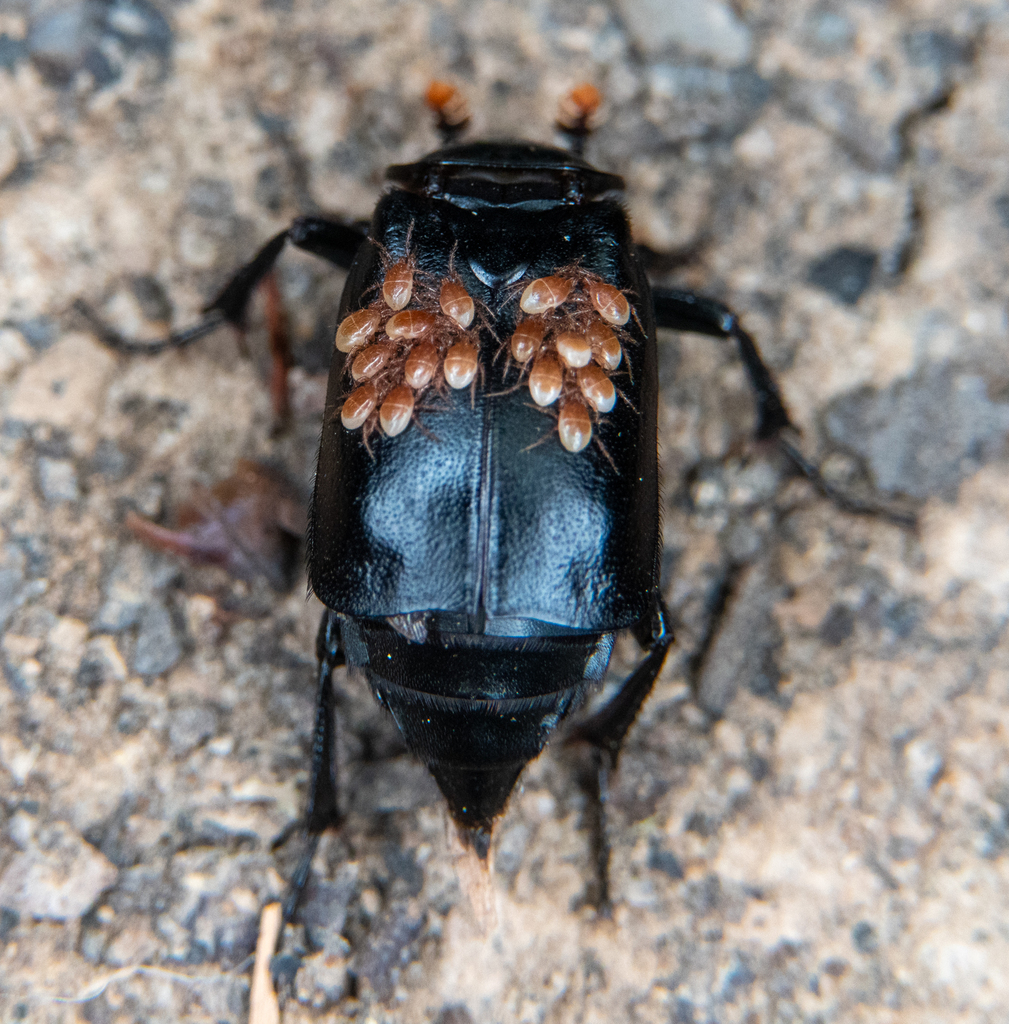
(c) Michael Warner, some rights reserved (CC BY) · licence
Family: Silphidae · Class: Insecta · Order: Coleoptera
Nicrophorus nigrita (Black Burying Beetle) is a California animal in the Silphidae family.
The Black Burying Beetle (Nicrophorus nigrita) is a carrion beetle in the family Silphidae, originally described by Mannerheim in 1843. Adults measure 13 to 18 mm (0.5 to 0.7 inches) in length, displaying the characteristic robust body plan of burying beetles. The species exhibits typical Nicrophorus morphology with a black exoskeleton, though specific coloration patterns and distinguishing features from closely related species require further documentation in the scientific literature. Nicrophorus nigrita occurs in the Pacific coastal region of North America, including the Pacific US states and southern British Columbia (BugGuide). The species' range encompasses the coastal areas of California, Oregon, and Washington, representing a more restricted distribution compared to many eastern North American burying beetle species. Within California, the species appears to be associated with the coastal zone, though specific county-level distribution records require additional documentation. The species inhabits coastal forests, where it occupies the forest floor ecosystem (BugGuide). These coastal forest environments provide the cool, moist conditions that appear favorable for this species' biology. The proximity to marine influence likely creates the stable humidity and temperature conditions that support carrion beetle populations. Adults are active primarily during the cooler and wetter months in California, suggesting seasonal activity patterns tied to moisture availability and temperature regimes. As a member of the burying beetle genus Nicrophorus, N. nigrita exhibits the characteristic reproductive behavior of locating small vertebrate carcasses, which serve as breeding resources. Burying beetles typically work in pairs to bury carcasses underground, creating a brood chamber where eggs are laid and larvae develop on the prepared carrion. The adults provide extensive parental care, feeding regurgitated food to developing larvae. However, specific details of N. nigrita's reproductive biology, including seasonal breeding patterns, clutch sizes, and development timing, have not been well documented in the scientific literature. The species' diet consists primarily of carrion, following the typical Nicrophorus feeding ecology. Adults locate carcasses through chemical detection and may compete with other carrion-feeding species for these resources. The ecological role of N. nigrita includes nutrient recycling and carcass removal from forest ecosystems, contributing to decomposition processes in coastal forest environments. Nicrophorus nigrita lacks formal conservation status assessments. According to available information, the species is not formally assessed by the IUCN Red List and is not considered threatened globally, with populations appearing stable and abundant (Grokipedia). Idaho Fish and Game lists the species with State Conservation Rank SNR (not ranked) and Global Conservation Rank GNR (not ranked), indicating insufficient data for formal conservation assessment. The species' restriction to coastal forests may make it vulnerable to habitat loss from coastal development and forest management practices, though specific population trends and threat assessments have not been conducted. The limited scientific documentation of this species' biology and distribution highlights the need for additional research on Pacific Coast burying beetle fauna.
Classification
Class: Insecta · Order: Coleoptera · Family: Silphidae
Frequently asked questions
How is Nicrophorus nigrita classified?
Nicrophorus nigrita belongs to class Insecta, order Coleoptera, family Silphidae.
What family does Nicrophorus nigrita belong to?
Nicrophorus nigrita is in the Silphidae family.
What is Nicrophorus nigrita?
The Black Burying Beetle (Nicrophorus nigrita) is a carrion beetle in the family Silphidae, originally described by Mannerheim in 1843.
Is Nicrophorus nigrita found in California?
Yes. Nicrophorus nigrita is recorded in California in The California Species Project's catalogue.
Related species
Other California species in the same genus, family, or bioregion.
Data from The California Species Project — 14,000+ California species with verified data from CNPS, CDFW, USFWS, and more.