Nitops pallipennis
Cactus Sap Beetle
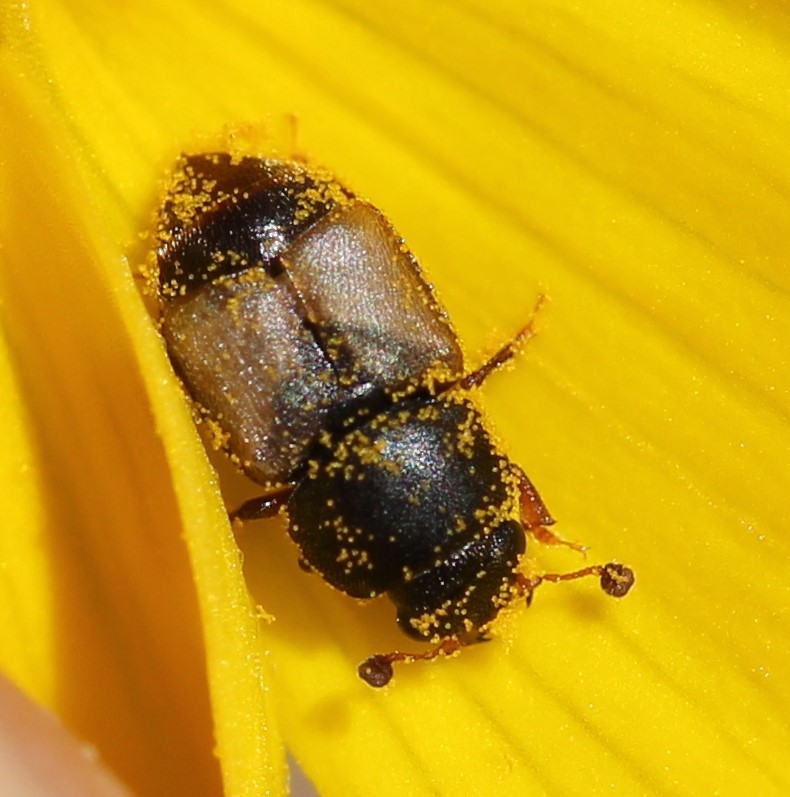
(c) Even Dankowicz, some rights reserved (CC BY) · licence
Family: Nitidulidae · Class: Insecta · Order: Coleoptera
Nitops pallipennis (Cactus Sap Beetle) is a California animal in the Nitidulidae family.
Nitops pallipennis, commonly known as the Cactus Sap Beetle, is a beetle species in the family Nitidulidae, commonly called sap beetles or picnic beetles. Members of this family are typically small beetles that feed on fermenting plant materials, tree saps, and decaying organic matter. The genus Nitops belongs to the order Coleoptera, which comprises the largest order of insects. Nitidulidae beetles are generally characterized by their small size, often measuring between 1.5 to 6 millimeters in length, though specific measurements for N. pallipennis have not been well documented in available literature. Like other nitidulids, this species likely possesses the family's characteristic club-shaped antennae and oval to elongated body form. Based on its common name association with cacti, N. pallipennis presumably occurs in arid and semi-arid regions where cactus species are prevalent. However, specific distribution data for this species within California or elsewhere has not been documented in readily accessible scientific literature. The southwestern United States, including California's desert regions, would be the expected range based on the cactus association implied by its common name. The habitat preferences of N. pallipennis likely center around cactus-dominated ecosystems, including desert scrub, chaparral with cactus components, and possibly urban areas where ornamental cacti are present. Nitidulidae beetles typically inhabit areas where fermenting plant materials are available, suggesting this species may be found near damaged or decaying cactus tissues, flowers, or fruit. As with other sap beetles, N. pallipennis likely feeds on plant exudates, fermenting materials, and possibly pollen or nectar from cactus flowers. Many nitidulids are attracted to overripe or fermenting fruits and damaged plant tissues where yeasts and bacteria create the fermentation process that provides their primary food source. The species may play a role in cactus pollination if it visits flowers for nectar, though this ecological relationship has not been scientifically documented. No current conservation status has been assigned to N. pallipennis by federal or state agencies. The species does not appear on the U.S. Endangered Species Act list, nor does it have a California state listing status. This absence from conservation lists may reflect either stable populations or, more likely, insufficient scientific study to assess population trends and threats. Detailed ecological studies, population assessments, and comprehensive surveys are needed to better understand this species' biology, distribution, and conservation needs. Scientific documentation for this species remains extremely limited. If you have verified information about this species' biology, distribution, or ecology, please contact us to help improve this species account.
Classification
Class: Insecta · Order: Coleoptera · Family: Nitidulidae
Frequently asked questions
How is Nitops pallipennis classified?
Nitops pallipennis belongs to class Insecta, order Coleoptera, family Nitidulidae.
What family does Nitops pallipennis belong to?
Nitops pallipennis is in the Nitidulidae family.
What is Nitops pallipennis?
Nitops pallipennis, commonly known as the Cactus Sap Beetle, is a beetle species in the family Nitidulidae, commonly called sap beetles or picnic beetles.
Is Nitops pallipennis found in California?
Yes. Nitops pallipennis is recorded in California in The California Species Project's catalogue.
More California species
This species has no close relatives in our California data — here are other species to explore.
Data from The California Species Project — 14,000+ California species with verified data from CNPS, CDFW, USFWS, and more.