Noctueliopsis aridalis
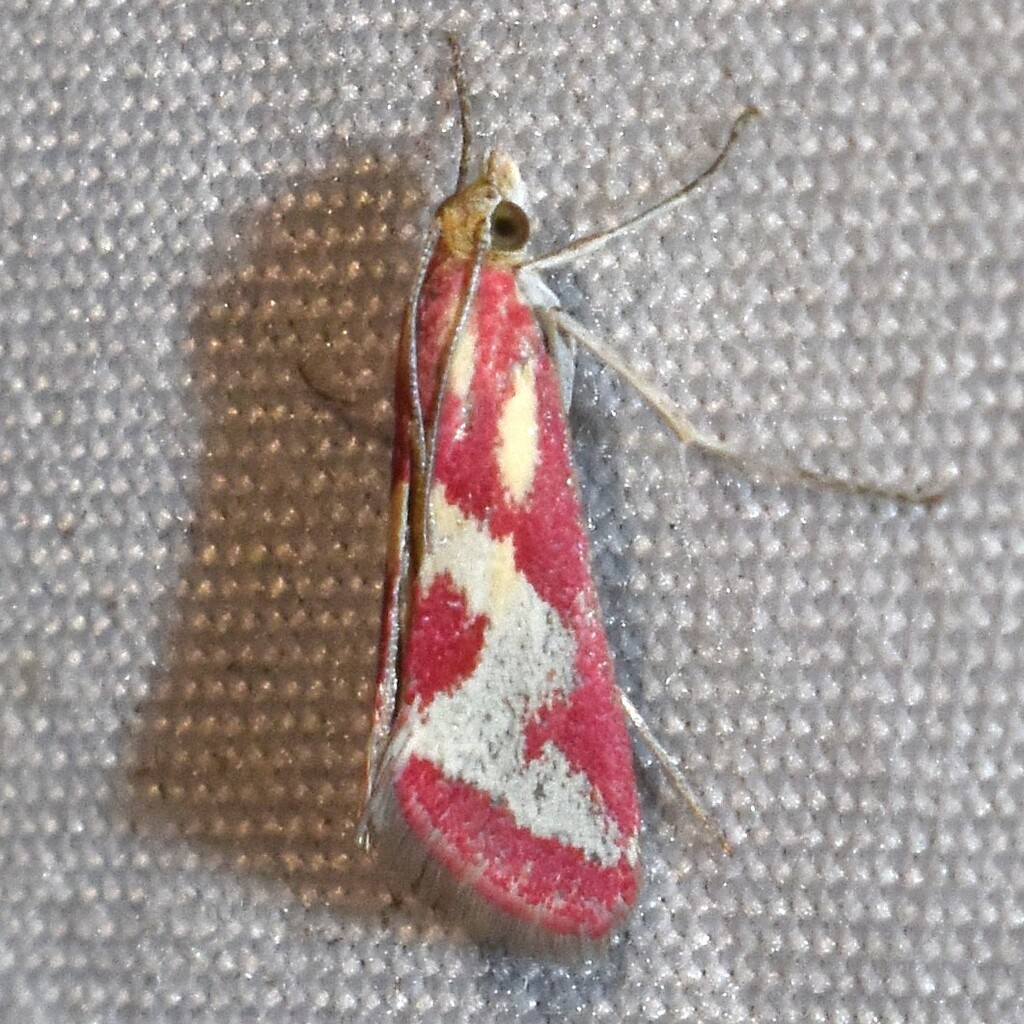
(c) Jeff Niznik, some rights reserved (CC BY-SA) · licence
Family: Crambidae · Class: Insecta · Order: Lepidoptera
Noctueliopsis aridalis is a California animal in the Crambidae family.
Noctueliopsis aridalis is a small moth in the family Crambidae, commonly known as grass moths or snout moths. This species belongs to a group of moths that typically have narrow forewings and elongated labial palps that project forward from the head, giving them a distinctive snout-like appearance. Specific morphological details for N. aridalis have not been comprehensively documented in the scientific literature. The species occurs in the California and Arizona deserts, representing part of the Sonoran Desert fauna that extends across the southwestern United States. Within California, this moth is associated with arid desert regions, likely including portions of the Mojave and Colorado Desert systems. The species' distribution reflects adaptation to the extreme environmental conditions characteristic of these desert ecosystems. Noctueliopsis aridalis inhabits desert environments characterized by low precipitation, high temperature variation, and specialized xerophytic vegetation. Desert habitats in California and Arizona typically support plant communities dominated by creosote bush, palo verde, various cacti species, and drought-adapted shrubs. The specific microhabitat preferences and elevation range for this species have not been well documented in available literature. As a member of the Crambidae family, N. aridalis likely follows typical crambid life cycle patterns, with larvae that may feed on grasses, herbs, or other low-growing vegetation. Many crambid species are nocturnal as adults, with flight periods that may coincide with favorable moisture conditions or host plant phenology. The timing of adult emergence, mating behavior, and larval host plant relationships for this species require further scientific investigation. Desert-adapted moths often exhibit behavioral and physiological adaptations to conserve water and tolerate extreme temperatures. The conservation status of Noctueliopsis aridalis has not been formally assessed by federal or state wildlife agencies. According to BugGuide, this species has been assigned Hodges number 4834, indicating its inclusion in systematic lepidopteran databases. However, detailed population data, trend assessments, and threat evaluations are not available in current literature. Desert ecosystems face ongoing pressures from urban development, renewable energy projects, recreational activities, and climate change impacts including altered precipitation patterns and increased temperature extremes. The limited scientific documentation available for this species reflects broader knowledge gaps in desert moth diversity and ecology. Desert environments support numerous endemic and specialized arthropod species, many of which remain poorly studied despite their ecological importance as pollinators, herbivores, and prey species. Comprehensive surveys and ecological studies of desert moths like N. aridalis would contribute valuable information for understanding desert biodiversity and informing conservation planning in arid ecosystems. Researchers and citizen scientists working in California and Arizona desert regions are encouraged to document observations of this and other crambid moths to improve understanding of their distribution, habitat associations, and conservation needs.
Classification
Class: Insecta · Order: Lepidoptera · Family: Crambidae
Frequently asked questions
How is Noctueliopsis aridalis classified?
Noctueliopsis aridalis belongs to class Insecta, order Lepidoptera, family Crambidae.
What family does Noctueliopsis aridalis belong to?
Noctueliopsis aridalis is in the Crambidae family.
What is Noctueliopsis aridalis?
Noctueliopsis aridalis is a small moth in the family Crambidae, commonly known as grass moths or snout moths.
Is Noctueliopsis aridalis found in California?
Yes. Noctueliopsis aridalis is recorded in California in The California Species Project's catalogue.
Related species
Other California species in the same genus, family, or bioregion.
Data from The California Species Project — 14,000+ California species with verified data from CNPS, CDFW, USFWS, and more.