Noctueliopsis brunnealis
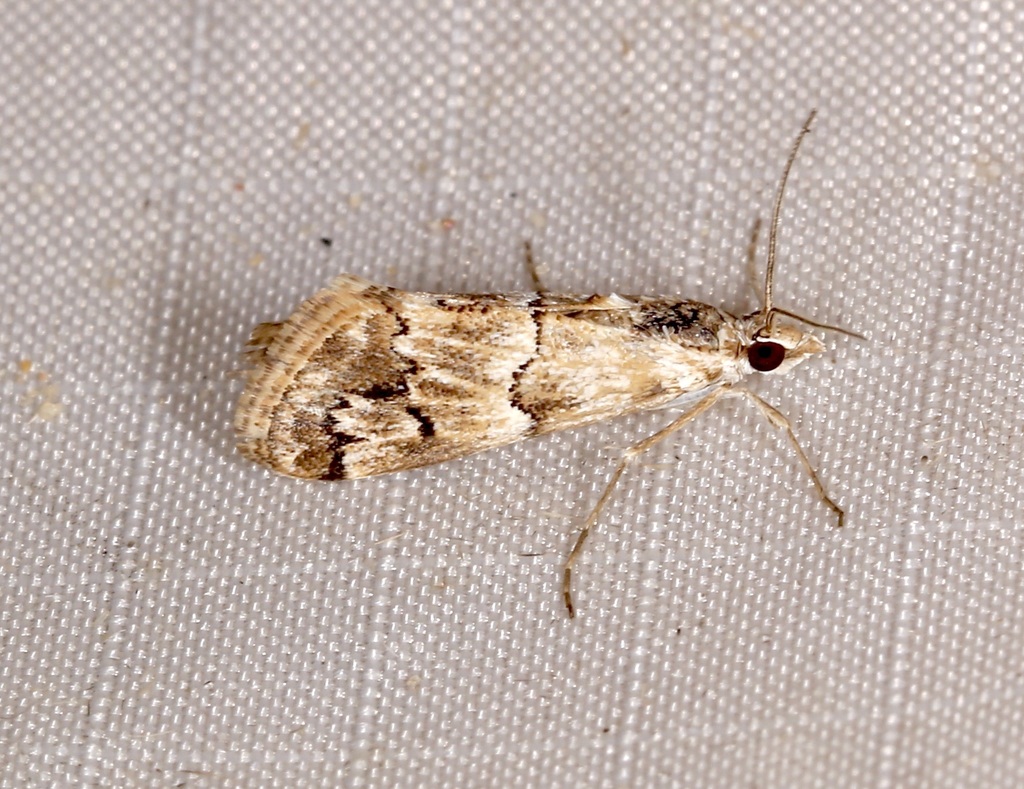
(c) Laura Gaudette, some rights reserved (CC BY) · licence
Family: Crambidae · Class: Insecta · Order: Lepidoptera
Noctueliopsis brunnealis is a California animal in the Crambidae family.
Noctueliopsis brunnealis is a small moth in the family Crambidae, commonly known as the grass moths or snout moths. This species belongs to a diverse family of pyraloid moths that includes over 10,000 described species worldwide. The genus Noctueliopsis contains only a few described species, making this moth part of a relatively small taxonomic group within the larger Crambidae family. The physical characteristics of N. brunnealis are consistent with typical crambid moths. Adults likely possess the characteristic triangular wing shape when at rest, with forewings that fold back along the body. The species name 'brunnealis' suggests brown coloration, indicating the forewings probably display brown or brownish tones, possibly with darker markings or patterns typical of the family. Like other crambids, this species likely has a wingspan ranging from 15 to 25 millimeters (0.6 to 1.0 inches), though specific measurements for this species have not been documented in accessible literature. The distribution and range of Noctueliopsis brunnealis remain poorly documented in current scientific literature. Limited taxonomic records suggest this species may be restricted to specific regions, potentially including parts of North America, though definitive range information requires further research. The apparent rarity of collection records indicates either a naturally restricted distribution or limited survey efforts in areas where the species occurs. Habitat preferences for N. brunnealis are not well established in available literature. Most Crambidae species are associated with grassy habitats, agricultural areas, or woodland edges where their larval host plants occur. Many crambid larvae feed on grasses, sedges, or herbaceous plants, developing as stem borers, root feeders, or leaf miners. The specific microhabitat requirements and elevation preferences for this species remain undocumented. The life history and ecological behavior of Noctueliopsis brunnealis follow patterns typical of temperate crambid moths. Adults are likely nocturnal, active during warm months when temperatures support flight activity. Females probably deposit eggs on or near larval host plants, with caterpillars developing through multiple instars before pupating. The larval stage likely overwinters, with adult emergence occurring during spring or early summer months. Flight periods and voltinism (number of generations per year) have not been documented for this species. Conservation status information for Noctueliopsis brunnealis is not available through standard wildlife databases or federal listing agencies. The species does not appear on federal endangered species lists or state wildlife conservation databases as of December 2025. This absence from conservation databases may reflect either stable populations, insufficient survey data, or taxonomic uncertainty. The limited ecological information available for this species highlights the need for additional research to understand its distribution, habitat requirements, and population status. Many small moth species remain poorly studied, particularly those with restricted ranges or cryptic behavior patterns.
Classification
Class: Insecta · Order: Lepidoptera · Family: Crambidae
Frequently asked questions
How is Noctueliopsis brunnealis classified?
Noctueliopsis brunnealis belongs to class Insecta, order Lepidoptera, family Crambidae.
What family does Noctueliopsis brunnealis belong to?
Noctueliopsis brunnealis is in the Crambidae family.
What is Noctueliopsis brunnealis?
Noctueliopsis brunnealis is a small moth in the family Crambidae, commonly known as the grass moths or snout moths.
Is Noctueliopsis brunnealis found in California?
Yes. Noctueliopsis brunnealis is recorded in California in The California Species Project's catalogue.
Related species
Other California species in the same genus, family, or bioregion.
Data from The California Species Project — 14,000+ California species with verified data from CNPS, CDFW, USFWS, and more.