Nola minna
Ceanothus Nola Moth
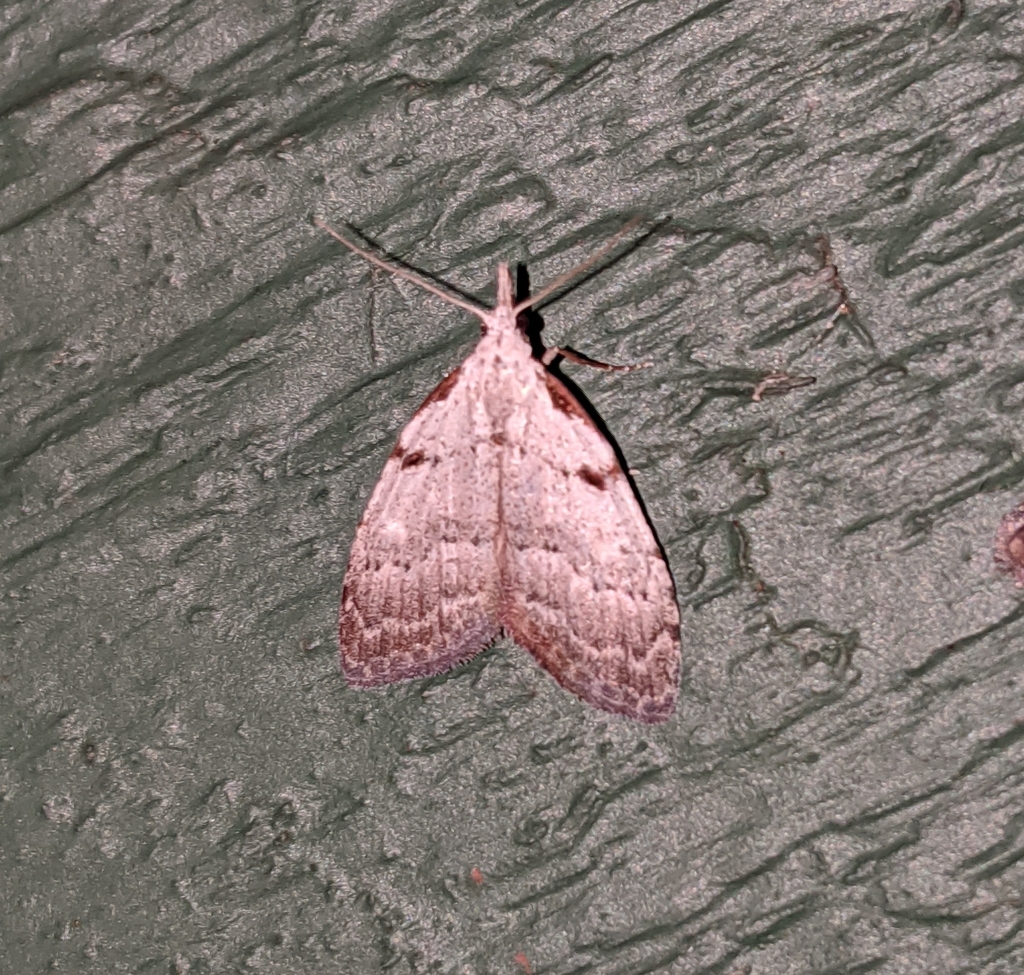
no rights reserved · CC0
Family: Nolidae · Class: Insecta · Order: Lepidoptera
Nola minna (Ceanothus Nola Moth) is a California animal in the Nolidae family.
The Ceanothus Nola Moth (Nola minna) is a small moth in the family Nolidae, subfamily Nolinae. This species belongs to a genus of 11 recognized North American species within the Noctuoidea superfamily. Physical characteristics of this moth have not been extensively documented in scientific literature, reflecting the limited research attention given to many members of the Nolidae family. Nola minna occurs across western North America, with documented records from California, Colorado, and Washington state. In California, the species has been recorded from multiple counties including Modoc, Los Angeles, San Bernardino, and other regions (Lepidopterists' Society Season Summaries). The species extends north to Washington, with records from San Juan County, specifically Orcas Island (Lepidopterists' Society 2019). Colorado populations have been documented from grassland sites on the Pawnee National Grassland (Lavigne 1976). The species demonstrates a clear association with Ceanothus plants, as indicated by its common name. Records from various locations suggest the moth inhabits areas where Ceanothus species are present, including chaparral, mountain slopes, and grassland-woodland interfaces. Elevational records indicate the species occurs from lower elevations to at least 5,000 feet, based on a collection from Barber Canyon in Modoc County (Lepidopterists' Society 2006). The Colorado grassland association suggests adaptability to various habitat types where suitable host plants occur. Adult flight periods appear to span from late spring through summer months. California records include specimens collected in May and July, with a May 27 collection from Modoc County at 5,000 feet elevation (Lepidopterists' Society 2006). Washington state records include a May 5 observation from Orcas Island (Lepidopterists' Society 2019). The larval host plant relationships have not been definitively documented, though the common name suggests an association with Ceanothus species, a diverse genus of shrubs common throughout western North America. Like many members of the Nolidae family, detailed ecological studies of Nola minna are lacking. The family typically includes species with small, cryptically colored adults that are often overlooked by collectors. Moths in this family generally have larvae that feed on various plants, and adults are typically attracted to artificial lights during nighttime hours. No formal conservation status has been assigned to Nola minna at federal or state levels. The species appears to have a relatively wide distribution across western states, though population trends and abundance are unknown due to limited systematic surveys. The moth's apparent association with Ceanothus plants may provide some habitat stability, as these native shrubs remain widespread across appropriate elevations and climate zones in western North America. Scientific documentation for this species remains limited despite its apparent broad distribution. Additional research is needed to clarify host plant relationships, detailed life history characteristics, and population status across its range.
Classification
Class: Insecta · Order: Lepidoptera · Family: Nolidae
Frequently asked questions
How is Nola minna classified?
Nola minna belongs to class Insecta, order Lepidoptera, family Nolidae.
What family does Nola minna belong to?
Nola minna is in the Nolidae family.
What is Nola minna?
The Ceanothus Nola Moth (Nola minna) is a small moth in the family Nolidae, subfamily Nolinae.
Is Nola minna found in California?
Yes. Nola minna is recorded in California in The California Species Project's catalogue.
Related species
Other California species in the same genus, family, or bioregion.
Data from The California Species Project — 14,000+ California species with verified data from CNPS, CDFW, USFWS, and more.