Nomophila nearctica
Lucerne Moth
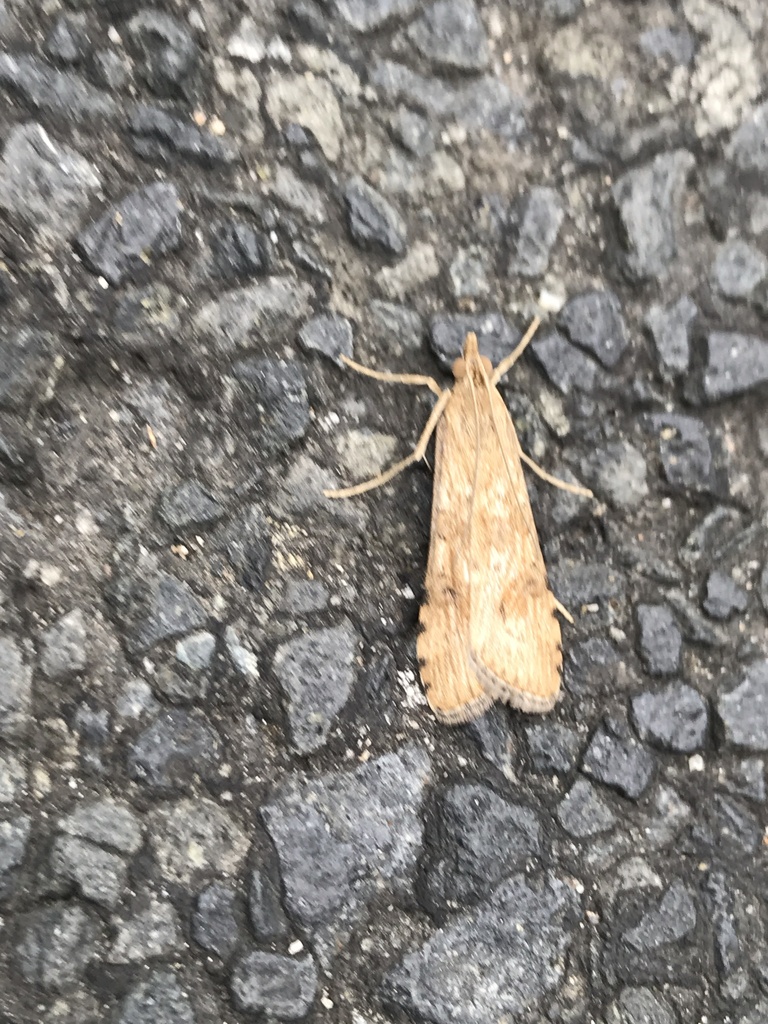
(c) Victor Engel, some rights reserved (CC BY) · licence
Family: Crambidae · Class: Insecta · Order: Lepidoptera
Nomophila nearctica (Lucerne Moth) is a California animal in the Crambidae family.
The Lucerne Moth (Nomophila nearctica) is a small member of the grass moth family Crambidae. Adults typically measure 15 to 25 mm (0.6 to 1.0 inches) in wingspan. The forewings are pale brown to tan with distinctive wavy crosslines and a characteristic pattern of light and dark markings. The hindwings are lighter in coloration, typically whitish to pale gray. Moths display sexual dimorphism, with males having more prominent feathery antennae compared to females. The species can be distinguished from related Nomophila species by wing pattern details and genital characteristics that require microscopic examination. Nomophila nearctica occurs throughout eastern North America, with its range extending from southeastern Canada south to Florida and west to the Great Plains. The species is distributed across deciduous and mixed forests, agricultural areas, and suburban environments where suitable host plants are present. While primarily an eastern species, scattered populations have been documented in suitable habitat corridors extending into the central United States. The Lucerne Moth inhabits diverse environments including agricultural fields, meadows, weedy areas, gardens, and forest edges. Adults are found from sea level to moderate elevations, typically below 1,500 meters (4,900 feet). The species thrives in disturbed habitats and areas with abundant low-growing vegetation. Larvae develop in soil and leaf litter near host plants, requiring adequate moisture and organic matter for successful development. Adults are primarily nocturnal and are attracted to artificial lights. Flight period extends from late spring through early fall, with multiple generations per year in warmer climates. Mating occurs during nighttime hours, with females depositing eggs singly or in small clusters on or near host plants. Larvae are polyphagous, feeding on a wide variety of low plants including celery, grasses, Polygonum species (smartweeds), and sweet clover. The caterpillars construct silken shelters among plant debris and feed primarily on decaying plant material and roots. Pupation occurs in silk-lined chambers in soil or plant litter. The species overwinters as larvae in northern portions of its range. Nomophila nearctica is not federally or state listed and appears to maintain stable populations across its range. As a polyphagous species with broad habitat tolerance, it has adapted well to human-modified environments. Agricultural practices and urbanization may actually benefit this species by creating suitable weedy habitats and maintaining host plant diversity. The moth's association with common, widespread plant species contributes to its ecological stability. Climate change may potentially expand its range northward, though specific population trend data are limited. The species serves as prey for various insectivores including bats, spiders, and other arthropod predators, contributing to local food web dynamics.
Classification
Class: Insecta · Order: Lepidoptera · Family: Crambidae
Frequently asked questions
How is Nomophila nearctica classified?
Nomophila nearctica belongs to class Insecta, order Lepidoptera, family Crambidae.
What family does Nomophila nearctica belong to?
Nomophila nearctica is in the Crambidae family.
What is Nomophila nearctica?
The Lucerne Moth (Nomophila nearctica) is a small member of the grass moth family Crambidae.
Is Nomophila nearctica found in California?
Yes. Nomophila nearctica is recorded in California in The California Species Project's catalogue.
Related species
Other California species in the same genus, family, or bioregion.
Data from The California Species Project — 14,000+ California species with verified data from CNPS, CDFW, USFWS, and more.