Norrisia norrisii
Norris's Topsnail
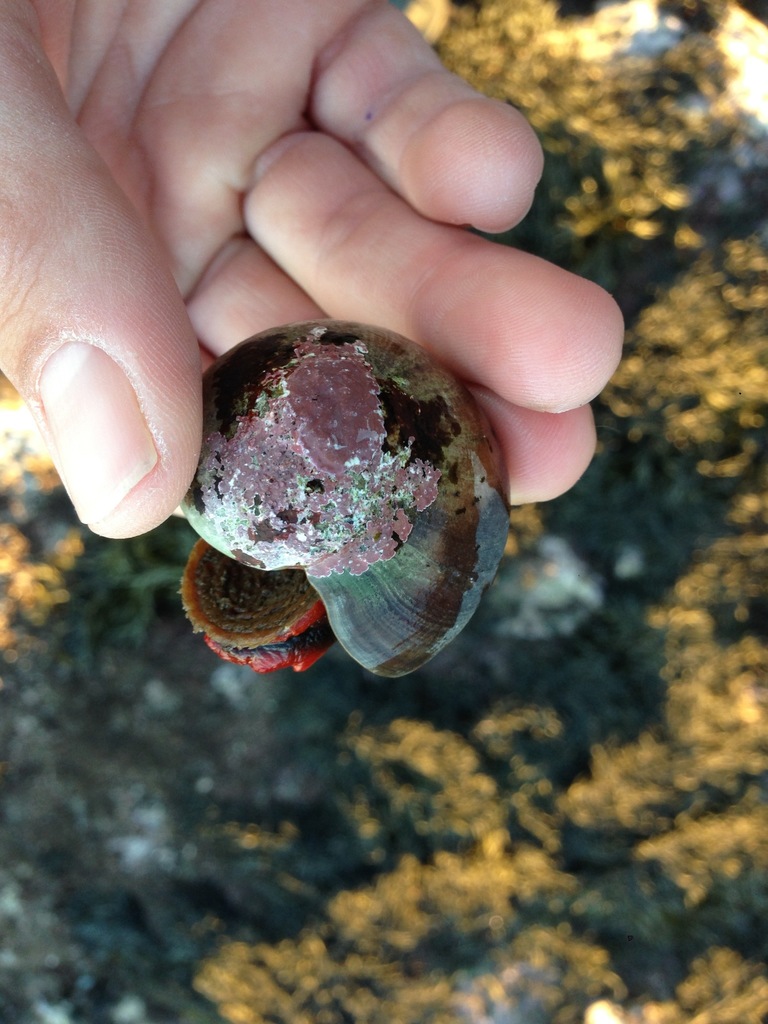
(c) Adam J. Searcy, some rights reserved (CC BY) · licence
Family: Tegulidae · Class: Gastropoda · Order: Trochida
Norrisia norrisii (Norris's Topsnail) is a California animal in the Tegulidae family.
Norrisia norrisii is a medium-sized gastropod mollusk within the family Tegulidae, known by several common names including Norris's top snail and Mexican red foot snail. The species displays the characteristic conical shell shape typical of topsnails, though specific morphological details including shell height, diameter, and coloration patterns have not been comprehensively documented in readily available literature. Norris's topsnail occurs along the Pacific coast from Point Conception, California, southward to Baja California, Mexico (Cabrillo Marine Aquarium). This distribution encompasses the warm temperate and subtropical marine waters of the California Current system, indicating the species' adaptation to the oceanographic conditions of this biogeographic region. The species inhabits rocky intertidal zones and kelp forest environments, with particular association to giant kelp (Macrocystis pyrifera) communities (Cabrillo Marine Aquarium). Norris's topsnails are found in the low intertidal zone, where they experience regular tidal exposure and submersion cycles. The rocky substrate provides attachment surfaces and shelter, while the kelp forest canopy offers both habitat structure and food resources. These habitats are characterized by high wave energy, variable temperatures, and seasonal oceanographic changes typical of California's coastal marine ecosystems. Norris's topsnail feeds primarily on brown algae, utilizing its radula to graze on algal films and macroalgal tissues (Cabrillo Marine Aquarium). This herbivorous feeding strategy positions the species as an important grazer in kelp forest food webs. The species' association with giant kelp suggests it may play a role in controlling epiphytic algae growth on kelp fronds, potentially contributing to kelp forest health through this ecological service. Reproductive biology, including spawning timing, larval development, and recruitment patterns, requires further documentation. Empty shells of deceased Norris's topsnails serve an important ecological function as housing for hermit crabs, extending the species' ecological influence beyond its living state (Mexican Shells). This secondary use of shells contributes to the structural complexity of intertidal and subtidal habitats. The conservation status of Norrisia norrisii has not been formally evaluated by major conservation organizations (Mexican Shells). The species appears to be relatively common within its range, as evidenced by its documentation at multiple marine protected areas including Point Lobos State Marine Reserve (California Department of Fish and Wildlife). However, like many marine invertebrates dependent on kelp forest ecosystems, the species may face potential threats from climate change-driven ocean warming, kelp forest decline, and coastal development pressures. The lack of comprehensive population assessments and ecological studies represents a significant knowledge gap for this species. Further research is needed to document the species' detailed morphology, population dynamics, reproductive ecology, and response to environmental changes. Such information would improve understanding of this topsnail's role in California's marine ecosystems and inform any future conservation needs.
Classification
Class: Gastropoda · Order: Trochida · Family: Tegulidae
Frequently asked questions
How is Norrisia norrisii classified?
Norrisia norrisii belongs to class Gastropoda, order Trochida, family Tegulidae.
What family does Norrisia norrisii belong to?
Norrisia norrisii is in the Tegulidae family.
What is Norrisia norrisii?
Norrisia norrisii is a medium-sized gastropod mollusk within the family Tegulidae, known by several common names including Norris's top snail and Mexican red foot snail.
Is Norrisia norrisii found in California?
Yes. Norrisia norrisii is recorded in California in The California Species Project's catalogue.
Related species
Other California species in the same genus, family, or bioregion.
Data from The California Species Project — 14,000+ California species with verified data from CNPS, CDFW, USFWS, and more.