Notocyphus dorsalis
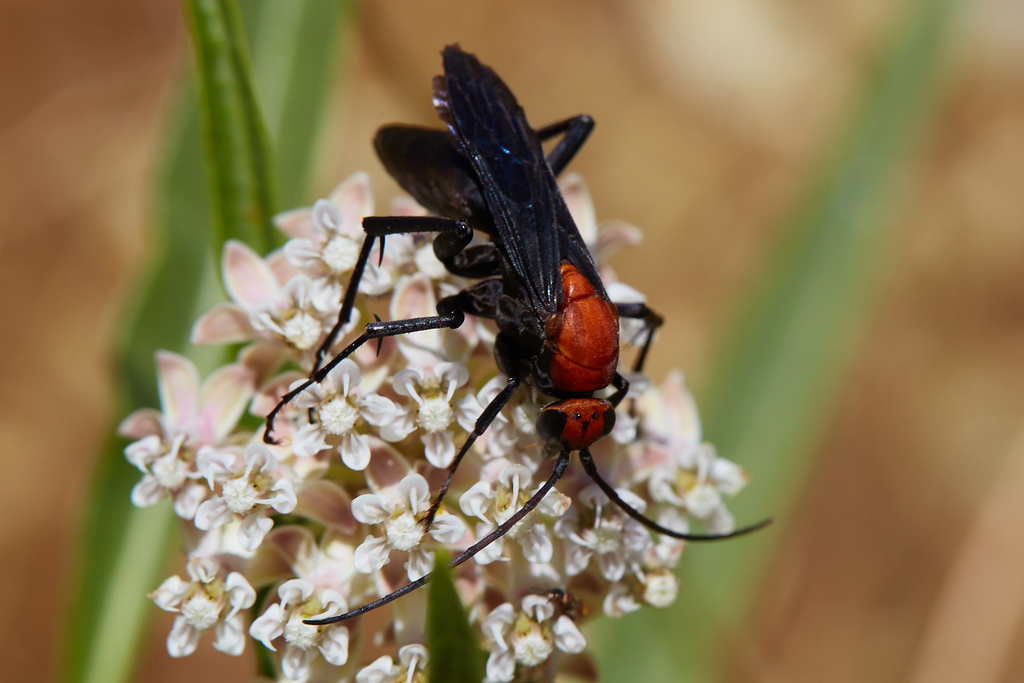
(c) Ken-ichi Ueda, some rights reserved (CC BY) · licence
Family: Pompilidae · Class: Insecta · Order: Hymenoptera
Notocyphus dorsalis is a California animal in the Pompilidae family.
Notocyphus dorsalis is a spider wasp in the family Pompilidae, subfamily Notocyphinae. This hymenopteran species belongs to a specialized group of wasps that hunt spiders as prey for their larvae. As a member of the Pompilidae, N. dorsalis exhibits the characteristic body structure of spider wasps, with long legs adapted for grappling with spider prey and a slender wasp-like form. The distribution of Notocyphus dorsalis includes North America, with documented records extending into South America (Leavengood et al. 2011). Within North America, the species occurs across multiple regions, though specific distributional data for California populations requires further documentation. The genus Notocyphus represents a relatively small group within the diverse Pompilidae family, which contains over 5,000 described species worldwide. Habitat preferences for N. dorsalis have not been extensively documented in the scientific literature. Like other spider wasps, the species likely occurs in areas where suitable spider prey is abundant. Pompilid wasps typically inhabit diverse environments including forest edges, scrublands, and areas with mixed vegetation that support spider communities. The specific microhabitat requirements and elevation preferences for this species remain poorly studied. The behavior and ecology of Notocyphus dorsalis follow the general pompilid life cycle pattern. Adult females hunt spiders, which they paralyze with their sting and provision as food for developing larvae. According to recent host records research, spider wasps in this family demonstrate varying degrees of host specificity, with some species targeting particular spider families or genera (BugGuide). The female constructs a nest, typically in soil or existing cavities, where she places the paralyzed spider along with a single egg. The developing larva feeds externally on the spider host, ultimately pupating within the nest chamber. Adult wasps are likely active during warmer months and feed on nectar and other sugar sources. The conservation status of Notocyphus dorsalis has not been formally assessed at federal or state levels. The species is not listed under the Endangered Species Act, nor does it appear on California state wildlife protection lists. Like many specialized parasitoid wasps, population trends and conservation needs remain largely unknown due to limited ecological research. The species faces potential threats common to many insects, including habitat loss, pesticide use, and climate change impacts on both the wasp and its spider prey. The maintenance of diverse spider communities is likely critical for sustaining N. dorsalis populations. Scientific documentation for this species remains limited despite its inclusion in North American pompilid fauna surveys. Current knowledge is based primarily on taxonomic treatments and distributional records rather than detailed ecological studies. Enhanced research on host relationships, habitat requirements, and population dynamics would improve understanding of this species' conservation status and ecological role within California's diverse hymenopteran fauna.
Classification
Class: Insecta · Order: Hymenoptera · Family: Pompilidae
Frequently asked questions
How is Notocyphus dorsalis classified?
Notocyphus dorsalis belongs to class Insecta, order Hymenoptera, family Pompilidae.
What family does Notocyphus dorsalis belong to?
Notocyphus dorsalis is in the Pompilidae family.
What is Notocyphus dorsalis?
Notocyphus dorsalis is a spider wasp in the family Pompilidae, subfamily Notocyphinae.
Is Notocyphus dorsalis found in California?
Yes. Notocyphus dorsalis is recorded in California in The California Species Project's catalogue.
Related species
Other California species in the same genus, family, or bioregion.
Data from The California Species Project — 14,000+ California species with verified data from CNPS, CDFW, USFWS, and more.