Notodonta pacifica
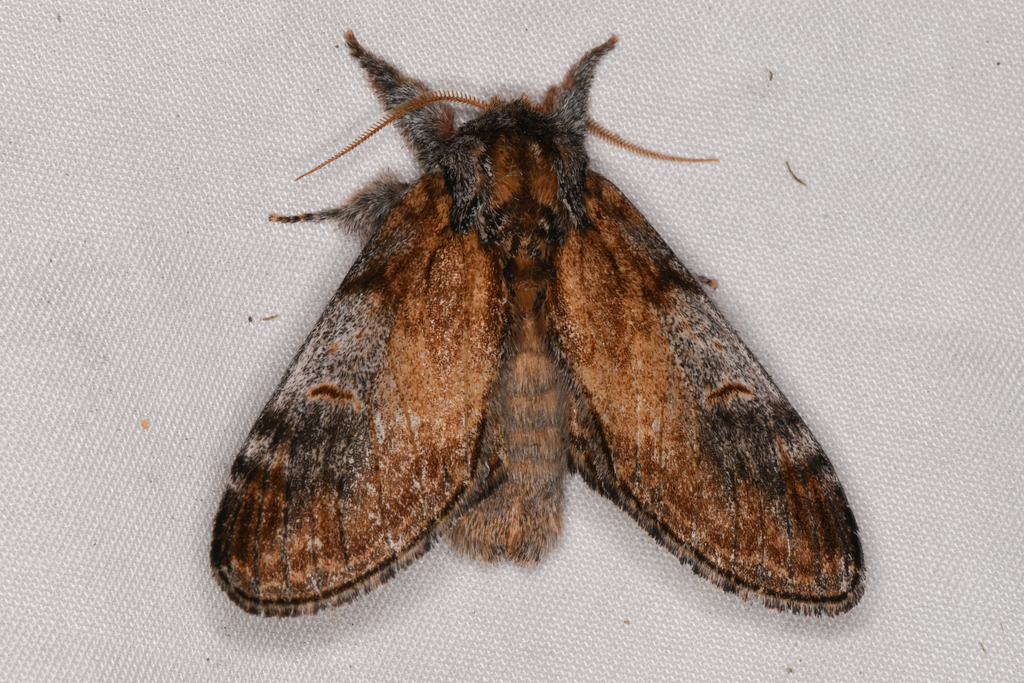
(c) Trevor Van Loon, some rights reserved (CC BY) · licence
Family: Notodontidae · Class: Insecta · Order: Lepidoptera
Notodonta pacifica is a California animal in the Notodontidae family.
Notodonta pacifica is a moth species in the family Notodontidae, commonly known as the prominents. This species belongs to a diverse family of nocturnal moths characterized by their distinctive wing patterns and often cryptic coloration that provides camouflage against tree bark and other natural surfaces. Adult moths typically display the characteristic features of the Notodonta genus, with forewings that often show complex patterns of browns, grays, and lighter markings. The specific morphological details and coloration patterns of N. pacifica require further taxonomic documentation, as detailed physical descriptions are not readily available in current literature. Like other notodontids, adults likely have a robust body structure with well-developed forewings and reduced hindwings. The distribution of Notodonta pacifica appears to be limited to western North America, with the species name suggesting a Pacific coastal association. However, the precise range within California and adjacent regions requires additional survey work and taxonomic verification. The species' occurrence in California may be restricted to specific biogeographic regions, though comprehensive distribution data are currently lacking. Habitat preferences for N. pacifica are not well-documented in available sources, but members of the Notodonta genus typically inhabit forested environments where their host plants occur. Notodontid moths generally prefer areas with deciduous or mixed woodlands, often at varying elevations depending on the specific requirements of their larval host plants. The species likely requires intact forest habitat for successful completion of its life cycle. The behavioral ecology and life history of Notodonta pacifica remain poorly studied. Like other notodontids, adults are presumably nocturnal and attracted to artificial light sources. The species likely has a single generation per year, with adults emerging during specific seasonal periods that correspond with optimal environmental conditions and host plant phenology. Larvae, if following typical notodontid patterns, would feed on deciduous trees or shrubs, potentially showing host plant specificity that could influence the species' distribution and conservation requirements. Mating behavior likely involves pheromone communication typical of nocturnal moths, with females releasing chemical attractants to draw males for reproduction. Eggs are probably deposited on or near host plant foliage, where larvae develop through multiple instars before pupating in soil or leaf litter. The conservation status of Notodonta pacifica is unclear due to limited taxonomic and ecological information. The species lacks federal or state listing status, which may reflect either stable populations or insufficient data for assessment. Without comprehensive population surveys or trend data, the species' conservation needs cannot be adequately evaluated. Potential threats could include habitat loss from forest management practices, urban development, or climate change impacts on host plant distributions. The apparent rarity of records suggests either limited distribution, low population densities, or insufficient survey effort targeting this species. Further research is needed to establish baseline population data, habitat requirements, and potential conservation concerns for this poorly known moth species.
Classification
Class: Insecta · Order: Lepidoptera · Family: Notodontidae
Frequently asked questions
How is Notodonta pacifica classified?
Notodonta pacifica belongs to class Insecta, order Lepidoptera, family Notodontidae.
What family does Notodonta pacifica belong to?
Notodonta pacifica is in the Notodontidae family.
What is Notodonta pacifica?
Notodonta pacifica is a moth species in the family Notodontidae, commonly known as the prominents.
Is Notodonta pacifica found in California?
Yes. Notodonta pacifica is recorded in California in The California Species Project's catalogue.
Related species
Other California species in the same genus, family, or bioregion.
Data from The California Species Project — 14,000+ California species with verified data from CNPS, CDFW, USFWS, and more.