Notorynchus cepedianus
Broadnose Sevengill Shark
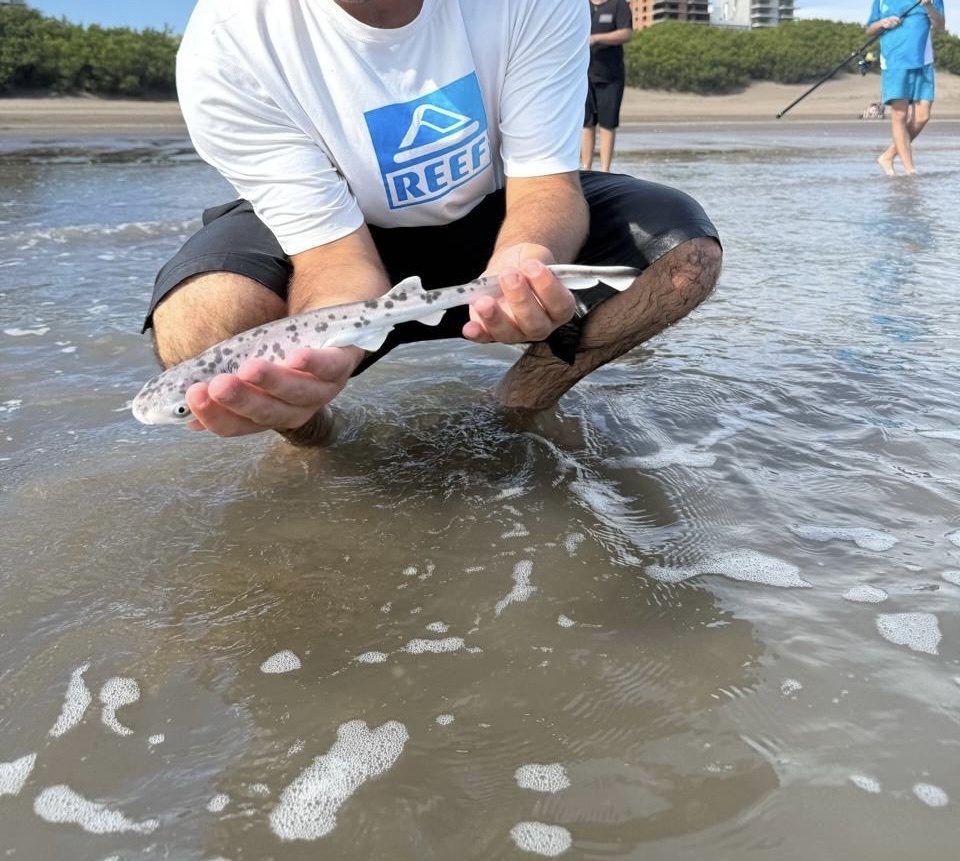
no rights reserved · CC0
Family: Hexanchidae · Class: Chondrichthyes · Order: Hexanchiformes
Notorynchus cepedianus (Broadnose Sevengill Shark) is a California animal in the Hexanchidae family.
The broadnose sevengill shark is a large, primitive shark species distinguished by its seven gill slits, which is unusual among modern sharks that typically possess five. Adults commonly reach lengths of 2 to 3 meters (6.6 to 9.8 feet), with some individuals exceeding 3 meters. The species exhibits a robust body with a broad, blunt snout and a single dorsal fin positioned far back on the body. Coloration ranges from silver-gray to brown on the dorsal surface with numerous small dark spots scattered across the body and fins, while the ventral surface is lighter. The broadnose sevengill shark occurs in temperate and subtropical waters worldwide, with populations found along the Pacific coast from British Columbia to Baja California. In California, the species is documented in coastal waters from Humboldt Bay south to San Diego County. According to the California Department of Fish and Wildlife, these sharks are present in central California waters and are included in state fishing regulations, with a daily bag limit of one fish and no size restrictions (CDFW 2025). This species inhabits continental shelf and slope waters, typically found at depths ranging from near-surface to over 570 meters (1,870 feet). Broadnose sevengill sharks prefer sandy and muddy bottoms in bays, estuaries, and coastal areas. Adults commonly occur in deeper offshore waters, while juveniles frequent shallow bays and estuaries, including enclosed systems like San Francisco Bay and Humboldt Bay. The species demonstrates considerable vertical migration, moving between shallow and deep waters. Broadnose sevengill sharks are opportunistic predators with a diverse diet including bony fishes, other sharks, rays, marine mammals, and carrion. They are known to exhibit cooperative hunting behavior, which is rare among shark species. Reproduction is ovoviviparous, with females producing litters of 82 to 95 pups after a gestation period of approximately 12 months. Sexual maturity occurs at lengths of about 1.5 to 2 meters for males and 1.8 to 2.2 meters for females. The species can live for several decades, with some estimates suggesting lifespans exceeding 50 years. Currently, the broadnose sevengill shark lacks federal protection status under the Endangered Species Act and is not listed as threatened or endangered in California. However, the species faces pressure from commercial and recreational fishing activities. The California state angling record for sevengill shark stands at 276 pounds, caught in Humboldt Bay in 1996 (CDFW 2025). Population trends are not well-documented, but the species' slow growth, late maturity, and low reproductive rate make it vulnerable to overfishing. Conservation efforts focus on sustainable fishing practices and habitat protection in critical nursery areas such as San Francisco Bay and other coastal estuaries.
Classification
Class: Chondrichthyes · Order: Hexanchiformes · Family: Hexanchidae
Frequently asked questions
How is Notorynchus cepedianus classified?
Notorynchus cepedianus belongs to class Chondrichthyes, order Hexanchiformes, family Hexanchidae.
What family does Notorynchus cepedianus belong to?
Notorynchus cepedianus is in the Hexanchidae family.
What is Notorynchus cepedianus?
The broadnose sevengill shark is a large, primitive shark species distinguished by its seven gill slits, which is unusual among modern sharks that typically possess five.
Is Notorynchus cepedianus found in California?
Yes. Notorynchus cepedianus is recorded in California in The California Species Project's catalogue.
More California species
This species has no close relatives in our California data — here are other species to explore.
Data from The California Species Project — 14,000+ California species with verified data from CNPS, CDFW, USFWS, and more.